
What Specifications Should You Include in an RFQ for Bulk Stainless Steel Pipes and Tubes?
- Siddhgiri Overseas
A stainless steel pipe order can look straightforward until the supplier asks for missing specifications. A purchase inquiry might mention SS 304 pipes and a total quantity, but leave out the wall thickness, manufacturing standard, surface finish, or inspection requirements. These details can change the product, price, and delivery schedule.
For engineering contractors, fabricators, and industrial procurement teams, a complete Request for Quotation (RFQ) helps suppliers understand exactly what is needed before submitting a price.
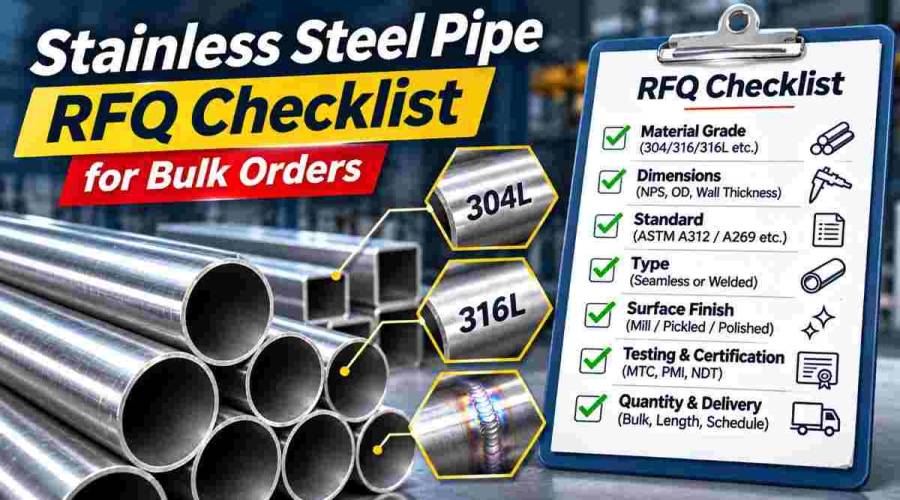
A well-prepared Stainless Steel Pipe RFQ Checklist should cover the material grade, product dimensions, applicable standards, manufacturing method, testing documentation, quantity, and delivery requirements.
This guide explains what to include in a bulk purchase inquiry so buyers can compare quotations accurately and reduce procurement delays.
What Is an RFQ for Stainless Steel Pipes and Tubes?
An RFQ is a formal purchasing document sent to suppliers requesting pricing and commercial terms for materials with defined specifications.
For stainless steel pipes and tubes, it should communicate both technical and purchasing requirements.
A complete RFQ typically includes:
-
Required stainless steel grade
-
Pipe or tube dimensions
-
Manufacturing method
-
Applicable material specifications
-
Surface finish requirements
-
Inspection and testing requirements
-
Order quantity
-
Delivery location and timeline
-
Material certification requirements
-
Packaging and shipping instructions
Providing these details allows suppliers to quote against the same technical requirements, making comparisons more meaningful.
Which Stainless Steel Grade Should You Specify in an RFQ?
Buyers should specify the exact stainless steel grade based on corrosion resistance, operating temperature, mechanical requirements, and fabrication conditions.
Different grades provide different performance characteristics, even when their dimensions are identical.
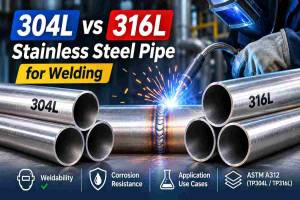
When Should You Specify SS 304 or SS 304L?
SS 304 is commonly used for general industrial piping, food processing equipment, fabrication, and applications involving relatively mild corrosive environments.
SS 304L contains a lower maximum carbon content, reducing susceptibility to sensitization during welding.
For extensively welded systems where corrosion resistance around welded joints matters, 304L may be preferred.
When Should You Specify SS 316 or SS 316L?
SS 316 contains molybdenum, improving resistance to chloride-related pitting and crevice corrosion compared with SS 304.
SS 316L offers similar corrosion-resistance benefits while reducing the risk of sensitization associated with welding.
These grades are commonly considered for chemical processing, certain coastal applications, and industrial systems exposed to more aggressive environments.
Other grades, including SS 321, SS 310, and SS 347H, may be appropriate for particular elevated-temperature or specialized applications.
Buyers should identify the required grade directly rather than describing the material only as corrosion-resistant stainless steel.
Explore the stainless steel pipe range to understand available product categories and grades.
What Dimensions Should Be Included in a Stainless Steel Pipe RFQ?
A stainless steel pipe RFQ should clearly state the nominal pipe size, outside diameter, wall thickness, required length, and applicable dimensional tolerances.
Dimensions are particularly important for bulk orders because even small misunderstandings can affect the compatibility of fittings, joints, and fabricated assemblies.
Why Should Buyers Specify Outside Diameter and Wall Thickness?
Outside diameter (OD) determines the pipe's external dimensions, while wall thickness influences its internal diameter, weight, pressure capability, and fabrication behavior.
For standard pipe products, buyers commonly specify nominal pipe size (NPS) and the applicable schedule.
For tubing, dimensions are often provided directly as outside diameter and wall thickness.
These two ordering methods should not be treated as interchangeable.
How Should Pipe Schedules Be Mentioned?
Pipe schedules identify standardized wall thicknesses for particular nominal pipe sizes.
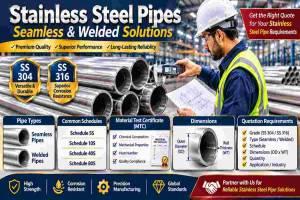
Common stainless steel schedules include:
-
Schedule 5S
-
Schedule 10S
-
Schedule 40S
-
Schedule 80S
Other schedules may apply under the relevant dimensional standard.
The appropriate schedule depends on operating pressure, temperature, corrosion allowance, and applicable design requirements.
Buyers should specify the dimensional standard, such as ASME B36.19M for applicable stainless steel pipe dimensions.
A schedule number alone does not establish a pipe's allowable operating pressure.
The stainless steel pipe size and schedule chart can help buyers review nominal sizes and corresponding wall thicknesses.
Should You Specify Seamless or Welded Stainless Steel Pipes?
Yes. An RFQ should identify whether seamless or welded construction is required, particularly when manufacturing method is relevant to the project specification.
Both types are used in industrial applications, but their manufacturing methods differ.
When Are Seamless Stainless Steel Pipes Required?
Stainless steel seamless pipes are manufactured without a longitudinal welded seam.
They are used in applications where seamless construction is required by the governing specification or preferred for particular operating conditions.
Typical applications include selected process piping systems, industrial equipment, and pressure-containing assemblies.
When Can Welded Stainless Steel Pipes Be Used?
Stainless steel welded pipes are produced by forming material into a tubular shape and joining the longitudinal seam.
They can provide an economical option for many industrial applications when the relevant material standard and engineering requirements permit welded construction.
A properly manufactured and qualified welded pipe may be suitable for pressure service.
The choice should be based on the design code, service conditions, required inspections, and material availability rather than assuming one manufacturing method is always superior.
Which ASTM Standards Should Be Included in a Bulk Pipe RFQ?
Buyers should specify the applicable ASTM material standard because it defines essential requirements for material composition, manufacturing, heat treatment, mechanical properties, and testing.
Different standards apply to different pipe and tubing applications.
What Is ASTM A312 Used For?
ASTM A312/A312M covers seamless, welded, and heavily cold-worked austenitic stainless steel pipes for high-temperature and general corrosive service.
Common designations include TP304, TP304L, TP316, and TP316L.
This specification is frequently used for industrial process piping.
When Is ASTM A269 Required?
ASTM A269/A269M covers seamless and welded austenitic stainless steel tubing for general corrosion-resisting and low- or high-temperature service.
It is relevant when the product is specified as tubing rather than standard pipe.
What Is ASTM A554 Used For?
ASTM A554 covers welded stainless steel mechanical tubing.
It is commonly relevant to mechanical and decorative applications, depending on the project requirements.
Other standards may apply to boiler tubing, heat exchangers, structural components, and specialized process systems.
The RFQ should state the exact required standard and edition where project documentation specifies one.
Why Should Surface Finish Requirements Be Included in the RFQ?
Surface finish requirements should be included because they affect appearance, cleanliness, corrosion performance, and suitability for the intended application.
An industrial process pipe may not require the same finish as tubing used in architectural installations or hygienic equipment.
Common requirements may include:
-
Mill finish
-
Pickled and passivated surface
-
Polished finish
-
Bright annealed finish
-
Specified surface roughness
-
Application-specific cleaning requirements
Buyers should also identify whether internal surface treatment is necessary.
For pharmaceutical, food processing, or other hygienic applications, surface roughness and cleanliness requirements may be particularly important.
A phrase such as "polished stainless steel pipe" may be insufficient if the project requires a defined surface roughness or finishing procedure.
What Testing and Certification Requirements Should an RFQ Include?
The RFQ should identify all required inspection, testing, and material documentation before suppliers prepare their quotations.
Testing requirements vary according to the material standard and intended service.
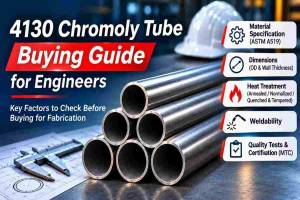
Why Is a Mill Test Certificate Important?
A Mill Test Certificate (MTC) documents relevant material properties and test results associated with the supplied product.
Depending on the requested inspection document and applicable specification, it may include:
-
Material grade
-
Heat number
-
Chemical composition
-
Mechanical test results
-
Applicable manufacturing standard
-
Product dimensions
-
Inspection or test details
When EN 10204 Type 3.1 certification is required, the RFQ should state this explicitly.
Buyers can learn more about Mill Test Certificates and the documentation used to support material verification.
Which Additional Tests May Be Required?
Depending on project requirements, buyers may request:
-
Hydrostatic testing
-
Nondestructive electric testing
-
Ultrasonic testing
-
Dimensional inspection
-
Positive Material Identification (PMI)
-
Hardness testing
-
Third-party inspection
-
Additional corrosion testing
Not every test is required for every product.
The specified testing scope should match the applicable standard, project quality plan, and service conditions.
How Should Buyers Specify Quantity and Delivery Requirements?
Buyers should provide clear quantities and delivery instructions so suppliers can calculate material requirements, logistics costs, and realistic lead times.
A bulk order should distinguish between the number of pieces, total running length, and total weight.
For example, a request for 500 meters of tubing should also specify the preferred individual lengths and whether shorter lengths are acceptable.
Important purchasing details include:
-
Total quantity required
-
Quantity for each size and grade
-
Standard or cut-to-length requirements
-
Permitted length tolerances
-
Delivery address
-
Required delivery date
-
Partial shipment acceptance
-
Packaging requirements
-
Transportation and handling conditions
For international orders, buyers should also clarify the required Incoterms rule and named delivery location.
Clear delivery conditions help prevent misunderstandings between the quoted material price and the total landed cost.
What Common Mistakes Should Procurement Teams Avoid When Preparing an RFQ?
The most common RFQ mistakes involve incomplete specifications, unclear quantity units, and missing quality requirements.
These issues can produce quotations for products that appear similar but are not technically equivalent.
Avoid the following errors:
-
Writing only "SS pipe" without specifying the grade
-
Omitting the applicable material standard
-
Confusing nominal pipe size with actual outside diameter
-
Failing to specify the wall thickness or schedule
-
Leaving the manufacturing method undefined when required
-
Not identifying required material certificates
-
Omitting surface finish specifications
-
Using unclear quantity units
-
Failing to specify delivery and packaging requirements
-
Comparing supplier prices without checking technical compliance
Procurement teams should review the technical offer and commercial offer separately before awarding an order.
A lower quoted price is not necessarily a better purchase if the material does not meet the project requirements.
How Can You Prepare a Complete Stainless Steel Pipe RFQ Checklist?
A complete RFQ should allow suppliers to identify the material, calculate the required quantity, confirm compliance, and prepare a commercial offer without guessing.
The following checklist can be used before sending a bulk inquiry.
Technical specifications
-
Product type: pipe or tube
-
Stainless steel grade
-
Applicable ASTM or other material standard
-
Seamless or welded construction
-
Nominal size or outside diameter
-
Wall thickness or pipe schedule
-
Required length and tolerances
-
Surface finish requirements
-
Operating or service conditions
-
Any special fabrication requirements
Quality and documentation
-
Material Test Certificate requirements
-
Chemical and mechanical testing requirements
-
Additional NDT or PMI requirements
-
Material traceability requirements
-
Third-party inspection, if applicable
Commercial requirements
-
Quantity for each line item
-
Required delivery date
-
Delivery location
-
Packaging instructions
-
Shipping and Incoterms requirements
-
Quotation validity period
-
Payment terms
-
Permitted substitutions, if any
Completing these details makes it easier to compare multiple quotations on a consistent basis.
Frequently Asked Questions About Stainless Steel Pipe RFQs
What Information Is Most Important in a Stainless Steel Pipe RFQ?
The most important details are the material grade, applicable standard, dimensions, wall thickness, manufacturing method, quantity, inspection requirements, and delivery conditions.
Should I Specify Pipe Schedule or Wall Thickness?
Specify the pipe schedule and applicable dimensional standard when purchasing standard pipe. For nonstandard dimensions or tubing, provide the required wall thickness directly. Including both can improve clarity.
Is an MTC Necessary for Every Stainless Steel Pipe Order?
An MTC is important when material verification, quality documentation, or project traceability is required. Buyers should specify the required certificate type before placing the order.
Can a Supplier Quote Different Grades as Alternatives?
A supplier may offer alternatives, but buyers should request that these be quoted separately. Any material substitution should receive technical approval before purchase.
How Can Buyers Compare Bulk Stainless Steel Pipe Quotations?
Compare the material grade, standard, dimensions, manufacturing method, inspection scope, quantity, delivery terms, and total cost. Technical compliance should be confirmed before comparing prices.
Where Can You Request a Bulk Stainless Steel Pipe and Tube Quotation?
A clear RFQ helps engineering and procurement teams obtain more accurate quotations while reducing specification-related delays.
Siddhgiri Overseas, based in Mumbai, India, supplies stainless steel pipes and tubes for industrial, engineering, fabrication, and construction applications.
Its product range includes round, square, rectangular, seamless, and welded products in multiple stainless steel grades, subject to specification and availability.
For bulk purchasing requirements, buyers can share their material grade, dimensions, manufacturing standard, quantity, inspection requirements, and delivery expectations.
Request a Quote for Bulk Stainless Steel Pipes and Tubes
Contact Siddhgiri Overseas with your project requirements to discuss product availability, technical specifications, and quotation details.