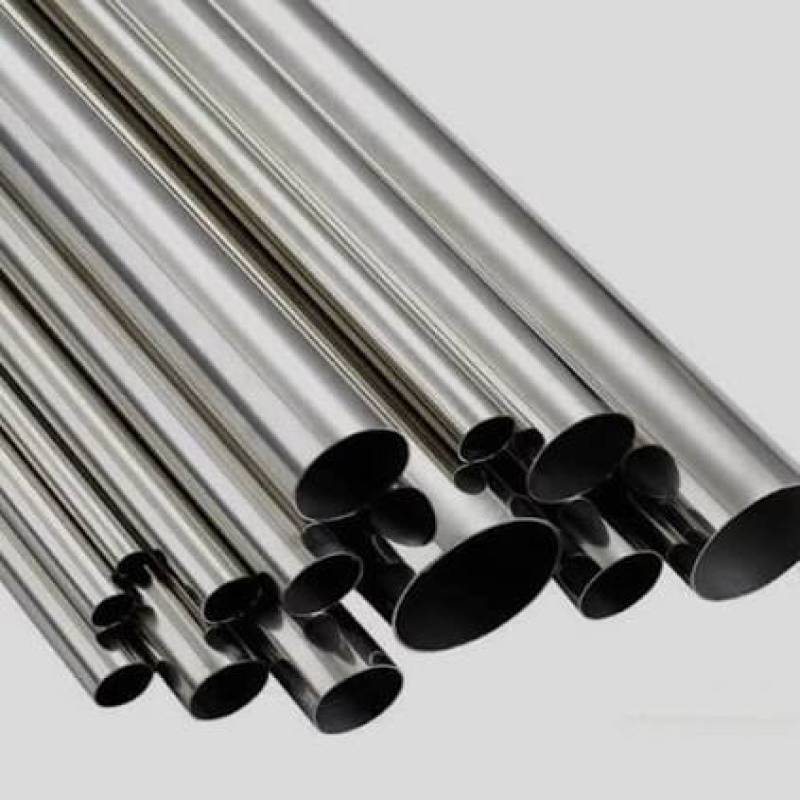
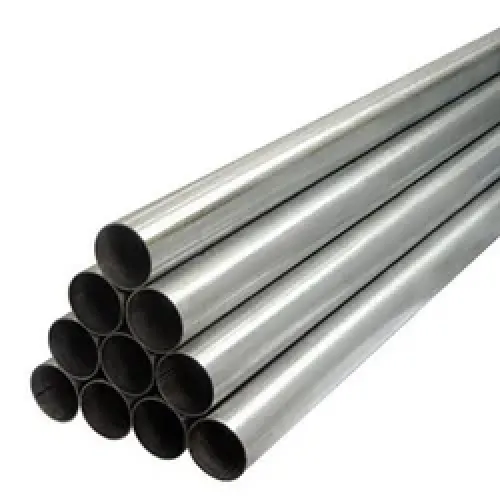
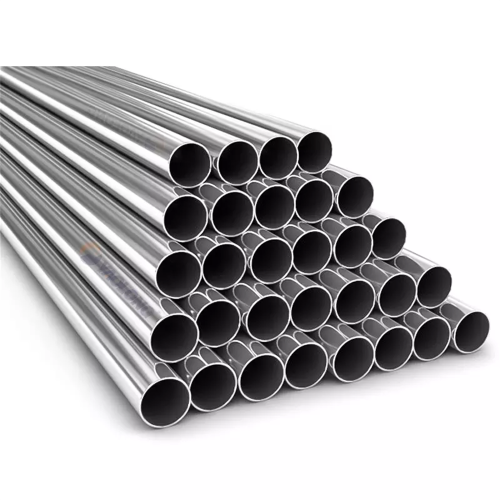
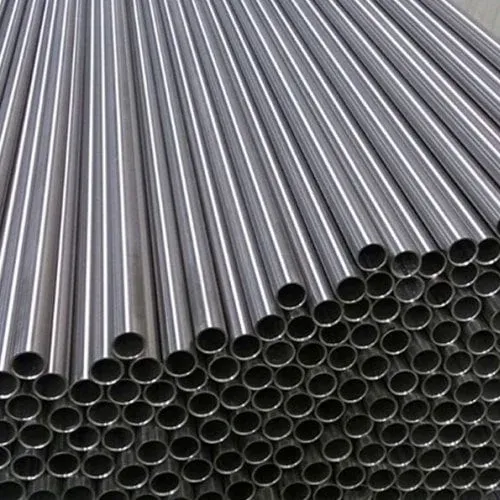
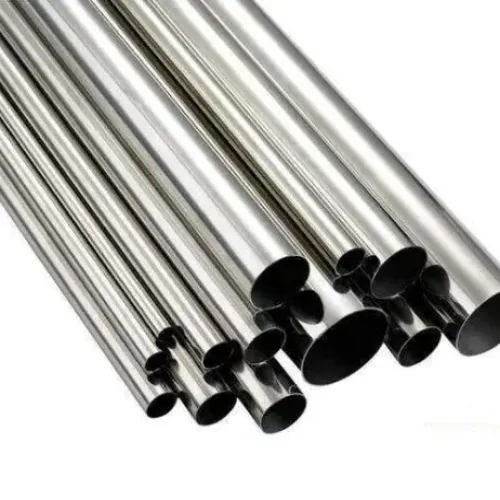
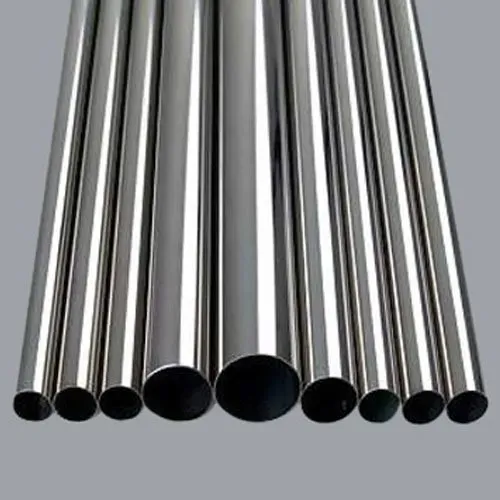
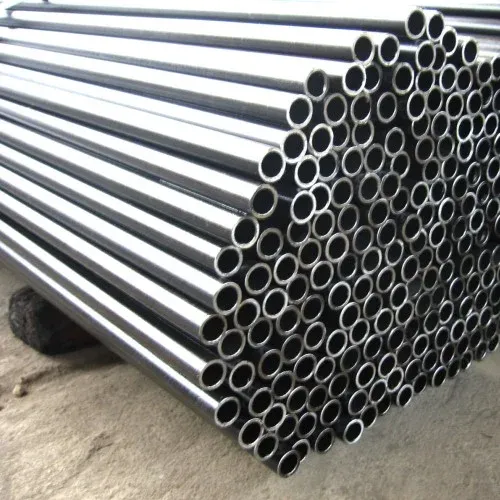
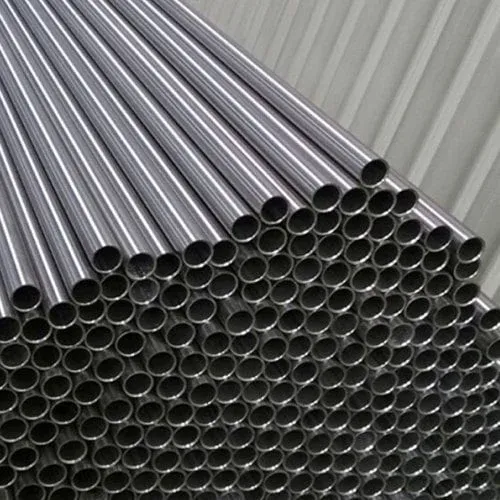
SS 321 tube is a titanium-stabilized austenitic stainless steel tube built for one specific job: staying corrosion-resistant and structurally sound after sustained exposure to 427°C-816°C, the sensitization range where ordinary austenitic tubing quietly loses its intergranular corrosion resistance. Instead of stripping out carbon the way low-carbon "L" grades do, SS 321 retains its carbon and adds titanium, which bonds with carbon ahead of chromium and prevents weld decay without sacrificing high-temperature strength. Manufactured by Siddhgiri Overseas from our Mumbai facility since 1962, SS 321 tube is supplied in seamless and welded construction across ASTM A213 and A249 size ranges, with dimensional, hydrostatic and non-destructive testing carried out on every batch before dispatch — the specification of choice for aircraft exhaust systems, EGR lines, boiler and superheater tubing, and heat exchangers operating continuously within the carbide precipitation zone.
SS 321 is an austenitic stainless steel from the 300 series, distinguished from close relatives such as SS 304 and SS 316 by one deliberate addition: titanium. It is engineered specifically for long-term structural stability in the 427°C-816°C sensitization range, the temperature band in which many stainless tubes spend their working life and in which standard grades are most vulnerable to chromium carbide precipitation and subsequent intergranular corrosion.
Unlike stainless steel pipe, which is sized by nominal bore and schedule, SS 321 tube is specified by its actual outside diameter (OD) and wall thickness, giving the tighter dimensional control that instrumentation lines, heat exchanger bundles and precision exhaust components require. Siddhgiri Overseas manufactures SS 321 tube in seamless (SMLS), electric resistance welded (ERW), electric fusion welded (EFW) and cold drawn welded (CDW) construction, using cold-drawing benches, precision extrusion and automatic roll-forming lines to hold tight OD, wall thickness and inner-surface tolerances suited to sustained high-temperature service.
Where other 300-series grades are selected for weldability, cost or general corrosion resistance, SS 321 is selected almost exclusively for one reason: it stays reliable after prolonged heat exposure in a way plain 304 or 316 tubing cannot. Every order from Siddhgiri Overseas can be supplied with a Mill Test Certificate (MTC) confirming chemical composition and mechanical properties before dispatch.

SS 321's chemistry is built around one stabilizing element added to the standard chromium-nickel austenitic base:
|
Chromium (Cr) |
17.00 - 19.00 |
|
Nickel (Ni) |
9.00 - 12.00 |
|
Carbon (C) |
0.08 max |
|
Titanium (Ti) |
5x(C) min, 0.70 max |
|
Manganese (Mn) |
2.00 max |
The titanium content is set as a minimum of five times the carbon content rather than a fixed figure, because it must scale with however much carbon is actually present in a given heat of steel — enough titanium has to be available to bond with the carbon before chromium can, up to a 0.70% ceiling. Carbon is deliberately retained at up to 0.08%, rather than reduced as in the "L" grades, because that carbon contributes directly to the alloy's high-temperature strength and creep resistance once titanium has neutralized its corrosion risk.
Mechanical properties (minimum):
Governing standards: ASTM A213 (seamless ferritic and austenitic alloy-steel tubes for boilers, superheaters and heat exchangers), ASTM A249 (welded austenitic tubes for the same service), and ASME SA213 / SA249, with dimensions referenced to ASME B36.19M. SS 321 tube is supplied with outside diameters from capillary sizes of 6.00 mm up to large-bore 914.4 mm, and wall thicknesses from 0.3 mm up to 50.0 mm, in schedules including 5S, 10S, 40S, 80S, 160 and XXS. Every production lot is verified through hydrostatic testing, eddy current or ultrasonic testing, radiography and Positive Material Identification (PMI) before dispatch from our Mumbai facility.
When conventional 18-8 austenitic stainless steels such as SS 304 are welded or held for extended periods in the 427°C-816°C range, chromium in the alloy reacts with carbon and precipitates out as chromium carbides at the grain boundaries — a condition known as sensitization or weld decay. The chromium locked into these carbides is no longer available to maintain the passive oxide film that gives stainless steel its corrosion resistance, so the grain-boundary regions become locally depleted in chromium and vulnerable to intergranular corrosion.
SS 321 prevents this by stabilization rather than carbon reduction. Titanium has a stronger chemical affinity for carbon than chromium does, so as the tube sits in or passes through the critical temperature range, titanium bonds preferentially with the available carbon instead of chromium. Chromium stays in solid solution, free to maintain the tough, self-healing passive film, and intergranular corrosion is suppressed without stripping carbon out of the steel. Because of this, SS 321 tube does not require solution annealing after welding to remain safe from weld decay, and it retains a base strength and creep resistance under sustained heat that a low-carbon "L" grade cannot match.
SS 321 tube is rated for continuous and cyclic service up to 816°C (1500°F), with short-term oxidation resistance extending to around 900°C. Grain refinement is closely controlled during solution annealing and thermal processing at our facility, producing tubing that resists intergranular corrosion without structural change even under repeated thermal cycling and challenging pressure conditions.
With its high sustained-temperature capability and stable mechanical properties, SS 321 tube is specified across industries where components spend their operating life inside the carbide precipitation zone rather than passing through it briefly:
Siddhgiri Overseas supplies SS 321 tube in seamless (SMLS), ERW, EFW and CDW construction, and stocks standard round utility tubing, square and rectangular tubing for high-heat equipment frames, and heavy-wall boiler tubing for steam headers and radiant coils — all tested and inspected before leaving our Mumbai facility.
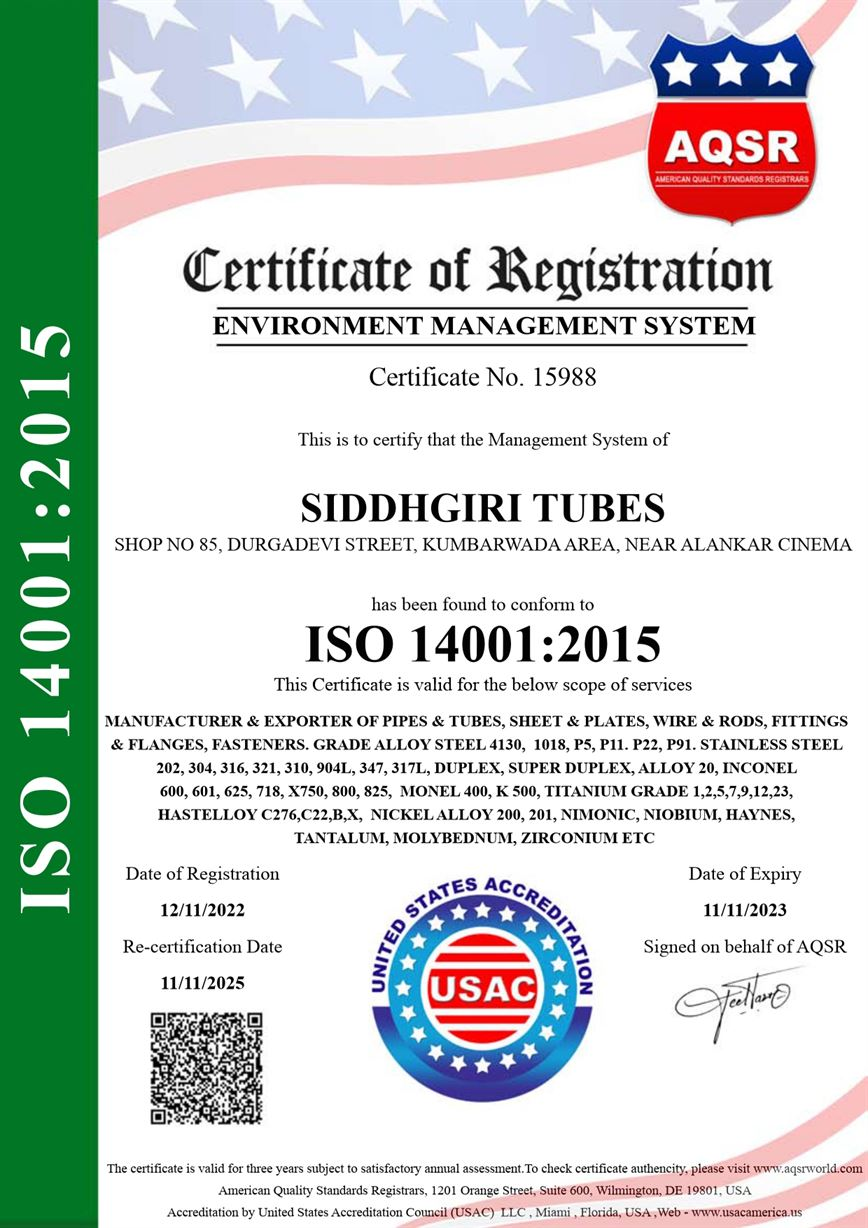
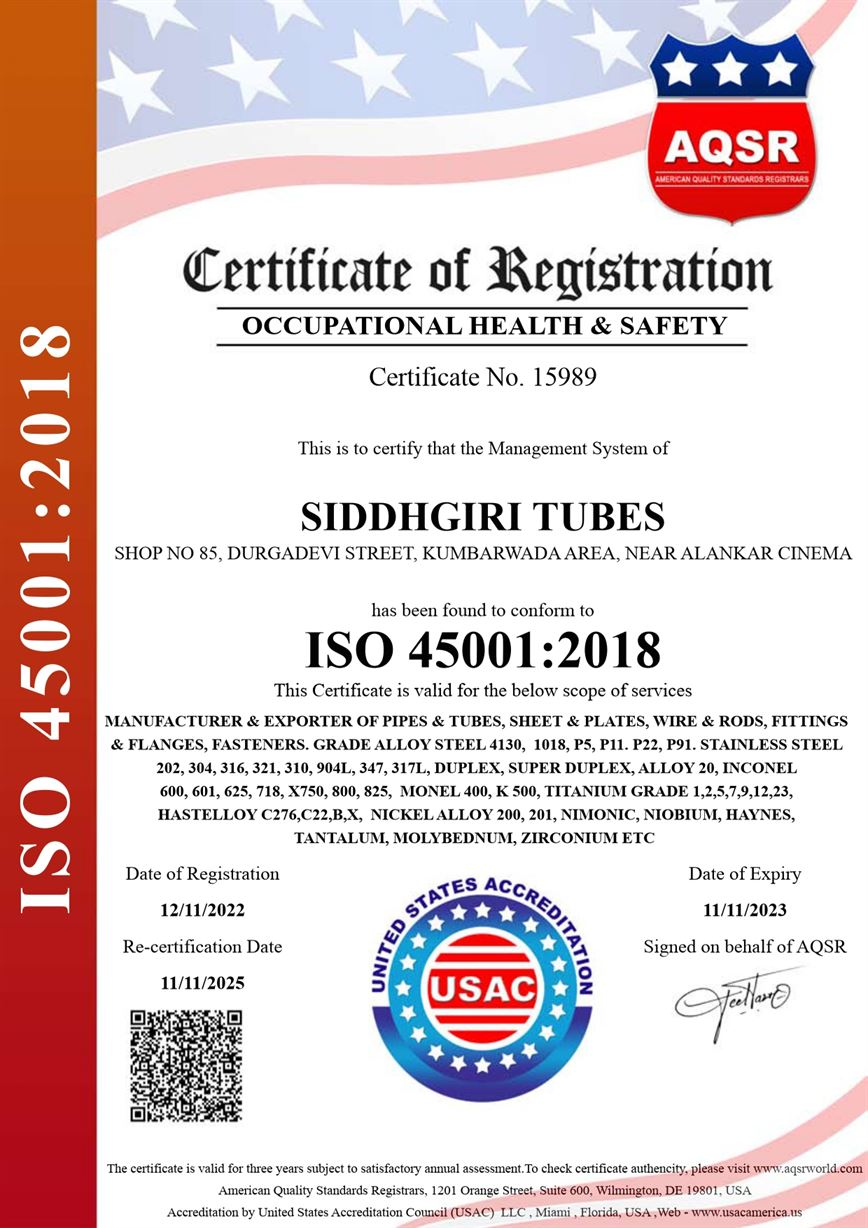
Siddhgiri Overseas is ISO certified for quality, occupational health & safety and environment management, and holds the import and export certification required to supply stainless steel pipe and tube to customers worldwide. Certificate copies are available on request for buyers who need them for their own compliance records.
SS 321 contains an added titanium stabilizer, set at a minimum of five times its carbon content, which bonds with carbon ahead of chromium during welding or sustained heat exposure. This prevents chromium carbide precipitation and the intergranular corrosion that can affect SS 304 or SS 316 tubing after prolonged service in the 427°C-816°C range, while retaining higher carbon for better high-temperature strength than a low-carbon grade.
No. Because titanium stabilization prevents chromium carbide precipitation at the grain boundaries during welding, SS 321 tube remains safe from weld decay without a post-weld solution anneal, which is one of the main reasons it is specified for fabricated exhaust and high-temperature piping assemblies.
SS 321 tube is rated for continuous and cyclic service up to 816°C (1500°F), with short-term oxidation resistance extending to around 900°C. It is specifically engineered for long-term stability across the 427°C-816°C sensitization range where standard austenitic grades are most vulnerable to intergranular corrosion.
SS 321 tube is specified by its actual outside diameter (OD) and wall thickness, per standards such as ASTM A213 and ASTM A249, rather than by nominal bore and schedule as with pipe under ASTM A312. This gives the tighter dimensional control needed for heat exchangers, instrumentation lines and precision exhaust components.
We manufacture SS 321 tube in seamless (SMLS), electric resistance welded (ERW), electric fusion welded (EFW) and cold drawn welded (CDW) construction, selected according to the application's pressure rating, dimensional requirements and budget — seamless for critical high-pressure and aerospace use, ERW for cost-effective high-temperature exhaust and EGR lines.
Not easily. Titanium carbide particles within the microstructure resist fine polishing, so SS 321 is treated as an industrial, high-temperature utility grade rather than a decorative one. We supply it in No. 1 pickled, 2B matte, bright annealed and mechanically polished finishes suited to functional rather than aesthetic use.
Every batch undergoes hydrostatic testing, eddy current or ultrasonic testing, radiography, Positive Material Identification (PMI) and dimensional inspection at our Mumbai facility, with a Mill Test Certificate (MTC) issued in line with EN 10204 Type 3.1 confirming chemical composition and mechanical properties.
SS 321 contains no molybdenum, so it does not resist pitting and crevice corrosion from chlorides as well as SS 316 or 316L tubing does. It should be selected for its high-temperature stability rather than as a substitute for a marine-grade tube in chloride-heavy service.