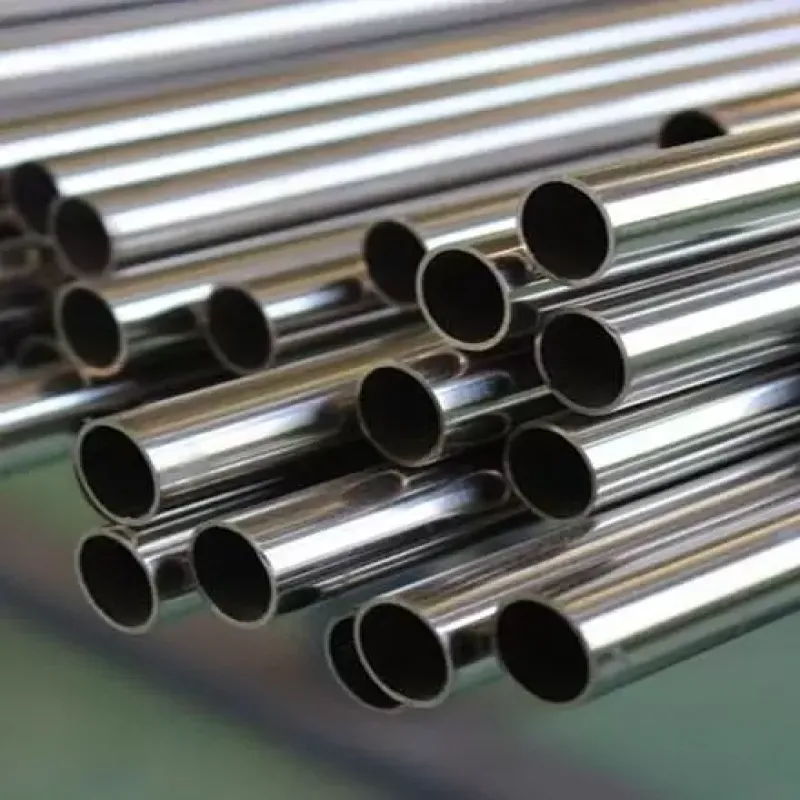
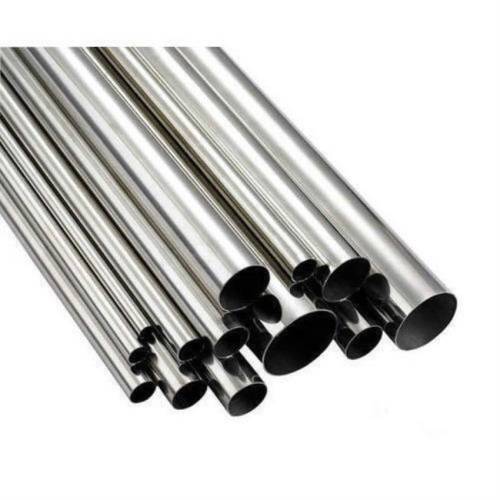
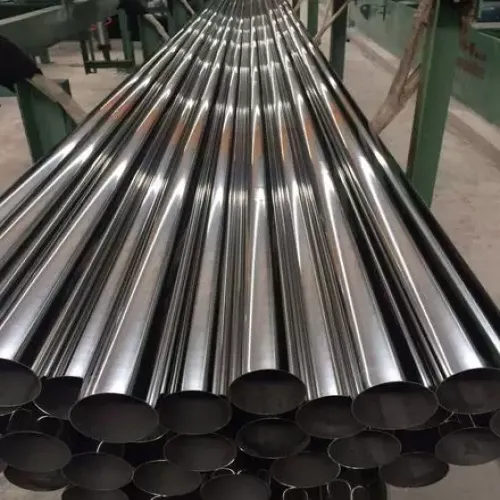
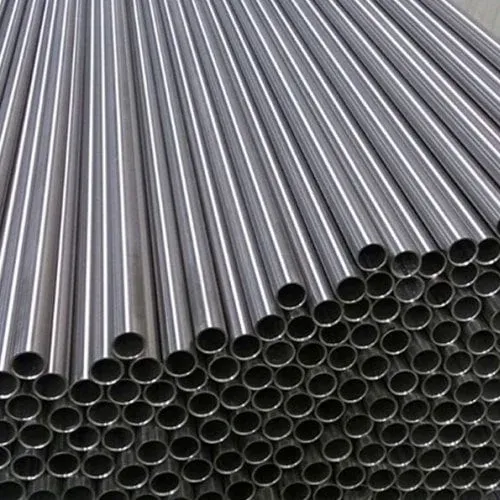
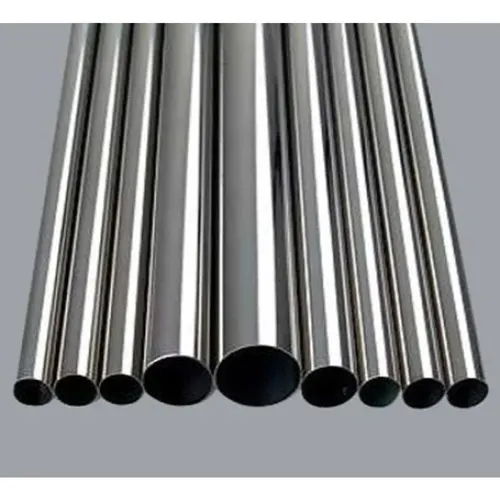
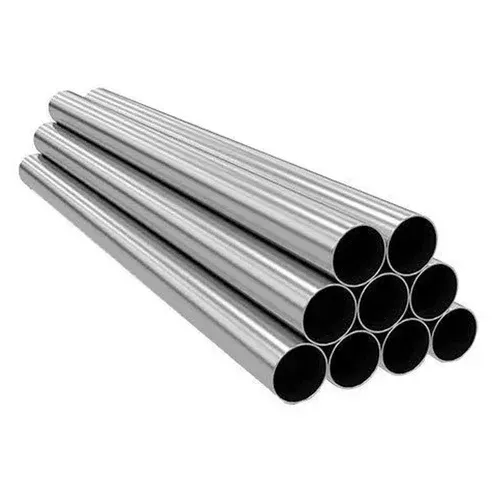
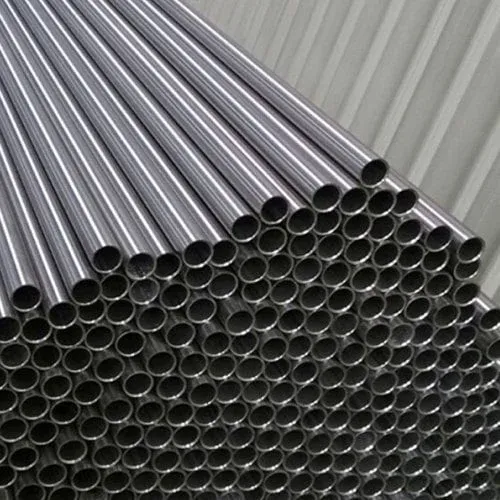
SS 321 pipe is a titanium-stabilized austenitic stainless steel built for one specific job: staying structurally sound after long exposure to 427°C-816°C (800°F-1500°F), the temperature band where ordinary stainless steels quietly fail from within. Rather than removing carbon the way low-carbon "L" grades do, SS 321 keeps its carbon and adds titanium, which binds to carbon ahead of chromium and protects the alloy's corrosion resistance while preserving higher strength and creep resistance at sustained heat. Manufactured by Siddhgiri Overseas in Mumbai since 1962, SS 321 pipe is supplied across small, medium, and heavy size ranges with dimensional checks before dispatch, and is the grade of choice for aerospace exhaust systems, refinery process lines, power generation boiler and steam piping, heavy-duty automotive exhaust, and high-temperature chemical processing equipment where the carbide precipitation range is a working condition, not an occasional excursion.
SS 321 is an austenitic stainless steel from the 300 series, distinguished from its close relatives by one deliberate addition: titanium. It is engineered specifically for long-term structural stability in the 427°C-816°C (800°F-1500°F) range, the temperature band where many stainless steel components spend their working life and where standard grades are most vulnerable to internal degradation.
Where other grades in this family are chosen for weldability, cost, or general corrosion resistance, SS 321 is chosen almost exclusively for one reason: it stays reliable after prolonged heat exposure in ways that plain 304 or 316 cannot. That makes it a specialist grade rather than a general-purpose one — it shows up in aircraft exhaust systems, refinery process lines, boiler and superheater piping, and turbocharger housings, and rarely anywhere heat is not the primary design constraint.
Siddhgiri Overseas manufactures SS 321 pipe across small, medium, and heavy size ranges, with dimensional checks carried out before dispatch and Mill Test Certificates (MTC) available for material verification.

When standard austenitic stainless steel is held for extended periods in the 427°C-816°C (800°F-1500°F) range — which happens routinely during welding, or in service in boilers, exhaust systems, and process piping — chromium in the alloy reacts with carbon and precipitates out as chromium carbides at the grain boundaries. This is commonly called sensitization or weld decay. The problem is that the chromium tied up in these carbides is no longer available to maintain the passive oxide layer that gives stainless steel its corrosion resistance, so the grain boundary areas become locally depleted in chromium and vulnerable to intergranular corrosion.
There are two engineering solutions to this. The low-carbon "L" grades solve it by removing carbon from the alloy so there is little left to form carbides in the first place — effective, but it also lowers high-temperature strength and creep resistance, since carbon contributes to both.
SS 321 solves the same problem a different way, by stabilization rather than carbon reduction. Titanium has a much stronger chemical affinity for carbon than chromium does, so as the alloy sits in the critical temperature range, titanium preferentially bonds with the available carbon instead of chromium. The chromium stays in solid solution, free to maintain the passive protective layer, and intergranular corrosion is prevented without stripping carbon out of the steel.
The practical result is that SS 321 retains a base strength and creep resistance at sustained high temperature that an "L" grade cannot match, because it never removed the carbon that contributes to that strength — it simply neutralized the carbon's downside. This is the entire reason SS 321 exists as a distinct grade, and it is why it is specified for components that spend their service life inside the carbide precipitation range rather than passing through it briefly.
SS 321's chemistry is built around one stabilizing element in addition to the standard chromium-nickel austenitic base:
|
Chromium (Cr) |
17.00 - 19.00 |
|
Nickel (Ni) |
9.00 - 12.00 |
|
Carbon (C) |
0.08 max |
|
Titanium (Ti) |
5x(C+N) min, 0.70 max |
|
Manganese (Mn) |
2.00 max |
The titanium content is set as a function of carbon and nitrogen content rather than a fixed number, because it needs to scale with how much carbon there actually is to stabilize in a given heat of steel — the "5x(C+N) minimum" rule ensures enough titanium is present to bind the carbon before chromium can, up to a 0.70% ceiling. Carbon is deliberately retained at up to 0.08%, rather than reduced as in the "L" grades, because that carbon is what gives the alloy its high-temperature strength once titanium has neutralized its corrosion risk.
Mechanical properties (minimum):
Standard cross-reference:
|
1.4541 |
X6CrNiTi18-10 |
TP321 |
Every SS 321 pipe order from Siddhgiri Overseas can be supplied with a Mill Test Certificate (MTC) confirming chemical composition and mechanical properties against these references.
Siddhgiri Overseas supplies SS 321 pipe across three broad size bands, each aligned to the equipment it typically feeds into:
Small profiles — 1/8" to 1" NB (15.88-33.7mm OD), Schedule 5S/10S. Used in aircraft exhaust lines, high-temperature instrumentation, laboratory furnace feeds, and automotive wastegate dumps, where thin-wall precision matters as much as heat resistance.
Medium profiles — 1.25" to 4" NB (42.4-114.3mm OD), Schedule 40S. The working range for truck manifolds, turbocharger downpipes, and boiler steam feeds — components that see both thermal cycling and mechanical load.
Heavy profiles — 6" to 48" NB (168.3-1219mm OD), Schedule 80S-160. Specified for steam conduits, catalytic cracking mains, thermal oxidizer components, and power-generation manifolds, where wall thickness and long-term structural integrity under sustained heat are the primary design drivers.
Where SS 321 pipe is used:
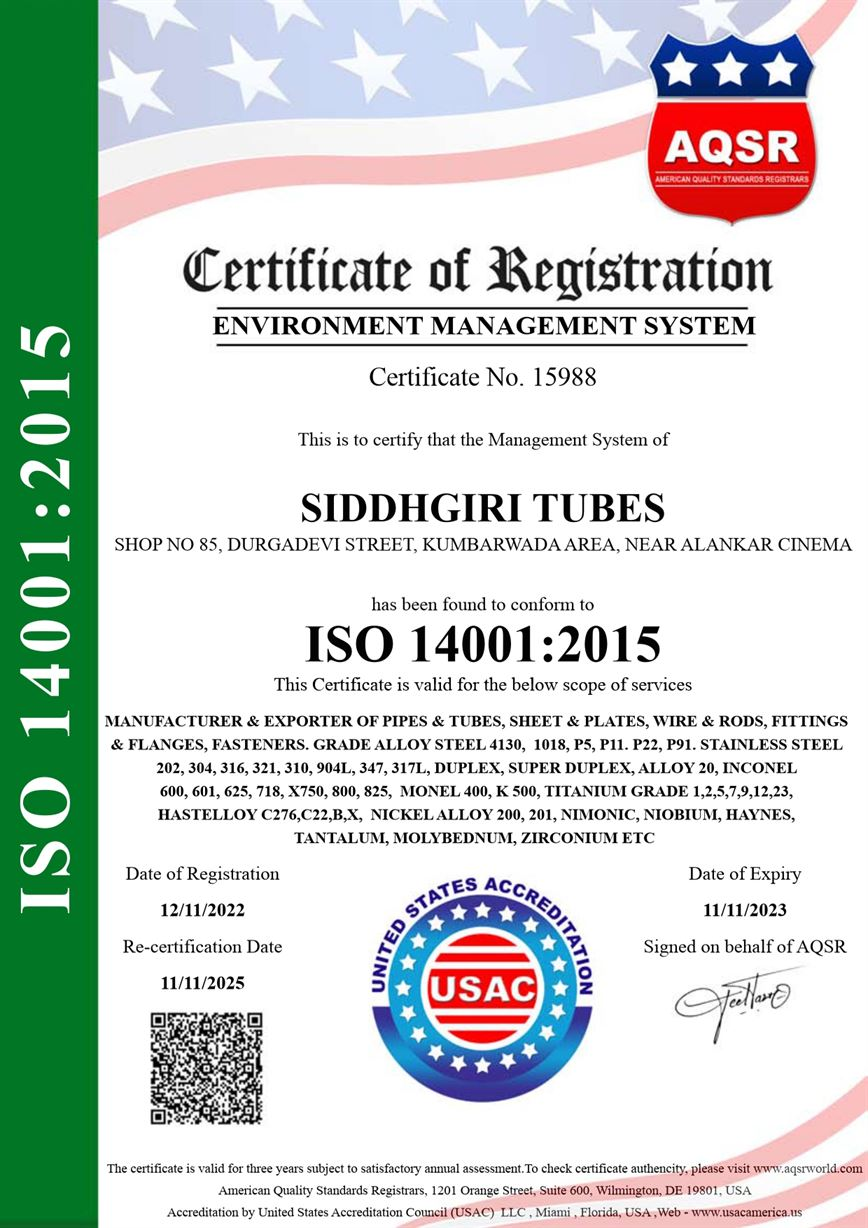
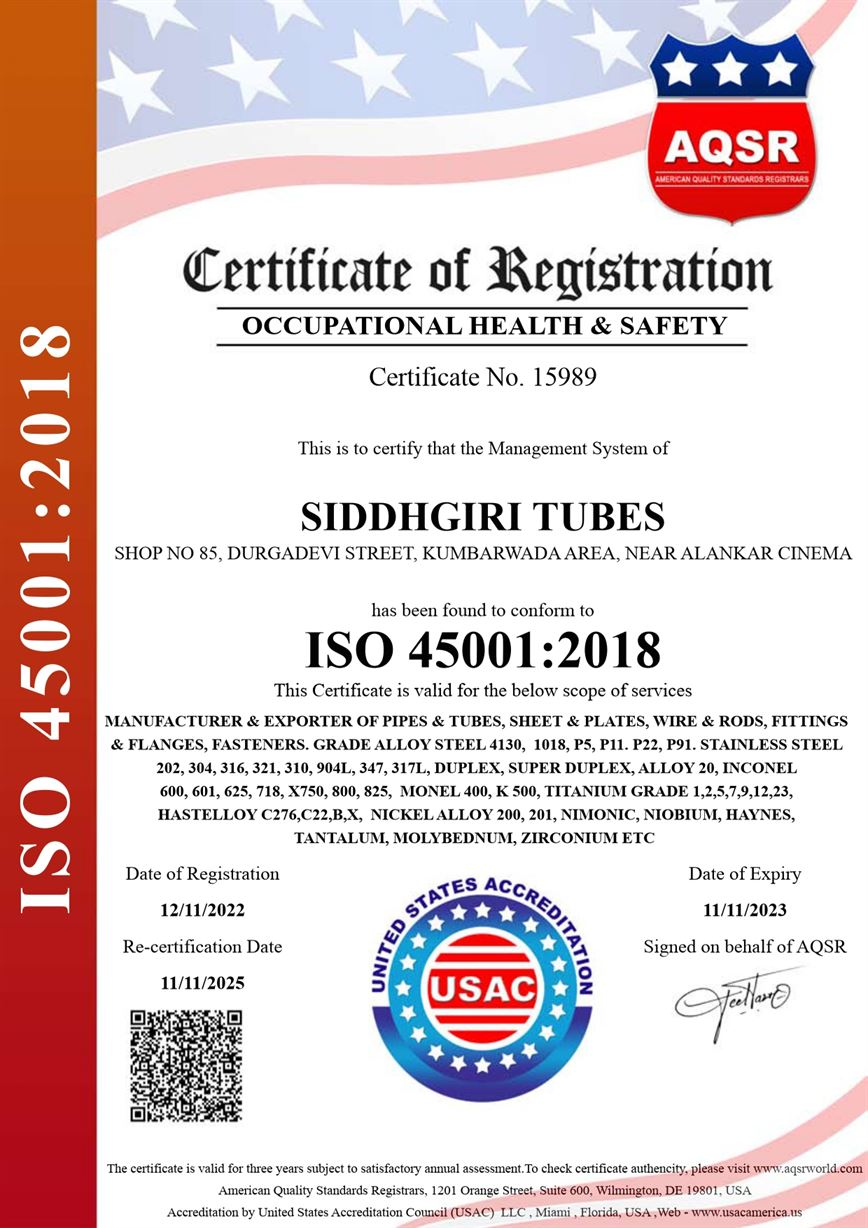
Siddhgiri Overseas is ISO certified for quality, occupational health & safety and environment management, and holds the import and export certification required to supply stainless steel pipe and tube to customers worldwide. Certificate copies are available on request for buyers who need them for their own compliance records.
For sustained service in the 427°C-816°C range, yes — 321 is stabilized specifically for that condition, using titanium to prevent chromium carbide precipitation while retaining higher carbon for better high-temperature strength and creep resistance. 316L solves the same weld decay problem by removing carbon instead, which protects against corrosion but gives up some of that high-temperature strength.
SS 321 contains no molybdenum, so it does not resist pitting and crevice corrosion from chlorides as well as 316 or 316L, which do contain molybdenum. It should be selected for its high-temperature performance rather than as a substitute for a marine-grade pipe.
Both are stabilized grades engineered to resist carbide precipitation at high temperature, but 321 uses titanium as its stabilizing element while 347H uses niobium (columbium) with a higher carbon minimum for elevated-temperature strength. Grade selection between the two typically comes down to the specific standard or specification the project calls for.
SS 321 is engineered for long-term structural stability across 427°C-816°C (800°F-1500°F), the range in which standard stainless steels are most prone to sensitization and intergranular corrosion. Its titanium stabilization is what allows it to hold up through repeated or sustained exposure in this band.
Not easily. Hard titanium carbide particles in the microstructure resist fine polishing, which makes SS 321 an industrial and high-utility grade rather than a decorative one — it is chosen for performance in heat-critical service, not for cosmetic finish.
Aircraft piston engine manifolds, turbocharger housings, and exhaust stacks undergo repeated thermal cycling directly through the carbide precipitation range, and SS 321's titanium stabilization keeps the alloy corrosion-resistant and structurally stable through that cycling without the strength trade-off of a low-carbon grade.
Siddhgiri Overseas supplies SS 321 pipe from 1/8" NB (15.88mm OD, Schedule 5S/10S) up to 48" NB (1219mm OD, Schedule 80S-160), covering small-diameter instrumentation and exhaust lines through to heavy steam conduits and power-generation manifolds, with dimensional checks before dispatch.