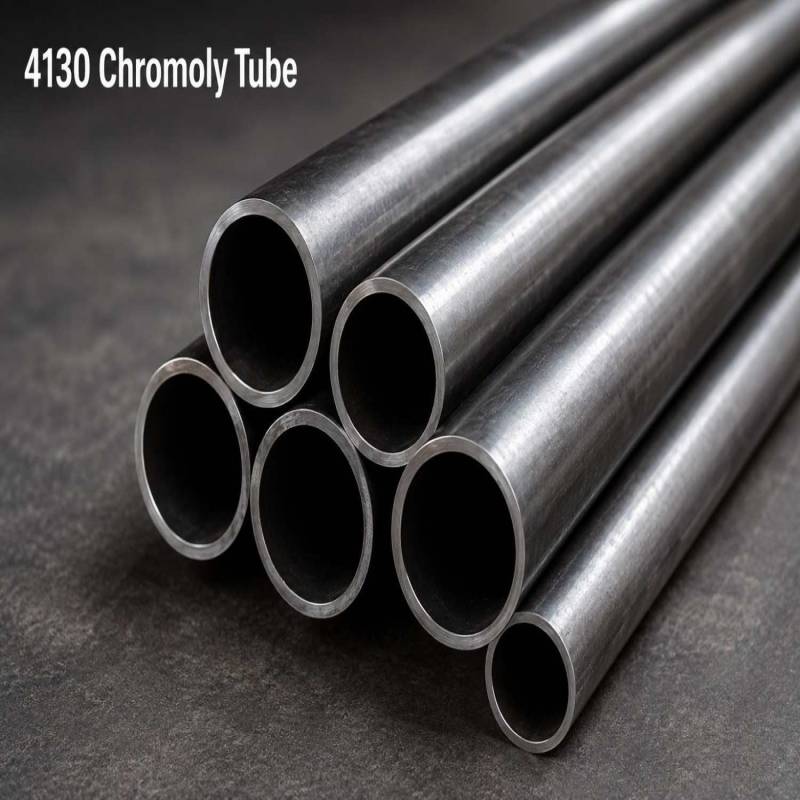
Siddhgiri Overseas manufactures 4130 chromoly tube from our Mumbai facility as a seamless, cold-drawn chromium-molybdenum alloy steel tube — not a stainless steel product, but a low-alloy structural steel prized for its exceptional strength-to-weight ratio. Produced from AISI/SAE 4130 billet with roughly 0.28–0.33% carbon, 0.80–1.10% chromium and 0.15–0.25% molybdenum, this alloy delivers tensile strength well above mild steel while retaining excellent weldability and fatigue resistance, allowing engineers to specify thinner walls without sacrificing load-carrying capacity. Manufactured to ASTM A519 and related ASME, DIN and EN specifications, our 4130 tube is supplied in seamless and cold-drawn construction, in normalized condition, across a range of outside diameters and wall thicknesses with black, bright, pickled or polished finishes. It is the material of choice for aircraft structures, motorsport roll cages and chassis, and high-performance bicycle frames. Established in 1962, Siddhgiri Overseas backs every batch with chemical, mechanical and dimensional testing before dispatch.
4130 chromoly tube is a low-alloy steel tube made from AISI/SAE 4130 grade steel — an alloy of chromium and molybdenum with a controlled carbon content of roughly 0.28% to 0.33%. The "41xx" designation identifies it within the SAE chromium-molybdenum alloy steel series, and "chromoly" is simply the common trade name for the same material. It is not a stainless steel: 4130 carries only 0.80–1.10% chromium, well below the level needed for stainless corrosion resistance, and its value lies instead in its mechanical performance rather than corrosion resistance.
Siddhgiri Overseas produces 4130 tube by piercing and hot rolling a heated alloy steel billet into a seamless hollow shell, then cold drawing it through precision dies to final outside diameter and wall thickness. Because there is no longitudinal weld seam, the tube carries uniform mechanical strength around its full circumference and along its length — a structural advantage in components subjected to repeated impact, vibration and dynamic loading.
The chromium and molybdenum content work together to raise hardenability, tensile strength and toughness well beyond plain carbon steel, while the moderate carbon level keeps the alloy readily weldable and machinable. This combination — high strength, low weight, and the ability to be TIG or MIG welded without special difficulty — is why 4130 tube is the standard material for lightweight structural components where both strength and fabricability matter.
The performance of 4130 chromoly tube comes from a tightly controlled chemical composition. Chromium content of 0.80–1.10% improves hardenability, wear resistance and strength; molybdenum at 0.15–0.25% adds further toughness, elevated-temperature strength and resistance to fatigue; and carbon held around 0.28–0.33% balances strength against ductility, machinability and weldability. This is a leaner alloy than fully stainless grades, which is precisely what gives it a favorable strength-to-weight ratio for structural use.
In the normalized condition — the standard delivery condition for most industrial 4130 tube — typical mechanical properties are:
These figures allow designers to reduce wall thickness significantly compared with mild steel while retaining equivalent or superior load-carrying capacity — a key reason 4130 is specified wherever weight reduction is as important as strength. Heat treatment (normalizing, annealing, tempering or stress relieving) is used to refine grain structure, relieve residual stresses from cold working, and tune the final balance of hardness, toughness and ductility to the application. 4130 tube also responds well to further heat treatment after fabrication, including quenching and tempering, where higher strength levels are required.
Siddhgiri Overseas verifies chemical composition and mechanical properties on every batch through tensile testing, hardness testing, and chemical analysis, in line with ASTM A519 and applicable ASME, DIN and EN specifications.
4130 chromoly tube is specified wherever engineers need a structural component that is strong, lightweight, weldable and able to withstand repeated dynamic loading. Typical applications include:
Because wall thickness can be matched to load requirements — from thin-wall tube around 0.89 mm for lightweight frames up to heavy-wall tube of 2.41 mm and above for roll cages and structural applications — Siddhgiri Overseas supplies 4130 chromoly tube across the outside diameters and wall thicknesses these industries require, with the surface finish and length specified by the project.
Producing 4130 chromoly tube to consistent mechanical and dimensional standards requires careful control at every processing stage.
Raw material selection: Production begins with chromium-molybdenum alloy steel billet selected for chemical consistency and metallurgical quality, so the finished tube reliably meets its specified composition.
Seamless tube formation: The billet is heated, then pierced and hot rolled into a seamless hollow shell. Because there is no longitudinal weld, the tube has uniform structural integrity and consistent mechanical properties around its full circumference.
Cold drawing: The seamless tube is drawn through precision dies to achieve tighter dimensional tolerances, improved concentricity, controlled wall thickness and a refined surface finish. Cold drawing also allows thin-wall tube to be produced to close tolerances.
Heat treatment: Controlled heat treatment — normalizing, annealing, tempering or stress relieving — refines the grain structure, relieves residual stresses introduced during forming, and develops the toughness, ductility and fatigue resistance the application calls for. Normalized condition is the standard delivery condition, offering a balanced combination of strength, ductility and weldability suited to both fabrication and further machining.
Finishing and inspection: Tubes are straightened, cleaned and finished — black, bright, pickled or polished, as specified — then subjected to dimensional inspection, tensile and hardness testing, ultrasonic testing and chemical analysis before dispatch, confirming each batch meets ASTM A519 and other applicable manufacturing standards.

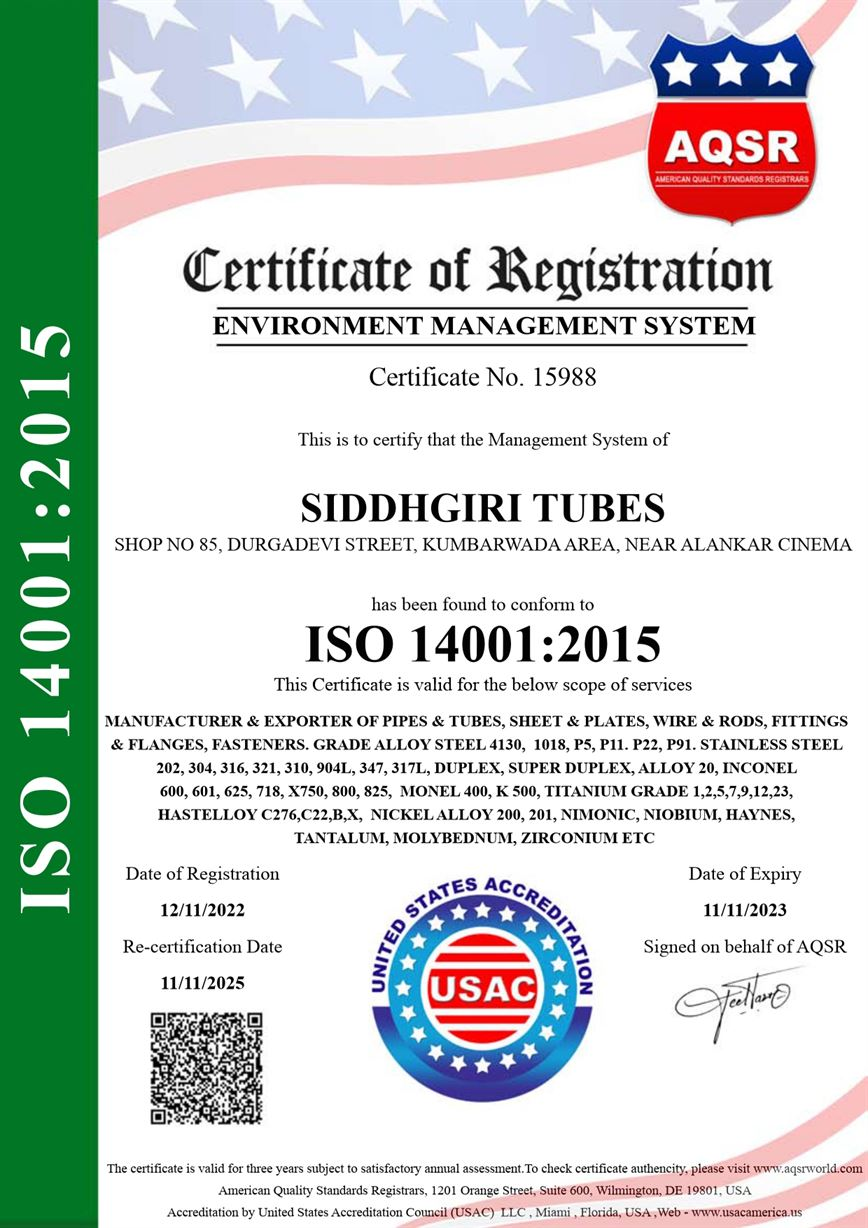
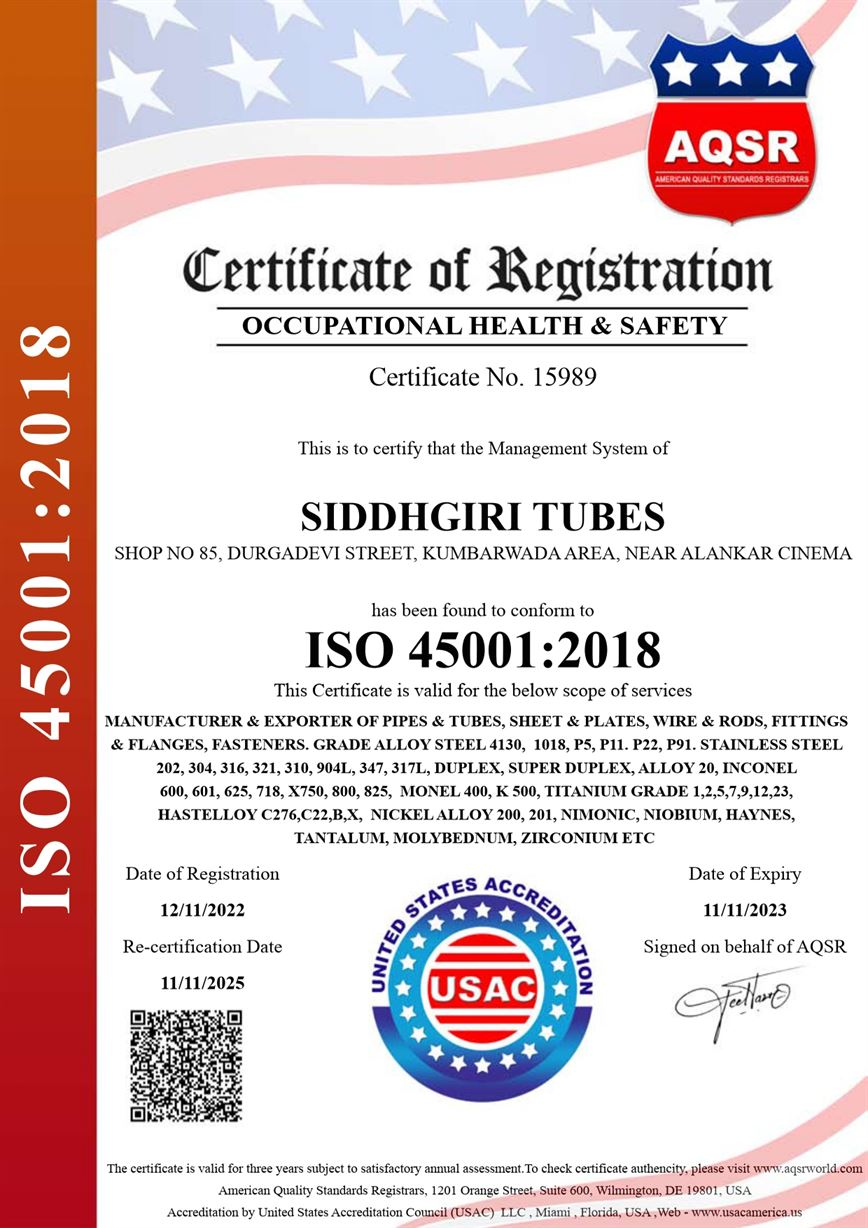
Siddhgiri Overseas is ISO certified for quality, occupational health & safety and environment management, and holds the import and export certification required to supply stainless steel pipe and tube to customers worldwide. Certificate copies are available on request for buyers who need them for their own compliance records.
No. 4130 is a chromium-molybdenum low-alloy steel, not a stainless steel. It contains only 0.80–1.10% chromium — far below the roughly 10.5% minimum required for stainless corrosion resistance — so it is selected for its strength-to-weight ratio, toughness and weldability rather than for corrosion resistance.
4130 steel typically contains approximately 0.28–0.33% carbon, 0.80–1.10% chromium and 0.15–0.25% molybdenum, along with controlled amounts of manganese and silicon. This balance of alloying elements gives the material high strength and fatigue resistance while keeping it readily weldable and machinable.
In the normalized condition, 4130 tube typically shows an ultimate tensile strength of approximately 560–700 MPa, yield strength of approximately 460–550 MPa, elongation at break of approximately 20%, and hardness of approximately 90–95 HRB. Actual values depend on wall thickness, exact heat treatment and testing conditions.
Our 4130 chromoly tube is manufactured to ASTM A519, the standard specification for seamless carbon and alloy steel mechanical tubing, along with other applicable ASME, DIN and EN specifications as required by the project.
Yes. 4130's moderate carbon content gives it excellent weldability compared with many high-strength alloy steels, and it is routinely joined using TIG or MIG welding. Preheating and post-weld heat treatment are often used on thicker sections or highly stressed joints to control the heat-affected zone and preserve mechanical properties.
Siddhgiri Overseas supplies 4130 tube from thin-wall sections around 0.89 mm — used in bicycle frames and lightweight aircraft structures — through medium-wall tube around 1.47–2.11 mm for suspension and steering components, up to heavy-wall tube of 2.41 mm and above for roll cages and heavy structural applications, along with custom thicknesses to project specification.
4130's high strength-to-weight ratio lets engineers use thinner walls than mild steel while carrying the same or greater load, reducing overall structure weight without compromising strength. Combined with its fatigue resistance under repeated impact and vibration, and its excellent weldability for fabricating complex frames, it is the standard material for aircraft fuselage structures, engine mounts, and motorsport chassis and roll cages.
Every batch is checked through tensile testing, hardness testing, ultrasonic testing, chemical composition analysis, dimensional inspection and surface finish inspection, confirming the tube meets ASTM A519 and other applicable standards before it leaves our Mumbai facility.