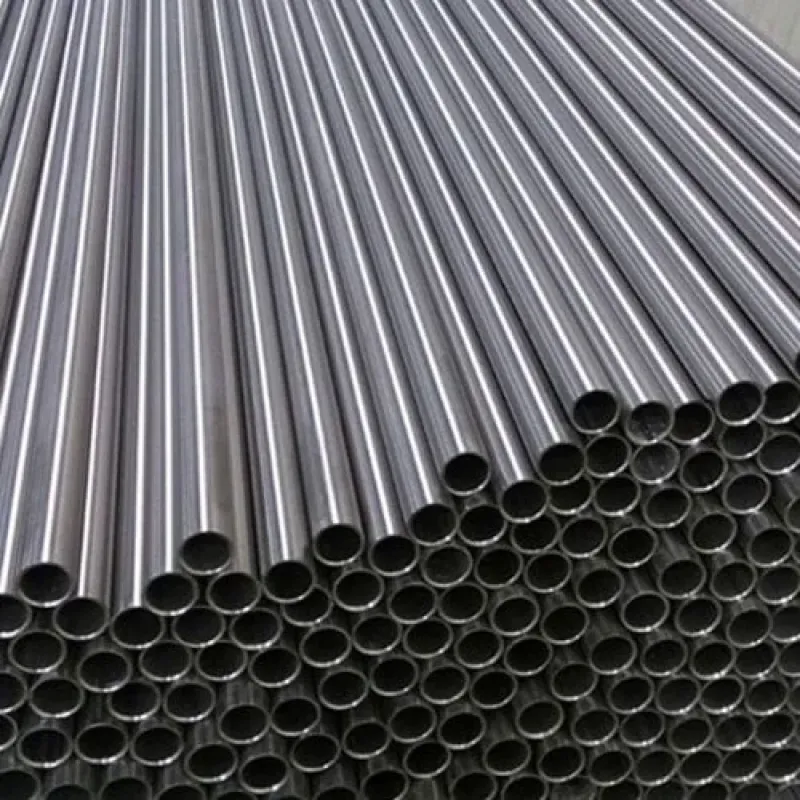
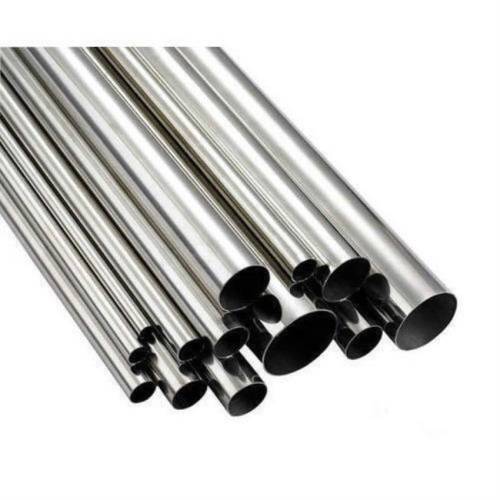
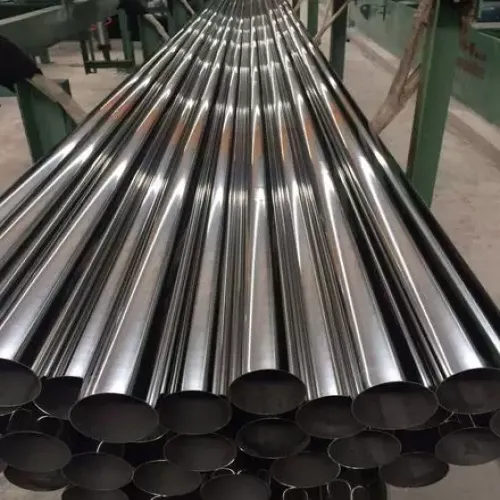
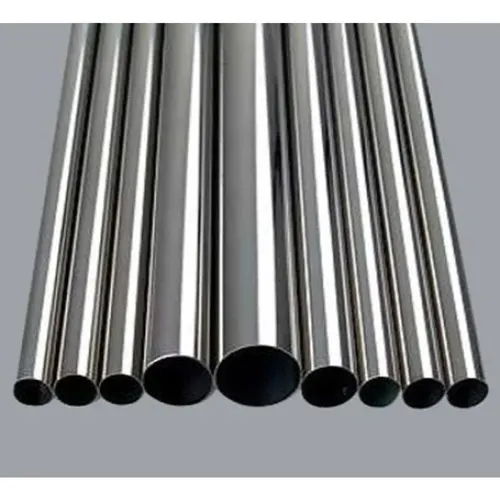
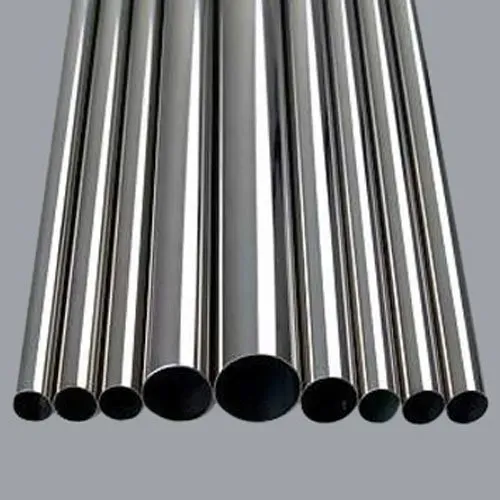
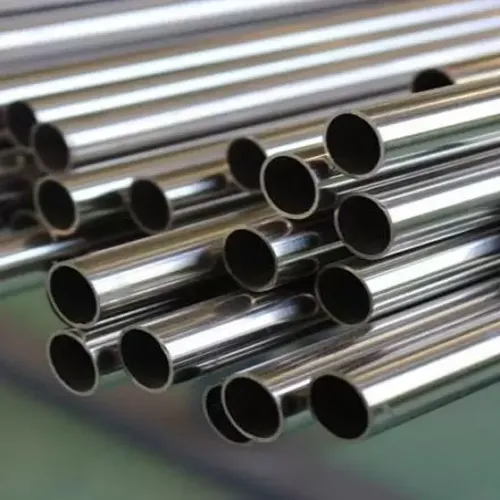
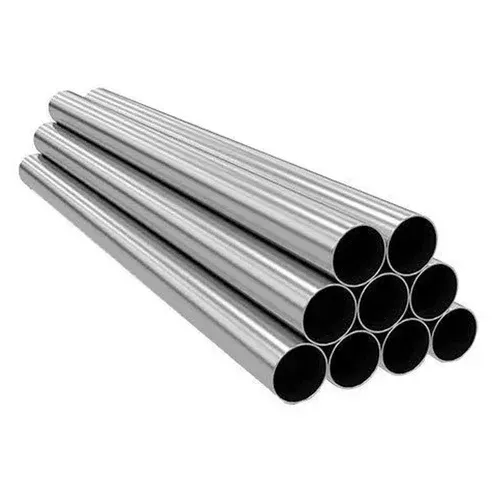
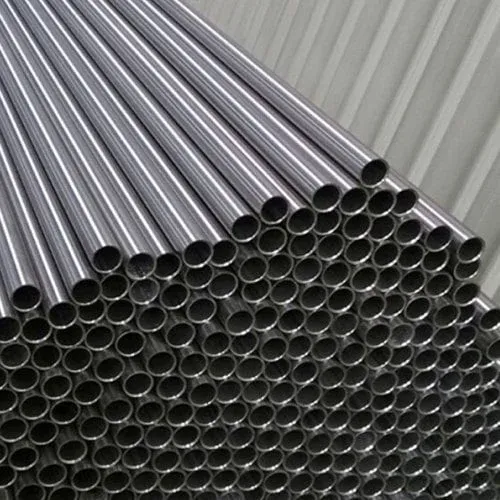
SS 304L pipe is the low-carbon version of SS 304, with carbon capped at 0.03% against 0.08% for standard 304. That single difference solves a real field problem: when standard 304 is welded, carbon in the heat-affected zone reacts with chromium to form chromium carbides, depleting chromium at the grain boundaries and leaving the weld area vulnerable to intergranular corrosion, known as weld decay. 304L's low carbon content prevents this carbide formation, so heavily welded fabrication can go into service without post-weld solution annealing. It also retains excellent toughness at cryogenic temperatures. Siddhgiri Overseas, manufacturing stainless steel pipe from Mumbai since 1962, supplies SS 304L pipe in seamless and welded construction across sanitary, medium, and heavy-wall sizes, with dimensional checks carried out before dispatch.
SS 304L is the low-carbon variant of SS 304 austenitic stainless steel, with carbon content capped at 0.03% maximum compared to 0.08% maximum for standard 304. The "L" designation stands for low carbon, and it is this one compositional change that defines the grade and everything it is used for.
Standard 304 is a general-purpose stainless, but its carbon content becomes a liability wherever heavy welding is involved. SS 304L exists specifically to remove that liability, making it the grade of choice for fabricators who need to weld extensively without a follow-up heat treatment step to protect corrosion resistance at the weld.
Siddhgiri Overseas supplies SS 304L pipe in both seamless and welded construction, manufactured in Mumbai since 1962, with dimensional verification carried out before every dispatch.
When standard SS 304 pipe is welded, the metal near the weld spends time in the 425°C–860°C range as it heats and cools. In that temperature band, carbon in the steel combines with chromium and precipitates out as chromium carbides at the grain boundaries. This pulls chromium away from the surrounding matrix, and the chromium-depleted zone right next to the weld — the heat-affected zone — loses the protective quality that makes stainless steel corrosion-resistant. The result is a condition known as weld decay: the heat-affected zone becomes locally vulnerable to intergranular corrosion, even though the rest of the pipe is unaffected.
SS 304L avoids this by starving the reaction of raw material. With carbon capped at 0.03%, there simply isn't enough carbon present for significant chromium carbide precipitation to occur during welding, so the heat-affected zone keeps its corrosion resistance intact.
The practical payoff is on the fabrication floor: 304L pipe can be welded heavily — multiple passes, heavy-gauge joints, extensive field fabrication — without needing post-weld heat treatment (solution annealing) to restore corrosion resistance afterward. For any project involving substantial site welding, that removes a real labor and schedule cost, which is exactly why 304L is specified over standard 304 wherever field welding is significant.
SS 304L cross-references to DIN/EN 1.4306 (X2CrNi19-11) and ASTM A312 grade TP304L for pipe. The defining chemistry difference from standard 304 is the carbon ceiling: 0.03% maximum for 304L versus 0.08% maximum for 304.
That lower carbon content comes with a mechanical trade-off. SS 304L has a minimum yield strength of 170 MPa and minimum tensile strength of 485 MPa, both lower than standard 304's 205 MPa yield and 515 MPa tensile minimums. Where a project needs the higher strength of 304 alongside the low-carbon weldability of 304L, dual-certified 304/304L material — meeting both spec limits simultaneously — is the appropriate choice, and is commonly used for exactly this reason.
Like standard 304, SS 304L is not molybdenum-alloyed, so its corrosion resistance has the same limitation: it is vulnerable to pitting and stress-corrosion cracking in warm saltwater, marine air, or heavy chloride exposure. For those environments, SS 316L — which adds molybdenum — is the correct grade, not 304L.
All SS 304L pipe supplied by Siddhgiri Overseas is dimensionally checked before dispatch, with Mill Test Certificates (MTC) available.
Siddhgiri Overseas manufactures SS 304L pipe across three size ranges to match how it's actually deployed:
Small profiles: 1/8"–1" NB (15.88–33.7mm OD), Schedule 5S/10S — used for sanitary tubing, chemical dosing lines, and instrument plumbing.
Medium profiles: 1.25"–4" NB (42.4–114.3mm OD), Schedule 40S — used for water treatment piping, brewery washdown headers, and structural frames.
Heavy profiles: 6"–48" NB (168.3–1219mm OD), Schedule 80S–160 — used for structural columns, wastewater mainlines, and chemical handling networks, where heavy-gauge field welding is common and 304L's no-PWHT advantage matters most.
Beyond sizing, SS 304L pipe is specified for chemical and petrochemical processing involving mildly corrosive chemicals and organic solvents where extensive field welding is required, water treatment and desalination handling non-saline water, brewery, dairy, and other sanitary lines that go through repeated high-heat cleaning cycles, and cryogenic piping where the grade's low-temperature toughness is essential. Pipe is supplied in both seamless and welded construction depending on application requirements.

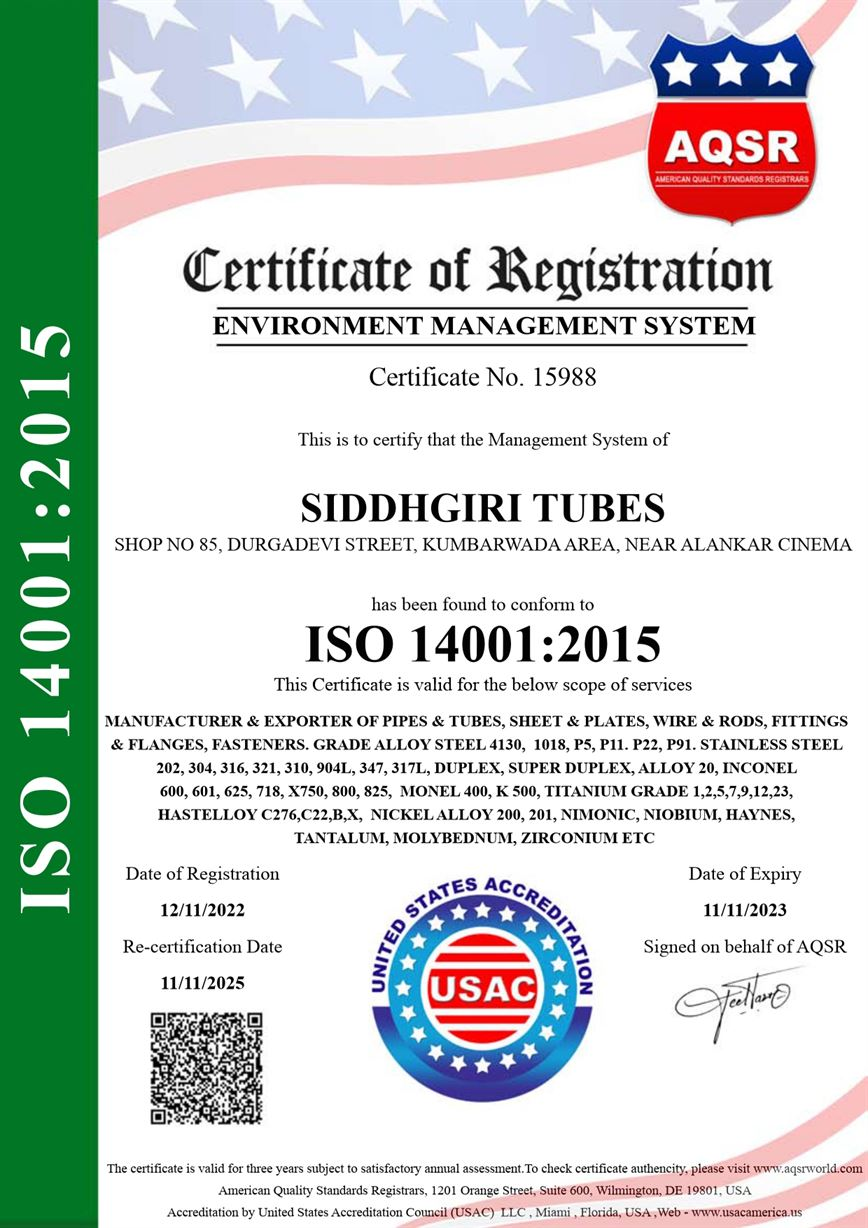
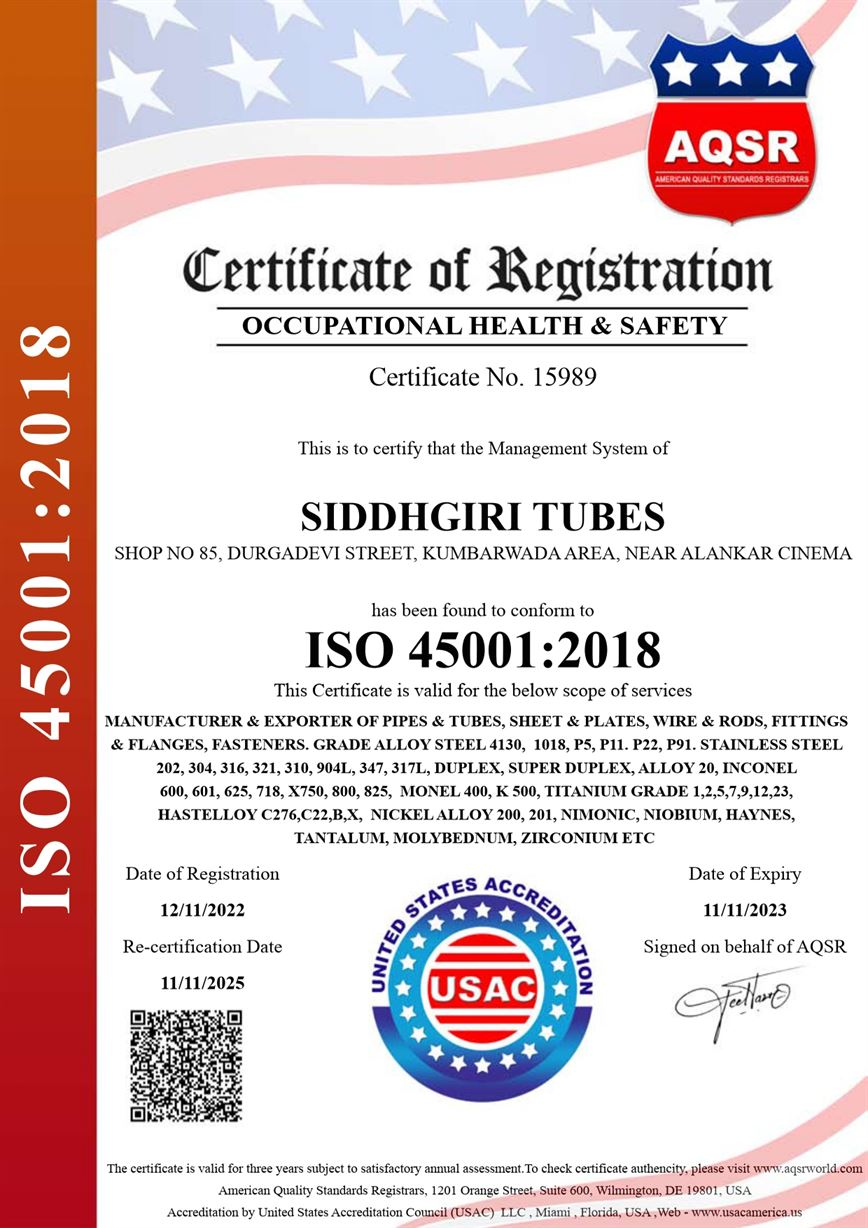
Siddhgiri Overseas is ISO certified for quality, occupational health & safety and environment management, and holds the import and export certification required to supply stainless steel pipe and tube to customers worldwide. Certificate copies are available on request for buyers who need them for their own compliance records.
The only compositional difference is carbon content: standard 304 allows up to 0.08% carbon, while 304L caps it at 0.03%. That lower carbon prevents chromium carbide formation during welding, which is the main reason to choose 304L over 304.
No. The low carbon content in 304L prevents the chromium carbide precipitation that causes weld decay, so heavily welded 304L pipe does not need post-weld solution annealing to restore corrosion resistance at the joint.
Yes, mechanically. SS 304L has a minimum yield strength of 170 MPa and minimum tensile strength of 485 MPa, both lower than 304's 205 MPa yield and 515 MPa tensile minimums. Where both higher strength and low-carbon weldability are needed, dual-certified 304/304L material is used.
It is stainless steel that meets the specification limits of both grades simultaneously — the carbon cap of 304L and the mechanical property minimums of 304. It's specified when a project needs the field weldability of 304L without giving up the higher strength rating of standard 304.
SS 304L is not molybdenum-alloyed, so it remains vulnerable to pitting and stress-corrosion cracking in warm saltwater, marine air, or heavy chloride exposure — the same limitation as standard 304. SS 316L, which adds molybdenum, is the correct choice for those environments; 304L is suited to non-saline water treatment, chemical processing, and sanitary applications.
Yes. The low-carbon austenitic structure of 304L retains good ductility and impact strength at deep sub-zero temperatures, making it a suitable choice for cryogenic piping.
SS 304L cross-references to DIN/EN 1.4306 (X2CrNi19-11) and ASTM A312 grade TP304L for pipe applications.