Phone Number +91-96194-06392
Opening Hours:

Mon-Sat: 9am - 6pm

Chromoly Tube Manufacturer in India

Import Export
European Directive 2014/68/EU
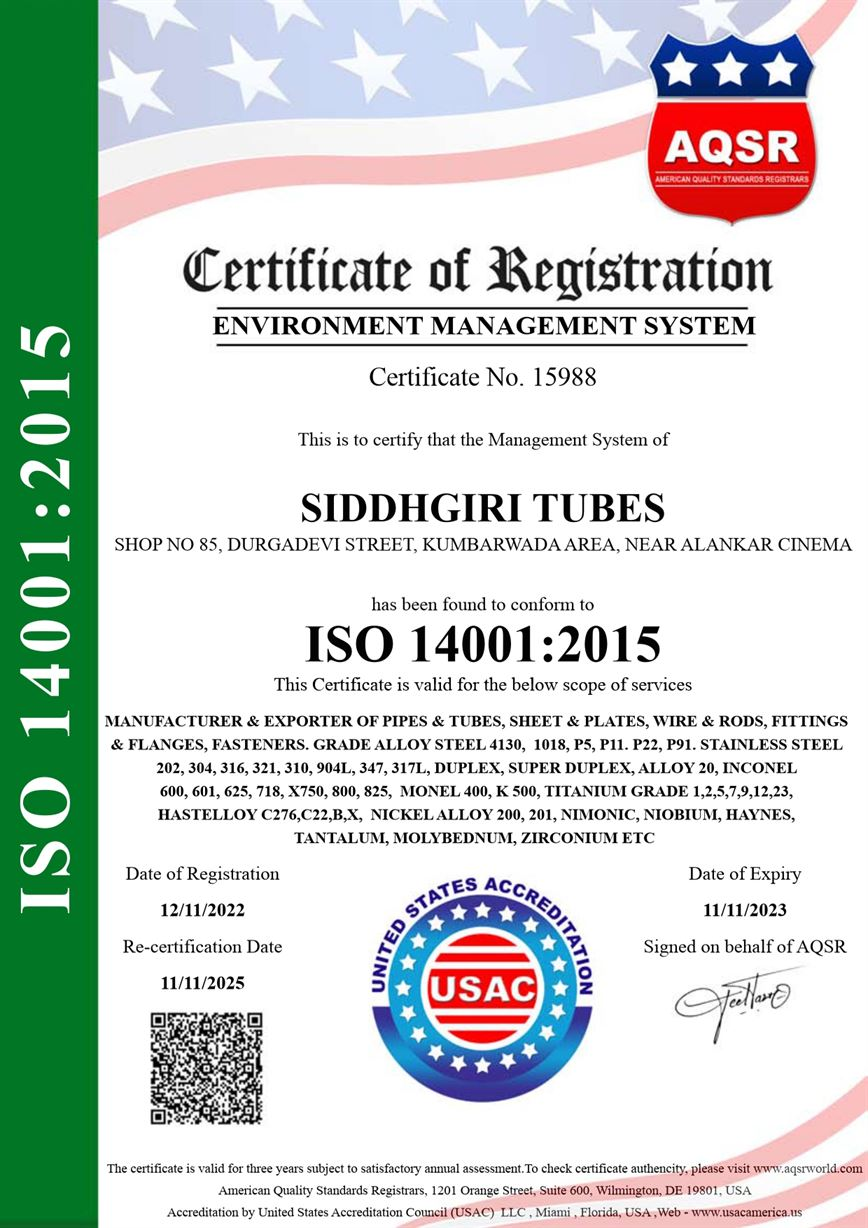
ISO 14001:2015
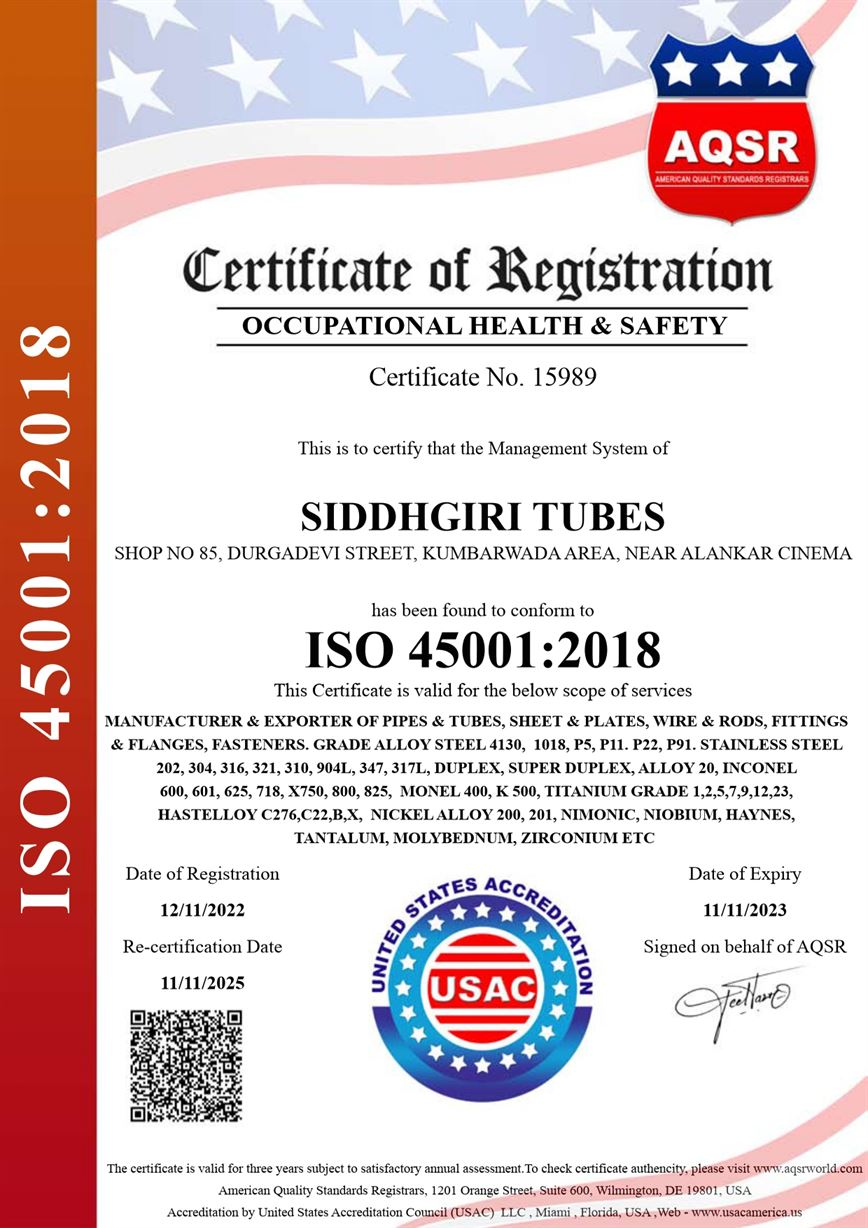
ISO 45001:2018
ISO 9001:2015
GST Certificate
Chromoly Tube Manufacturer in India

Chromoly Tube Manufacturer in India Since 1962

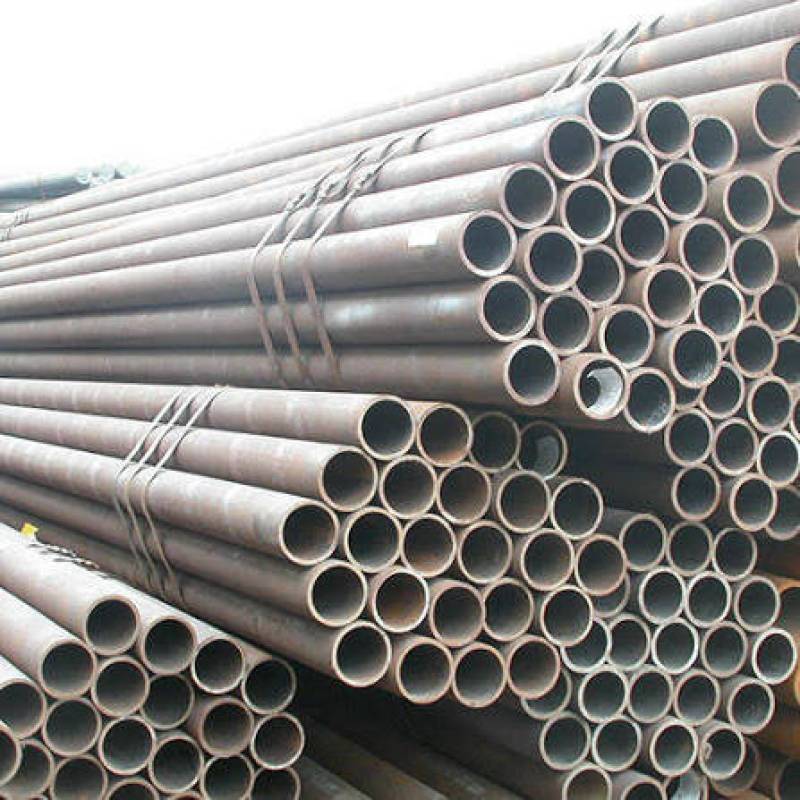
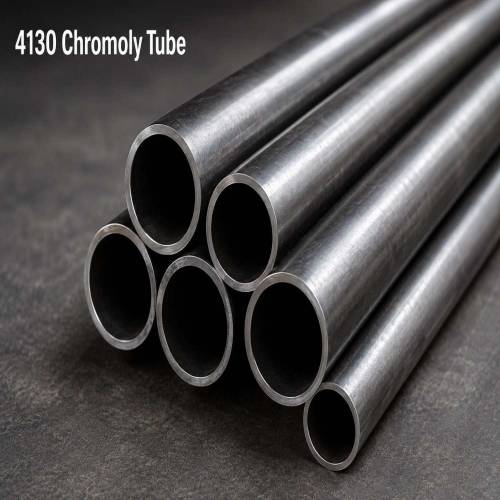
Siddhgiri Overseas manufactures chromoly tube from our Mumbai facility, producing hollow sections in chromium-molybdenum alloy steel to SAE grades 4130 and 4140. Chromium adds hardness, wear resistance and moderate corrosion resistance, while molybdenum increases toughness, fatigue strength and resistance to heat — together giving chromoly a strength-to-weight ratio that plain carbon steel tubing cannot match, so engineers can specify thinner walls without giving up structural strength. That combination has made chromoly the material of choice wherever weight matters as much as strength: motorsport roll cages and chassis, aircraft framing, bicycle frames, and high-stress components across oil & gas, power generation and heavy engineering. Manufactured to ASTM A519 and related ASTM, ASME, DIN and EN standards, our chromoly tubes are supplied seamless and cold drawn, and tested for chemical composition and mechanical properties before dispatch. This category covers our full chromoly tube range, including SAE 4130 Chromoly Tube, our most widely specified grade for aerospace, automotive and motorsport fabrication.

Chromoly tube is a hollow section made from chromium-molybdenum alloy steel — most commonly SAE grade 4130 or SAE 4140. Chromium is added to increase hardness, wear resistance and moderate corrosion resistance, while molybdenum improves toughness, heat resistance and fatigue strength. In SAE 4130, chromium typically ranges from 0.80% to 1.10% and molybdenum from 0.15% to 0.25%, with carbon held around 0.30% to balance strength against weldability and machinability.

This alloying is what separates chromoly from plain carbon steel tube. For a given wall thickness, chromoly offers substantially higher tensile and yield strength, which lets designers use thinner-walled tubing to reach a target strength and cut weight — a trade-off that matters directly in motorsport, aerospace and any structure where mass affects performance. It is important to note that chromoly is an alloy steel, not a stainless steel: it does not carry the high chromium content (typically 10.5% or more) that gives stainless steel grades their corrosion resistance, and it is chosen for mechanical performance rather than corrosion service.

  • Chromium-molybdenum alloy steel, produced in SAE 4130 and SAE 4140
  • High strength-to-weight ratio compared with carbon steel tubing of equivalent wall thickness
  • Good weldability, particularly with TIG welding, and heat-treatable to raise hardness and tensile strength
  • Supplied seamless and cold drawn, manufactured to ASTM A519 and related ASTM, ASME, DIN and EN standards


How Chromoly Tube Is Made

Producing chromoly tube to the tolerances and mechanical properties required for structural and safety-critical use involves several controlled manufacturing stages.

Raw Material and Hot Forming

Manufacturing starts with high-quality chromium-molybdenum alloy steel billets, selected for consistent chemical composition. The billets are heated to a controlled temperature, then pierced and hot rolled into seamless hollow sections, forming the initial tube shape without compromising the metallurgical integrity of the alloy.

Cold Drawing

The hot-formed tube is then cold drawn to refine outside diameter, wall thickness uniformity and surface finish, and to improve concentricity. Cold drawing lets us hold tighter dimensional tolerances than hot forming alone can achieve, which matters for tubing that will be welded or machined into precision assemblies.

Heat Treatment

Normalising or controlled annealing relieves the internal stresses introduced during hot and cold forming, restoring ductility, toughness and machinability. Depending on the application, additional heat treatment can be applied to raise hardness and tensile strength to the level the end use requires.

Finishing and Quality Testing

Tubes are straightened, cut to standard or custom lengths, cleaned and marked for traceability before final inspection. Quality testing on each batch includes dimensional inspection, ultrasonic and eddy current testing, tensile and yield strength testing, hardness testing, chemical composition analysis, and surface finish and visual inspection, confirming that every tube meets its specified standard before dispatch.

Applications of Chromoly Tube

Chromoly tube is specified wherever a structure needs to be strong without being heavy, or needs to survive repeated stress, vibration or impact.

  • Automotive and motorsport — roll cages, race car chassis, suspension components, steering systems and protective bars, where high strength at low weight and reliable weldability are essential.
  • Aerospace — aircraft fuselage structures, engine mounts and landing gear assemblies, where fatigue resistance and structural reliability are critical.
  • Bicycle frames — road, mountain, BMX and touring bicycles, where chromoly's balance of strength, ride quality and light weight remains a preferred choice over plain carbon steel.
  • Oil & gas — drilling equipment, high-pressure pipelines and structural supports in demanding chemical processing and field environments.
  • Power generation and heavy engineering — power plant components, construction equipment, industrial machinery and agricultural equipment manufacturing.

Siddhgiri Overseas supplies chromoly tube to these industries in seamless and cold-drawn construction, tested and inspected to the applicable ASTM, ASME, DIN or EN standard before dispatch from our Mumbai facility.

Chromoly Tube Grades & Specifications

Chromoly tube is available in a small number of SAE grades and forms, each suited to different performance requirements.

SAE 4130 Chromoly Tube

SAE 4130 is the most widely specified chromoly grade, valued for its balance of strength, toughness, weldability and machinability. At approximately 0.30% carbon content, it fabricates well and is the grade most commonly used for aircraft structures, race car chassis and roll cages, bicycle frames, suspension components and industrial machinery. See our dedicated 4130 Chromoly Tube page for grade-specific detail.

SAE 4140 Chromoly Tube

SAE 4140 carries a slightly higher carbon content than 4130, giving it greater hardness, wear resistance and tensile strength. It is typically selected for high-powered mechanical parts, power transmission components, heavy machinery, and oil drilling and mining equipment where load-bearing capacity is the priority.

Seamless and Cold-Drawn Forms

Chromoly tube is produced seamless, without a weld joint, giving consistent mechanical properties around the full circumference — important for components subject to high pressure or repeated loading. Cold-drawn processing then refines dimensional accuracy, surface finish and concentricity beyond what hot forming alone achieves.

Material Grades

SAE 4130, SAE 4140

Material Type

Chromium-Molybdenum Alloy Steel

Manufacturing Type

Seamless & Cold Drawn

Shape

Round

Chromium Content

0.80% – 1.10%

Molybdenum Content

0.15% – 0.25%

Manufacturing Standards

ASTM A519, ASTM, ASME, DIN, EN

Surface Finish

Black, Bright, Polished, Pickled

Certifications

Siddhgiri Overseas is ISO certified for quality, occupational health & safety and environment management, and holds the import and export certification required to supply stainless steel pipe and tube to customers worldwide. Certificate copies are available on request for buyers who need them for their own compliance records.

Related Categories

FAQs

Frequently Asked Questions About Chromoly Tube

Chromoly tube is made from chromium-molybdenum alloy steel, most commonly SAE grade 4130 or SAE 4140. Chromium content typically ranges from 0.80% to 1.10% and molybdenum from 0.15% to 0.25%, with carbon held around 0.30% in 4130 to balance strength against weldability and machinability.

No. Chromoly is a chromium-molybdenum alloy steel selected primarily for its strength-to-weight ratio and toughness, not for corrosion resistance. Its chromium content is much lower than the 10.5% or more found in stainless steel grades, so it does not offer the same corrosion resistance and is typically finished, coated or painted according to the service environment.

SAE 4130 has a lower carbon content, around 0.30%, giving an excellent balance of strength, toughness, weldability and machinability, which makes it the more common choice for aerospace structures, motorsport chassis and bicycle frames. SAE 4140 carries slightly higher carbon content, giving greater hardness, wear resistance and tensile strength, and is typically used in heavier-duty mechanical components, power transmission and drilling or mining equipment.

Yes. Chromoly's relatively low carbon content gives it good weldability, particularly with TIG welding, without the material becoming excessively hard or brittle in the heat-affected zone when good welding practice is followed. This weldability is one of the reasons chromoly is favoured for fabricated structures such as roll cages and bicycle frames.

Our chromoly tubes are produced to ASTM A519 for seamless carbon and alloy steel mechanical tubing, along with other applicable ASTM, ASME, DIN and EN specifications as required by the project and industry.

Every batch is checked through dimensional inspection, ultrasonic and eddy current testing, tensile and yield strength testing, hardness testing, chemical composition analysis, and surface finish and visual inspection, confirming each tube meets its specified standard before it leaves our Mumbai facility.

Chromoly tube is used across automotive and motorsport (roll cages, chassis, suspension), aerospace (fuselage structures, engine mounts, landing gear), bicycle manufacturing (road, mountain, BMX and touring frames), oil & gas (drilling equipment, high-pressure pipelines), and power generation and heavy engineering (industrial machinery, construction and agricultural equipment).

Yes. We manufacture chromoly tube in both seamless construction, which eliminates any weld joint for consistent mechanical properties around the full circumference, and cold-drawn processing, which refines dimensional accuracy, wall thickness uniformity and surface finish for applications requiring tighter tolerances.

Clients

Our Partners

Tata Power
Shell Global Solutions
ONGC
NRL
NTPC
NIOC
HP
JSL
Godrej
Bhel
Inoxium Tubi
24/7 we are here
Your Partner in Industrial Growth, Let’s get started today!