
What Specifications Should You Include in a Stainless Steel Pipe and Tube RFQ?
- Siddhgiri Overseas
Are you sourcing stainless steel pipes or tubes for an industrial project? An incomplete request for quotation (RFQ) can result in incorrect material grades, unsuitable wall thicknesses, missing certifications, and unexpected procurement delays.
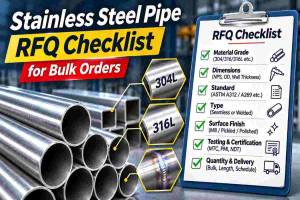
A stainless steel pipe RFQ checklist should include material grade, applicable ASTM or ASME standard, pipe or tube type, outside diameter, wall thickness or schedule, quantity, testing, certification, and delivery requirements.
Providing accurate specifications helps suppliers prepare comparable quotations and identify suitable products.
Siddhgiri Overseas supplies stainless steel pipes and tubes for industrial and engineering applications.
What Is a Stainless Steel Pipe RFQ?
A stainless steel pipe RFQ is a purchasing document that communicates the technical and commercial requirements of pipes or tubes to potential suppliers.
It helps suppliers evaluate material availability, dimensional requirements, applicable standards, and order quantities.
A detailed RFQ can reduce misunderstandings during purchasing, manufacturing, inspection, and delivery.
Why Are Complete Pipe Specifications Important?
Complete specifications ensure that suppliers quote materials suitable for the intended application and approved engineering requirements.
Incomplete information may cause:
-
Incorrect material selection.
-
Dimensional mismatches.
-
Missing inspection documentation.
-
Unnecessary quotation revisions.
-
Delayed project schedules.
-
Additional material costs.
Industrial buyers should refer to approved project specifications rather than selecting products based on price alone.
Which Stainless Steel Grade Should You Specify?
The material grade should be selected according to corrosion exposure, operating temperature, fabrication requirements, and applicable engineering standards.
Common grades include:
-
SS 304: Used in many general industrial applications.
-
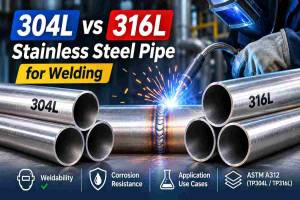
SS 304L: A low-carbon grade commonly specified for suitable welded applications.
-
SS 316: Contains molybdenum, improving resistance to certain corrosive environments.
-
SS 316L: A low-carbon molybdenum-bearing grade used in many process applications.
-
SS 321: A titanium-stabilized grade for selected elevated-temperature applications.
-
SS 310: Considered for certain high-temperature applications.
Grade selection must consider actual service conditions.
Explore Stainless Steel Pipe Grades for available material options.
Which ASTM Standards Should You Include?
Specify the material standard applicable to the product type and intended application.
Examples include:
-
ASTM A312/A312M: Austenitic stainless steel pipe, including seamless, welded, and heavily cold-worked products.
-
ASTM A269/A269M: Seamless and welded austenitic stainless steel tubing for general service.
-
ASTM A213/A213M: Seamless ferritic and austenitic alloy-steel tubing for boilers, superheaters, and heat exchangers.
The correct standard depends on project requirements.
Include the required standard edition where specified.
Should You Order Seamless or Welded Stainless Steel Pipe?
Choose seamless or welded construction according to the approved material specification, operating conditions, inspection requirements, and project budget.
Seamless pipes are manufactured without a longitudinal weld seam.
Welded pipes are produced by forming material and joining the seam.
Neither construction method should be considered universally superior.
Explore Stainless Steel Seamless Pipes and Stainless Steel Welded Pipes for product information.
Which Pipe Dimensions Should You Provide?
Pipe dimensions should identify the nominal pipe size, applicable dimensional standard, wall thickness or schedule, and required length.
Important details include:
-
Nominal Pipe Size (NPS) or DN.
-
Outside diameter.
-
Schedule or nominal wall thickness.
-
Required length.
-
Dimensional tolerances.
-
End preparation.
For tubing, specify actual outside diameter and wall thickness as required by the applicable standard.
Avoid confusing nominal pipe size with measured outside diameter.
Why Is Pipe Schedule Important?
Pipe schedule identifies a standardized wall-thickness series associated with a particular nominal pipe size.
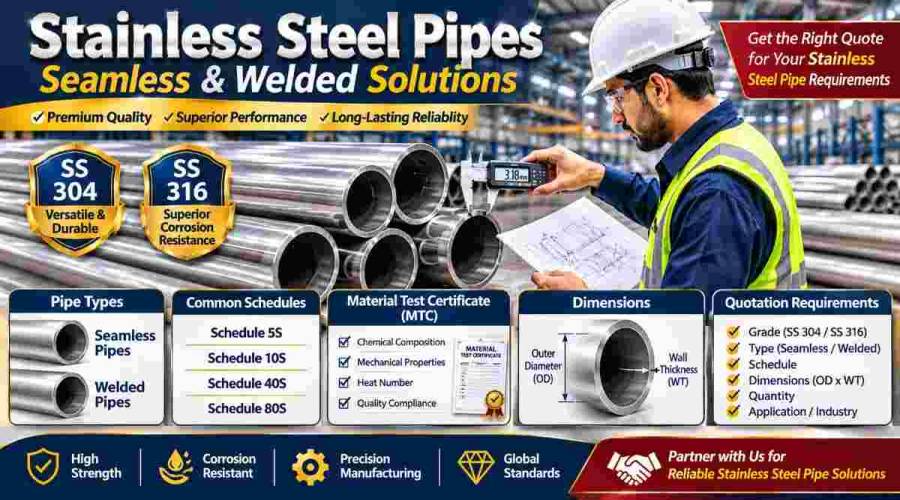
Common stainless steel pipe schedules include:
-
Schedule 10S.
-
Schedule 40S.
-
Schedule 80S.
The required wall thickness depends on pressure, temperature, corrosion allowance, mechanical loading, and the applicable piping design code.
A higher schedule generally indicates a thicker wall for the same nominal size, but it does not independently establish the complete pressure rating.
What Surface Finish and End Preparation Should You Specify?
Surface finish and end preparation should match the intended installation, joining method, and cleanliness requirements.
Specify applicable requirements such as:
-
Mill finish.
-
Polished finish.
-
Plain ends.
-
Beveled ends.
-
Surface cleanliness.
-
Protective end caps.
Additional surface requirements should be documented before placing an order.
What Testing and Inspection Requirements Should You Include?
Testing requirements should follow the product standard and any additional project-specific acceptance criteria.
Depending on the applicable specification, requirements may include:
-
Chemical composition verification.
-
Dimensional inspection.
-
Tensile testing.
-
Hydrostatic testing.
-
Nondestructive electric testing.
-
Visual inspection.
-
Additional corrosion testing.
Not every test is required or applicable to every pipe or tube.
Identify supplementary testing requirements at the quotation stage.
Why Is a Mill Test Certificate Important?
A Mill Test Certificate (MTC) provides material traceability and records test results associated with the supplied material.
Important information may include:
-
Material grade.
-
Heat number.
-
Chemical composition.
-
Mechanical properties.
-
Product specification.
-
Relevant test results.
Where specified, request an EN 10204 Type 3.1 inspection certificate.
Additional third-party inspection requirements should be agreed upon before supply.
Learn more about Mill Test Certificates.
How Do Quantity and Delivery Requirements Affect Quotations?
Quantity, product dimensions, stock availability, packaging, and destination can influence pricing and delivery arrangements.
Provide:
-
Quantity in meters, pieces, or kilograms.
-
Required cut lengths.
-
Delivery destination.
-
Packaging requirements.
-
Requested delivery date.
-
Any special export documentation.
Ask suppliers to identify whether their quotation covers the complete order or only available stock.
What Factors Affect Stainless Steel Pipe Prices?
Stainless steel pipe prices depend on material grade, size, wall thickness, construction method, quantity, testing, and market conditions.
Other considerations include certification, finishing, packaging, and freight.
Compare quotations based on equivalent specifications and complete delivered costs.
What Should You Include in a Stainless Steel Pipe RFQ Checklist?
A complete RFQ should communicate the product, material, dimensions, quality requirements, quantity, and commercial conditions.
Include:
-
Product type: pipe or tube.
-
Material grade.
-
ASTM, ASME, or other applicable standard.
-
Seamless or welded construction.
-
NPS, DN, or actual outside diameter.
-
Wall thickness or pipe schedule.
-
Required length and tolerance.
-
Surface finish and end preparation.
-
Required testing and inspection.
-
MTC and traceability requirements.
-
Quantity and packaging.
-
Delivery location and required date.
Attach the approved technical specification or purchase drawing whenever available.
What Are the Most Frequently Asked Questions About Stainless Steel Pipe RFQs?
Industrial buyers commonly ask about grades, dimensions, certifications, and quotation requirements.
Can You Request a Pipe Quotation Without an Engineering Drawing?
Yes. Standard pipes can often be quoted using the grade, product standard, size, schedule, length, and quantity.
Is SS 304 Suitable for Every Industrial Application?
No. Material suitability depends on corrosion exposure, temperature, and operating conditions.
Is a Mill Test Certificate Necessary?
It depends on the project requirements. Many industrial and regulated applications specify traceable material documentation.
Are Stainless Steel Pipe and Tube Specifications Interchangeable?
No. Pipes and tubes may follow different dimensional conventions and product standards.
Can Stainless Steel Pipes Be Supplied in Custom Lengths?
Custom lengths may be available depending on the product, stock, and supplier capabilities.
How Can You Request Stainless Steel Pipes and Tubes From Siddhgiri Overseas?
You can request a quotation by sharing your material grade, product standard, dimensions, quantity, inspection requirements, and delivery location.
Siddhgiri Overseas lists stainless steel seamless pipes, welded pipes, and tubing products across various grades and dimensions.
Explore Stainless Steel Pipes, Stainless Steel Tubes, or contact Siddhgiri Overseas for product enquiries.
Technical Note: Final material selection, pressure design, dimensional acceptance, and testing requirements should follow approved engineering specifications and applicable codes.