
Stainless Steel Pipe vs Tube: What’s the Difference and Which One Do You Need?
- Siddhgiri Overseas
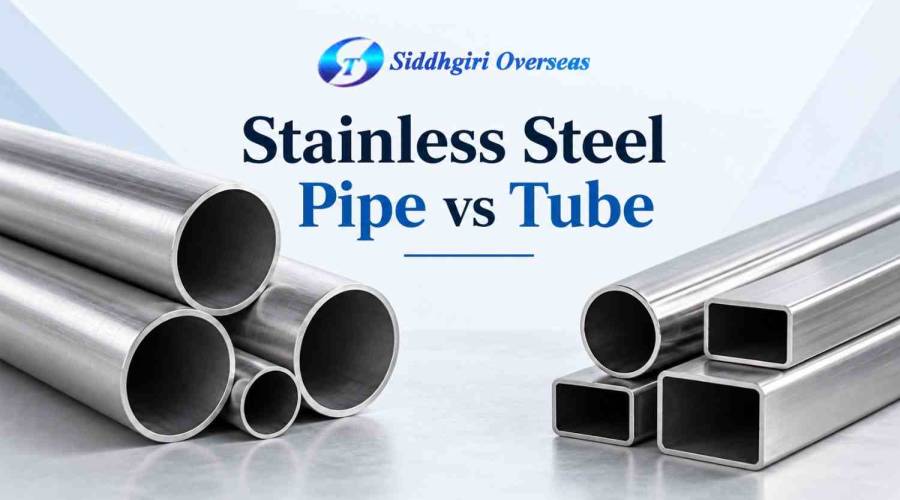
Stainless steel pipes and tubes are widely used across industries where strength, corrosion resistance, durability, and reliable performance are essential. Although the terms “pipe” and “tube” are often used interchangeably, they are not exactly the same.
The difference between a stainless steel pipe and tube goes beyond their shape. They can differ in how they are measured, specified, manufactured, and selected for different applications.
Choosing the wrong product can lead to incorrect dimensions, unsuitable wall thickness, unnecessary costs, or problems during installation. Understanding these differences can therefore help engineers, procurement teams, fabricators, and industrial buyers make a more informed choice.
This guide explains stainless steel pipe vs tube, their key differences, common applications, and the factors you should consider before placing an order.
What Is a Stainless Steel Pipe?
A stainless steel pipe is primarily designed to transport liquids, gases, steam, chemicals, and other media from one point to another.
Because pipes are frequently used for fluid transportation, factors such as pressure rating, nominal size, wall thickness, material grade, and corrosion resistance are important when selecting a pipe.
Stainless steel pipes are commonly found in industries such as:
-
Oil and gas
-
Chemical processing
-
Petrochemical
-
Power generation
-
Water treatment
-
Food processing
-
Marine applications
-
Pharmaceutical processing
-
Industrial piping systems
Depending on the application, buyers can choose from different stainless steel pipe grades, dimensions, schedules, and manufacturing methods.
What Is a Stainless Steel Tube?
A stainless steel tube is generally specified by its actual outside diameter (OD) and wall thickness. Tubes are commonly selected where dimensional accuracy, structural performance, surface finish, or precise fitting is particularly important.
Stainless steel tubes can be round, square, rectangular, or produced in other specialized profiles depending on the application.
Common applications include:
-
Heat exchangers
-
Condensers
-
Instrumentation systems
-
Automotive components
-
Structural fabrication
-
Aerospace applications
-
Hydraulic systems
-
Mechanical equipment
-
Architectural structures
The required dimensions, tolerances, stainless steel grade, manufacturing process, and finish depend on the intended use.
Stainless Steel Pipe vs Tube: Key Differences
While both products can be manufactured from stainless steel, their specifications and intended applications can be quite different.
| Factor | Stainless Steel Pipe | Stainless Steel Tube |
|---|---|---|
| Primary purpose | Fluid and gas transportation | Structural, mechanical and precision applications |
| Common sizing | Nominal Pipe Size (NPS) | Actual outside diameter (OD) |
| Wall specification | Often identified by schedule | Usually specified directly by wall thickness |
| Shapes | Primarily round | Round, square, rectangular and other profiles |
| Dimensional precision | Depends on specification/application | Often important for precision applications |
| Common applications | Process piping, water, oil, gas and chemicals | Heat exchangers, instrumentation, structures and machinery |
| Selection focus | Flow, pressure, schedule and material | OD, wall thickness, tolerance and application |
Understanding these differences makes it easier to identify the appropriate product before requesting a quotation.
How Are Stainless Steel Pipes Measured?
One of the most important differences between pipes and tubes is their sizing system.
Stainless steel pipes are commonly specified using Nominal Pipe Size (NPS) and a schedule.
The nominal size should not automatically be interpreted as the exact outside or inside diameter of the pipe. The applicable dimensional standard should be consulted when exact dimensions are required.
What Does Pipe Schedule Mean?
A pipe schedule helps define the wall thickness associated with a particular nominal pipe size.
Common pipe schedules include:
-
Schedule 10
-
Schedule 40
-
Schedule 80
-
Schedule 160
The required schedule depends on factors such as the applicable standard, design pressure, temperature, service conditions, and engineering requirements.
For industrial projects, buyers should therefore avoid selecting a pipe based only on its nominal diameter.
How Are Stainless Steel Tubes Measured?
Stainless steel tubes are typically specified using their outside diameter and wall thickness.
For example, a tube specification may provide:
OD × Wall Thickness
This approach is particularly useful where precise dimensions are required for fabrication, assembly, heat-transfer equipment, instrumentation, or mechanical applications.
Tube tolerances can also be important because even relatively small dimensional differences may affect fitting, fabrication, or system performance.
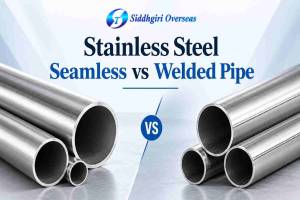
Stainless Steel Seamless vs Welded Pipes and Tubes
Both pipes and tubes can be available in seamless and welded forms.
Seamless Stainless Steel
Seamless products are manufactured without a longitudinal welded seam.
They are used in a wide range of industrial applications, including demanding services where the applicable engineering specification calls for seamless construction.
Welded Stainless Steel
Welded products are formed from stainless steel strip, plate, or other suitable starting material and joined along a seam using an appropriate welding process.
Modern welded stainless steel products are used extensively across industrial applications when manufactured and tested according to the required standards.
The correct choice between seamless and welded stainless steel pipe should therefore be based on the project specification, pressure and temperature conditions, required dimensions, applicable standard, availability, and budget.
Stainless Steel Pipe and Tube Grades
Material grade is another major factor when selecting stainless steel pipes or tubes.
304 Stainless Steel
304 is one of the most commonly used austenitic stainless steel grades. It provides a useful combination of corrosion resistance, formability, fabrication characteristics, and mechanical properties for many general industrial applications.
316 Stainless Steel
316 stainless steel contains molybdenum, which improves resistance to certain forms of corrosion, particularly in chloride-containing environments compared with 304.
This makes 316 stainless steel pipes and tubes relevant to many marine, chemical, processing, and other corrosive-service applications.
Duplex and Super Duplex Stainless Steel
For more demanding applications, Duplex and Super Duplex stainless steel pipes and tubes may be considered.
These materials combine high strength with strong corrosion resistance and are used in applications such as chemical processing, offshore systems, marine environments, and other demanding industrial services.
Material selection should always consider the actual operating environment and the relevant engineering specification rather than choosing a grade solely based on general corrosion-resistance descriptions.
Where Are Stainless Steel Pipes Used?
Because pipes are well suited to transporting media, they are commonly used for:
Oil and Gas Systems
Stainless steel piping can be used in processing and transportation systems where the selected grade and specification meet the required operating conditions.
Chemical Processing
Chemical plants may require corrosion-resistant piping for handling different process fluids.
Water Treatment
Stainless steel pipes are used in various water-treatment and process-water applications where hygiene, durability, and corrosion resistance are important.
Food and Pharmaceutical Processing
Certain stainless steel grades and finishes are suitable for hygienic processing systems where cleanliness and corrosion resistance are critical.
Power and Energy
Stainless steel piping can also be found in power-generation and energy-related systems subject to the applicable design requirements.
Where Are Stainless Steel Tubes Used?
Tubes are particularly useful where controlled dimensions, specific shapes, or mechanical performance are required.
Heat Exchangers and Condensers
Stainless steel tubes are widely used in heat-transfer equipment because material selection, dimensions, surface condition, and corrosion resistance can be tailored to the operating environment.
Instrumentation
Precision tubing is used in instrumentation and control systems where dimensional consistency and reliable connections are important.
Automotive Applications
Stainless steel tubing can be used in exhaust, fluid-handling, structural, and other automotive components depending on design requirements.
Structural and Architectural Applications
Round, square stainless steel tubes, and rectangular stainless steel tubes can be used for structural fabrication, railings, frameworks, architectural features, and industrial structures.
Should You Choose Stainless Steel Pipe or Tube?
There is no single option that is better for every application.
Choose a stainless steel pipe when the primary requirement involves transporting liquids, gases, steam, or process media and the system is designed around piping standards, nominal sizes, and schedules.
A stainless steel tube may be more appropriate when the project requires specific outside dimensions, wall thicknesses, tighter dimensional control, structural shapes, or specialized mechanical applications.
Before deciding, consider:
-
Intended application
-
Required stainless steel grade
-
Outside diameter or nominal pipe size
-
Wall thickness or schedule
-
Operating pressure
-
Operating temperature
-
Corrosive environment
-
Dimensional tolerance
-
Surface finish
-
Seamless or welded construction
-
Applicable ASTM, ASME, EN, DIN, or other project standards
-
Required quantity
These details help a manufacturer or supplier identify a suitable product for the application.
What Information Should You Provide When Requesting a Quote?
Providing complete technical information can significantly simplify the quotation process.
When requesting stainless steel pipes and tubes, consider providing:
Product type: Pipe or tube
Material grade: Such as 304/304L, 316/316L, Duplex or Super Duplex
Size: NPS or OD, as applicable
Wall: Schedule or wall thickness
Manufacturing type: Seamless or welded
Standard: ASTM, ASME, EN, DIN or project-specific specification
Length: Required product length
Finish: If applicable
Quantity: Number of pieces, total length, or weight
Application: Where useful for determining suitability
Testing/documentation: Any project-specific certification or inspection requirements
A detailed enquiry reduces ambiguity and helps ensure that the quotation matches the actual project requirement.
Source Stainless Steel Pipes and Tubes from SPT
SPT supplies stainless steel pipes, tubes, and related industrial products for a wide range of applications.
Our product range includes stainless steel pipes, stainless steel tubes, square and rectangular tubes, and products in specialized materials for demanding industrial requirements.
Whether your project requires stainless steel for process piping, structural fabrication, heat exchangers, instrumentation, automotive components, marine applications, or other industrial uses, our team can help you identify products according to your required grade, size, standard, and specification.
Contact SPT with your technical requirements to discuss availability and request a quotation.
Frequently Asked Questions
Is stainless steel pipe the same as stainless steel tube?
No. Although the terms are sometimes used interchangeably, pipes and tubes are typically specified differently. Pipes are commonly associated with nominal sizing and schedules, while tubes are generally specified using actual outside diameter and wall thickness.
Is stainless steel tube stronger than pipe?
Not necessarily. Strength depends on factors such as material grade, dimensions, wall thickness, manufacturing process, heat treatment, and loading conditions. A product should be selected according to the engineering requirements of the application.
What is the difference between NPS and OD?
NPS stands for Nominal Pipe Size and is a standardized designation used for pipe sizing. OD means outside diameter and refers to the actual external diameter of a product.
Which stainless steel grade is better: 304 or 316?
Neither grade is universally better. 304 is suitable for many general applications, while 316 offers improved resistance in certain corrosive and chloride-containing environments. The appropriate grade depends on operating conditions and project specifications.
Can stainless steel tubes be square or rectangular?
Yes. Stainless steel tubes are available in round, square, rectangular, and other profiles depending on manufacturing capability and application requirements.
Are stainless steel pipes available in seamless and welded types?
Yes. Stainless steel pipes can be manufactured in seamless and welded forms. Selection should be based on the applicable standard, operating conditions, dimensions, project specifications, and commercial requirements.