
How to Choose the Right Stainless Steel Pipe Schedule: 10S, 40S or 80S?
- Siddhgiri Overseas

Choosing the correct stainless steel pipe is about more than selecting the right material grade or diameter. Wall thickness plays an equally important role in determining whether a pipe is suitable for its intended application, operating pressure, and installation requirements.
When purchasing stainless steel pipes, you will frequently encounter specifications such as Schedule 10S, Schedule 40S, and Schedule 80S. But what do these numbers mean, and how can you determine which schedule is appropriate for your project?
A stainless steel pipe schedule is a standardized designation used to identify the nominal wall thickness of a pipe for a particular nominal pipe size. Generally, a higher schedule number represents a thicker wall for the same pipe size, although the actual dimensions must always be checked against the applicable standard.
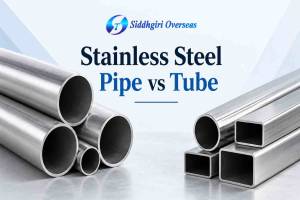
At Siddhgiri Overseas, we manufacture and supply stainless steel pipes and tubes for industrial, engineering, fabrication, and construction applications. Understanding pipe schedules helps buyers select appropriate products and communicate their technical requirements more accurately.
This guide explains the differences between Schedule 10S, 40S, and 80S stainless steel pipes, how pipe schedules affect wall thickness, and the factors engineers and procurement teams should consider before ordering.
What Is a Stainless Steel Pipe Schedule?
A stainless steel pipe schedule is a standardized designation that identifies the nominal wall thickness of a pipe for a specified Nominal Pipe Size (NPS).
Pipe schedules are important because pipes with the same nominal size can have different wall thicknesses while maintaining the same outside diameter.
For example, a 2-inch stainless steel pipe can be manufactured in Schedule 10S, Schedule 40S, or Schedule 80S. Each has the same nominal size and specified outside diameter, but the internal diameter changes because the wall thickness is different.
Stainless steel piping dimensions are standardized under ASME B36.19M, Stainless Steel Pipe.
This standard establishes dimensional requirements for welded and seamless wrought stainless steel pipes used across various industrial applications.
Common stainless steel pipe schedule designations include:
- Schedule 5S: A relatively thin-wall stainless steel pipe designation.
- Schedule 10S: A lighter-wall option used where the design permits reduced wall thickness.
- Schedule 40S: An intermediate wall-thickness designation used in many industrial piping specifications.
- Schedule 80S: A heavier-wall designation used where additional wall thickness is required.
The correct schedule depends on pipe size, material grade, operating conditions, applicable piping codes, and engineering calculations.
What Does the Letter S Mean in Pipe Schedule 10S, 40S, and 80S?
The letter "S" distinguishes stainless steel pipe schedule designations under ASME B36.19 from the corresponding schedule designations commonly associated with ASME B36.10.
For example, Schedule 40S refers to a stainless steel pipe wall-thickness designation under the stainless steel dimensional standard.
The suffix does not mean that every Schedule 40S pipe has a thinner wall than a Schedule 40 pipe.
For many nominal pipe sizes, the dimensions are identical. However, certain larger sizes have different specified wall thicknesses.
Therefore, engineers should not automatically treat Schedule 40 and Schedule 40S, or Schedule 80 and Schedule 80S, as interchangeable.
The correct wall thickness should always be verified against the applicable ASME dimensional standard.
What Is the Difference Between Schedule 10S, 40S, and 80S Stainless Steel Pipes?
The main difference between Schedule 10S vs 40S vs 80S stainless steel pipes is their nominal wall thickness at a given pipe size.
As the wall thickness increases, the pipe generally becomes heavier, its internal diameter becomes smaller, and its pressure-containing capability may increase when other design conditions remain the same.
Schedule 10S Stainless Steel Pipe
Schedule 10S is a relatively thin-wall stainless steel pipe designation.
Its lower wall thickness can reduce material weight and may make it a cost-effective option where engineering requirements permit.
Schedule 10S pipes may be considered for applications such as:
- Low-pressure fluid distribution.
- Certain water-handling systems.
- Process lines where the calculated wall thickness permits.
- Selected food and beverage processing installations.
- Industrial piping systems designed for lighter-wall construction.
However, Schedule 10S should not automatically be selected for every low-pressure application. Corrosion allowance, mechanical loading, connection method, and applicable codes must also be considered.
Schedule 40S Stainless Steel Pipe
Schedule 40S provides a thicker wall than Schedule 10S for the same nominal pipe size.
It is commonly considered when a piping system requires additional wall thickness for its design pressure, fabrication method, mechanical loading, or service conditions.
Applications may include:
- Industrial fluid-handling systems.
- Chemical processing lines.
- General process piping.
- Plant utility systems.
- Engineering and manufacturing installations.
For projects requiring seamless construction, explore the stainless steel seamless pipe range available from Siddhgiri Overseas.
Schedule 80S Stainless Steel Pipe
Schedule 80S has a heavier nominal wall than Schedule 40S for the same nominal pipe size.
This additional wall thickness may be required in systems involving higher design pressures, corrosion allowances, mechanical loads, or more demanding service conditions.
Typical applications can include:
- High-pressure industrial process lines.
- Selected oil and gas piping systems.
- Chemical processing equipment.
- Industrial fluid-transfer systems.
- Applications requiring additional wall thickness under the approved piping design.
However, a heavier schedule alone does not guarantee suitability for high pressure. Material strength, operating temperature, weld quality, applicable design code, and other factors must also be evaluated.
How Does Pipe Schedule Affect Stainless Steel Pipe Wall Thickness?
The stainless steel pipe wall thickness depends on both nominal pipe size and schedule designation.
A pipe schedule number does not represent a fixed wall thickness across every pipe diameter.
For example, under ASME B36.19, a nominal 2-inch stainless steel pipe has an outside diameter of approximately 60.3 mm.
Its nominal wall thickness varies by schedule:
- Schedule 10S: 2.77 mm.
- Schedule 40S: 3.91 mm.
- Schedule 80S: 5.54 mm.
All three pipes have the same nominal outside diameter, but their inside diameters differ.
As wall thickness increases, the available internal flow area decreases.
This can influence fluid velocity and pressure loss for a given flow rate.
To check wall thickness values for other sizes, refer to the stainless steel pipe size and schedule chart provided by Siddhgiri Overseas.
How Do You Calculate the Inside Diameter of a Stainless Steel Pipe?
The approximate inside diameter of a pipe can be calculated using its outside diameter and nominal wall thickness.
Inside Diameter = Outside Diameter - (2 × Wall Thickness)
For example, consider a 2-inch Schedule 40S stainless steel pipe.
Outside Diameter = 60.3 mm
Nominal Wall Thickness = 3.91 mm
Inside Diameter = 60.3 - (2 × 3.91)
Approximate Inside Diameter = 52.48 mm
Now consider the same nominal pipe size in Schedule 80S.
Outside Diameter = 60.3 mm
Nominal Wall Thickness = 5.54 mm
Inside Diameter = 60.3 - (2 × 5.54)
Approximate Inside Diameter = 49.22 mm
This example shows how a thicker pipe wall reduces the available internal diameter without changing the outside diameter.
These calculations use nominal dimensions. Actual dimensions may vary within the permitted manufacturing tolerances.
Which Stainless Steel Pipe Schedule Is Best for High-Pressure Applications?
When selecting a pipe schedule for high-pressure applications, wall thickness is an important consideration, but it is not the only factor.
For a given pipe size, material grade, and operating temperature, additional wall thickness can generally increase pressure-containing capability.
However, actual allowable pressure depends on several variables:
- Pipe outside diameter.
- Minimum available wall thickness.
- Stainless steel material grade.
- Design temperature.
- Allowable material stress.
- Manufacturing and welding requirements.
- Corrosion or erosion allowance.
- Applicable piping design code.
In many industrial installations, engineers consider seamless stainless steel pipes when seamless construction is required by the project specification.
However, properly manufactured and qualified welded stainless steel pipes can also be suitable for pressure applications when permitted by the relevant code.
Pipe schedule selection should be based on documented engineering calculations rather than assuming that Schedule 80S is always necessary or that Schedule 10S is always unsuitable.
Does a Higher Pipe Schedule Mean Better Quality?
No. A higher pipe schedule indicates a different nominal wall thickness, not necessarily better manufacturing quality.
For example, a Schedule 10S pipe manufactured to the correct material and dimensional specifications may be entirely suitable for its intended application.
Similarly, a Schedule 80S pipe that does not meet material, dimensional, or inspection requirements may be unsuitable despite its thicker wall.
Pipe quality depends on factors such as:
- Material composition and grade verification.
- Dimensional accuracy.
- Surface condition.
- Manufacturing quality.
- Testing and inspection results.
- Compliance with the applicable material standard.
- Traceability and supporting documentation.
When comparing suppliers, evaluate the complete technical specification rather than relying on wall thickness alone.
How Does Pipe Schedule Affect the Weight and Cost of Stainless Steel Pipes?
Pipe schedule affects the amount of material used to manufacture a pipe.
When comparing pipes with the same outside diameter, length, and material density, a thicker wall generally increases the pipe's weight.
This means that a Schedule 80S pipe will typically weigh more than a Schedule 40S pipe of the same nominal size.
The additional material may also increase the purchase price, handling requirements, and transportation weight.
However, the final cost depends on several factors:
- Stainless steel grade.
- Pipe diameter and wall thickness.
- Manufacturing method.
- Order quantity.
- Surface finish and processing.
- Testing and certification requirements.
- Raw material prices and availability.
Selecting an unnecessarily heavy pipe can increase project costs without delivering a meaningful engineering advantage.
Likewise, choosing a thinner pipe simply to reduce cost can create problems if it does not satisfy the applicable design requirements.
For dimensional reference, use the SS pipe schedule chart before finalizing your material requirements.
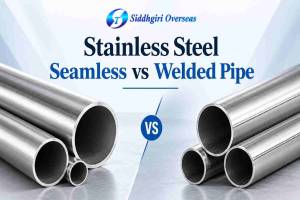
Should You Choose Seamless or Welded Stainless Steel Pipe?
In addition to selecting the appropriate schedule, buyers must consider whether the project requires seamless or welded pipe.
Both manufacturing methods can be used to produce stainless steel piping, but they have different production processes and application considerations.
When Should You Choose Seamless Stainless Steel Pipe?
Seamless pipes are produced without a longitudinal welded seam.
They are often specified for demanding process applications or where the applicable project requirements explicitly call for seamless construction.
Selection factors may include pressure design, inspection requirements, operating conditions, and availability.
Siddhgiri Overseas supplies stainless steel seamless pipes in several grades and wall-thickness schedules, subject to the size and specifications required.
When Should You Choose Welded Stainless Steel Pipe?
Welded stainless steel pipes are produced by forming stainless steel material into a tubular shape and joining the edges through a welding process.
They can be suitable for many industrial applications, including fluid handling and process piping, when manufactured and qualified to the required specifications.
Welded construction may also provide manufacturing and cost advantages in certain sizes and applications.
Explore the stainless steel welded pipe range to learn more about the available products.
The final choice between seamless and welded construction should be based on engineering requirements, not solely on the selected schedule number.
How Do Stainless Steel Grades 304 and 316 Affect Pipe Selection?
Pipe schedule determines nominal wall thickness, while stainless steel grade influences properties such as corrosion resistance, mechanical behavior, and suitability for particular operating environments.
Two commonly specified stainless steel grades are 304 and 316.
SS 304 Stainless Steel Pipe
Grade 304 is widely used in general industrial, engineering, fabrication, and selected food-processing applications.
It offers corrosion resistance in many common environments and is frequently chosen where more specialized corrosion resistance is not required.
Explore the SS 304 pipe range for relevant product information.
SS 316 Stainless Steel Pipe
Grade 316 contains molybdenum, which generally improves resistance to chloride-related localized corrosion compared with Grade 304.
It is often considered for chemical processing, marine-related equipment, coastal environments, and other applications involving more demanding corrosion conditions.
Visit the SS 316 pipe page to explore the material range.
For welded piping systems, low-carbon variants such as 304L and 316L may also be considered based on fabrication methods and corrosion requirements.
The correct grade and schedule must be selected together because increasing wall thickness does not automatically solve a material compatibility or corrosion problem.
How Do You Choose the Correct Pipe Schedule for Your Project?
Selecting the correct stainless steel pipe schedule requires a systematic evaluation of the pipe's intended operating conditions.
Step 1: Identify the Required Nominal Pipe Size
Start by confirming the nominal pipe size specified in the piping design.
Remember that NPS is a standardized size designation and is not necessarily equal to the actual outside or inside diameter.
Step 2: Determine the Design Pressure and Temperature
Confirm the design conditions, including maximum pressure, temperature, and any relevant transient operating loads.
These values are essential for determining the required minimum wall thickness under the applicable piping code.
Step 3: Select the Appropriate Stainless Steel Grade
Choose a material compatible with the fluid, operating environment, temperature, and corrosion conditions.
Depending on the application, this may involve grades such as 304, 304L, 316, or 316L.
Step 4: Calculate the Required Wall Thickness
A qualified piping engineer should determine the minimum required thickness based on the relevant design code.
This calculation may include pressure design requirements, manufacturing tolerances, corrosion allowance, and other design factors.
Step 5: Compare the Required Thickness With Available Schedules
Use the stainless steel pipe size chart to identify the schedule that provides the required nominal wall thickness.
Confirm that the selected nominal thickness, after accounting for relevant tolerances and allowances, satisfies the design requirements.
Step 6: Confirm Manufacturing Method and Documentation
Determine whether seamless or welded construction is required.
Also confirm the material standard, inspection requirements, and any Mill Test Certificate documentation needed for the project.
Step 7: Verify Availability Before Ordering
Not every combination of pipe size, stainless steel grade, schedule, and manufacturing method will necessarily be available from stock.
Share your complete specification with the supplier to confirm manufacturing or supply availability.
What Common Mistakes Should Buyers Avoid When Ordering Stainless Steel Pipes?
Incorrect pipe specifications can lead to unnecessary costs, installation difficulties, delays, or unsuitable materials.
Some common purchasing mistakes include:
- Confusing nominal pipe size with outside diameter: Always verify actual dimensions.
- Assuming schedule numbers represent fixed wall thicknesses: The dimensions change with nominal pipe size.
- Using Schedule 40 and 40S interchangeably: Check the applicable dimensional standard, especially for larger sizes.
- Ignoring operating temperature: Material allowable stresses can change significantly with temperature.
- Selecting the wrong stainless steel grade: Wall thickness cannot compensate for every corrosion-related limitation.
- Ignoring manufacturing tolerances: Design calculations must account for permitted thickness variation.
- Ordering without material documentation: Confirm test certificates and required traceability before purchase.
Addressing these issues during procurement can reduce specification errors and improve communication between engineers, purchasing teams, and suppliers.
Where Can You Buy Stainless Steel Pipes in Different Schedules?
When sourcing stainless steel pipes, choose a supplier that can help you confirm dimensions, material grades, manufacturing methods, and documentation requirements.
Siddhgiri Overseas manufactures and supplies stainless steel pipes and tubes from Mumbai, India, serving industrial, engineering, fabrication, and infrastructure-related applications.
The company's product range includes seamless and welded stainless steel pipes, along with multiple stainless steel grades.
For seamless pipe requirements, the published range includes Schedule 40, Schedule 80, and Schedule 160 in specified nominal sizes. Availability of other schedules, grades, and sizes should be confirmed directly before ordering.
When submitting an enquiry, provide:
- Required stainless steel grade.
- Nominal pipe size.
- Required schedule or wall thickness.
- Seamless or welded construction.
- Applicable ASTM or other material specification.
- Required quantity and length.
- Testing and documentation requirements.
- Delivery location and schedule.
To discuss your project requirements, visit the Siddhgiri Overseas contact page and submit your technical specifications for review.
Frequently Asked Questions About Stainless Steel Pipe Schedules
What Is the Difference Between Schedule 10S and Schedule 40S?
Schedule 40S has a thicker nominal wall than Schedule 10S for the same nominal pipe size. This generally increases pipe weight and reduces internal diameter. The correct option depends on engineering requirements, pressure design, material grade, and the intended application.
Is Schedule 80S Stronger Than Schedule 40S?
For the same pipe size and material, Schedule 80S generally has a thicker wall and can provide greater pressure-containing capability when other design factors remain equal. However, schedule alone does not determine the allowable working pressure or overall material quality.
What Does Schedule 40S Mean in Stainless Steel Pipe?
Schedule 40S is a stainless steel pipe wall-thickness designation associated with ASME B36.19. The actual nominal thickness depends on the specified pipe size.
Is Schedule 40 the Same as Schedule 40S?
Not for every nominal pipe size. Their dimensions match for many sizes, but certain larger sizes differ under ASME B36.10 and ASME B36.19. Always verify the specified wall thickness before treating the two designations as equivalent.
Which Pipe Schedule Is Best for High Pressure?
There is no single schedule suitable for every high-pressure system. Schedule 80S or heavier-wall options may be required for certain applications, but the correct selection must follow engineering calculations and the applicable piping design code.
Does Pipe Schedule Affect Inside Diameter?
Yes. For pipes with the same nominal size and outside diameter, increasing the wall thickness reduces the inside diameter. This may affect flow area, fluid velocity, and pressure loss.
Can Schedule 10S Stainless Steel Pipe Be Used for Industrial Applications?
Yes, Schedule 10S may be suitable for certain industrial piping systems when the calculated wall thickness and other requirements meet the applicable design code. It should not be selected solely because it is lighter or less expensive.
What Is the Standard for Stainless Steel Pipe Schedules?
ASME B36.19 establishes standardized dimensions for welded and seamless wrought stainless steel pipes, including stainless steel schedule designations and their associated nominal wall thicknesses.
How Do I Check Stainless Steel Pipe Dimensions?
Identify the nominal pipe size and schedule, then verify the specified outside diameter and wall thickness using the applicable dimensional standard. You can also consult the stainless steel pipe schedule chart for dimensional reference.
Final Thoughts
Choosing the correct stainless steel pipe schedule is an important step in ensuring a piping system meets its technical and operational requirements.
Schedule 10S, 40S, and 80S differ primarily in nominal wall thickness, but the correct selection also depends on pipe size, stainless steel grade, pressure, temperature, corrosion conditions, manufacturing method, and applicable design standards.
Rather than choosing a heavier schedule automatically, engineers and procurement teams should determine the required wall thickness and verify the available standardized dimensions.
Whether your project requires seamless stainless steel pipes or welded stainless steel pipes, selecting the appropriate dimensions and material specifications helps support reliable project execution.
For technical specifications, product availability, and quotation requests, contact Siddhgiri Overseas and share your stainless steel piping requirements.