Phone Number +91-96194-06392
Opening Hours:

Mon-Sat: 9am - 6pm

Stainless Steel Welded Pipe Supplier in Jordan

Import Export
European Directive 2014/68/EU
ISO 14001:2015
ISO 45001:2018
ISO 9001:2015
GST Certificate
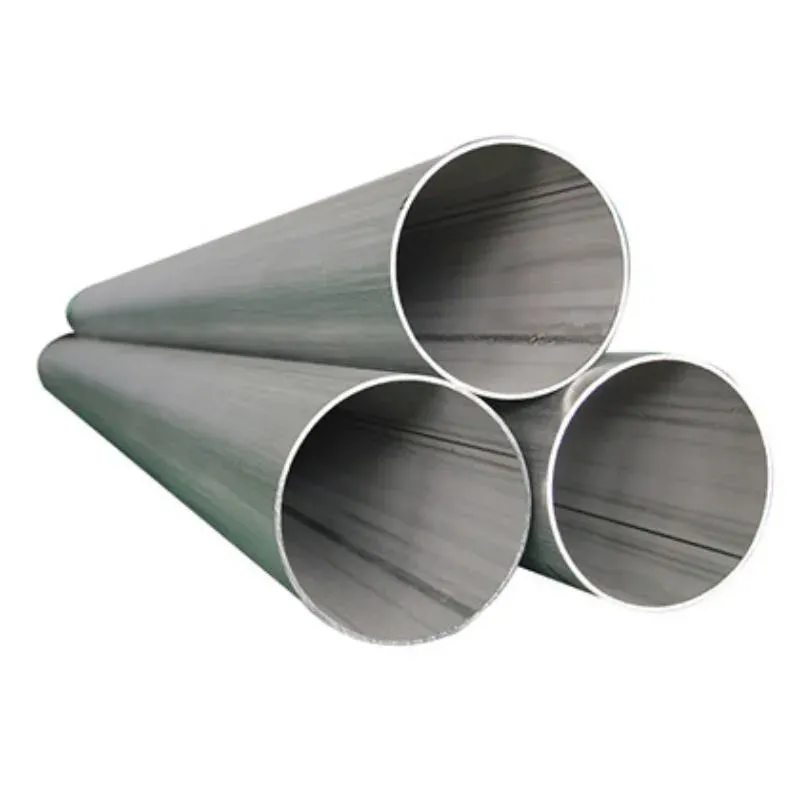
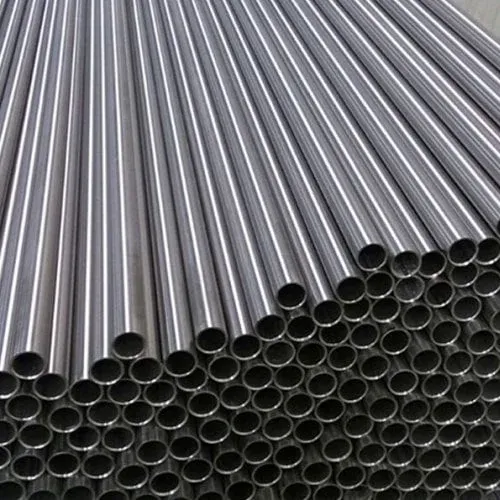
Stainless Steel Welded Pipe

Stainless Steel Welded Pipe Supplier in Jordan Since 1962

Siddhgiri Overseas manufactures stainless steel welded pipe at our Mumbai works and supplies buyers in Jordan. We have been in continuous production since 1962.

Welded pipe is formed from strip or plate, rolled to diameter and joined along a longitudinal seam. That single difference from seamless governs the price, the available diameters, the lead time and the tests the pipe has to pass. It does not, on a properly made and properly tested pipe, govern whether the line holds pressure.

Send the grade, nominal size, schedule or wall, length, quantity and the standard your drawing is written to, and we will confirm what we can supply.

The seam is the product

Everything that distinguishes welded pipe comes back to one line of metal running the length of it. Judge an offer on how that seam was made, what it was tested with, and what happened to it afterwards.

How the seam is made

ERW, electric resistance welding. The strip edges are brought together and resistance-heated by a high-frequency current until they forge. No filler metal. Fast, economical, and the usual route for the small and medium diameters that make up most structural and general service work. Our ERW pipe page covers it in detail.

EFW, electric fusion welding. An arc process, normally with filler, used where the wall is heavy or the diameter large. ASTM A358 is the specification that governs EFW austenitic pipe intended for pressure service, and it is a different document from A312 with a different test regime.

SAW, submerged arc welding. The arc runs under a blanket of granular flux that shields the weld pool from the atmosphere. Used at large diameters, in longitudinal or spiral seams, where deposition rate matters.

Laser and TIG. Narrow heat affected zone and a clean profile, chosen where distortion or internal bead matters more than cost.

What happens to the seam after welding

This is the part that gets skipped on cheap pipe, and the part that decides whether the seam corrodes.

Welding takes the heat affected zone through 425–815 °C, the band in which chromium carbides precipitate at the grain boundaries and leave the metal beside them short of the chromium that was protecting it. In a corrosive duty that strip fails first, along the weld line, and the failure looks like a manufacturing defect because it is one.

Two ways out. Solution anneal after welding, which redissolves the carbides and resets the structure. Or use a low-carbon grade so the carbides never form: 304L or 316L rather than 304 or 316. For welded pipe going into anything wet and corrosive, the low-carbon grade is almost always the right call and the cheaper one, because it removes a heat treatment from the process.

How the seam is tested

A312 requires a hydrostatic test or a non-destructive electric test on every length. Eddy current is the usual NDT choice on thinner walls; ultrasonic suits heavier sections; radiography is specified on A358 pressure work and on projects that call for it explicitly.

Ask which test was applied, not whether the pipe was tested. "Tested" with no method named usually means the cheapest permitted option.

Welded or seamless: the decision on merit

Seamless is not automatically better, and specifying it reflexively is one of the commonest ways to overpay on a piping package.

Welded is the better buy at larger diameters, where seamless becomes expensive or simply unavailable; where wall tolerance matters more than wall uniformity, because strip is rolled to a tighter thickness band than a pierced billet; where surface finish matters, since strip starts life flat and finished; and wherever the duty is structural, architectural, or low-pressure fluid handling.

Seamless earns the premium in high-pressure and high-temperature service, in cyclic duty where a seam is a fatigue initiation site, in sour service and anywhere NACE MR0175 governs, and where a client specification simply forbids a longitudinal weld, which on refinery and offshore work it frequently does. Our seamless pipe page sets out that side.

Where the drawing does not say, ask the design engineer rather than the buyer. The answer comes from the design code, not from the budget.

Grades, sizes and standards

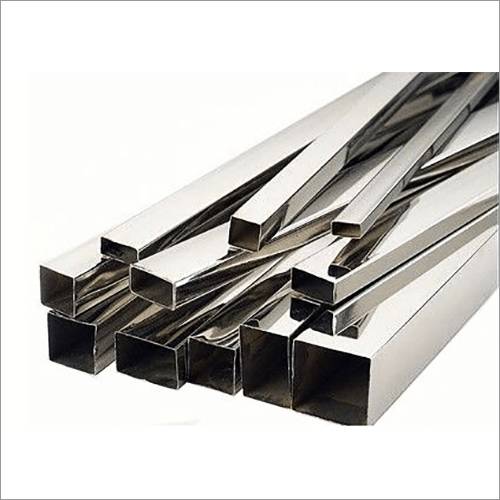
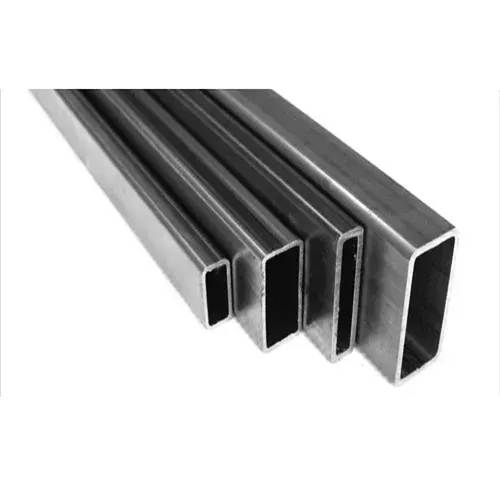
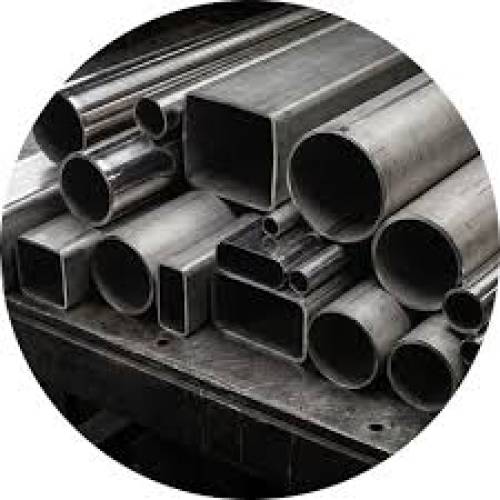
We manufacture welded pipe in 202, 304, 304L, 316, 316L, 321, 310 and 347H, subject to size and availability at the time of order, in round, square and rectangular profiles.

Dimensions follow ASME B36.19M for the stainless schedule series. A312 covers welded and seamless austenitic pipe together; A358 covers EFW pipe for pressure service specifically. If your drawing cites a bare schedule number without naming the standard, settle that before ordering: above NPS 12 the S-suffix and plain series diverge, and the wall difference is expensive. The weight calculator gives mass per metre once the dimensions are agreed.

What to check in an offer

Four questions separate a sound welded pipe from a cheap one. Which welding process. Whether it was solution annealed after welding, or supplied in a low-carbon grade instead. Which non-destructive test was applied. And whether the mill test certificate comes from the works that made it, with a heat number you can match to the marking on the pipe.


Welding Methods

"Welded pipe" is a category that covers several distinct welding processes, each suited to different diameters, wall thicknesses, and production volumes. The common methods are: 

  • ERW (Electric Resistance Welding): The most common welding method for stainless steel pipe. The seam edges are heated by electrical resistance and forged together without any filler metal being added. 
  • HFW (High Frequency Welding): A variant of resistance welding that uses a high-frequency current to heat the seam edges, allowing faster production speeds. 
  • EFW (Electric Fusion Welding): A fusion welding process for joining the seam, generally used where the application calls for a fusion-welded joint rather than a resistance-welded one. 
  • SAW (Submerged Arc Welding): Used for larger-diameter pipe, either as a spiral (helical) seam or a long (straight) seam, and typically applied where the diameter or wall thickness makes resistance welding impractical. 

For more detail on electric resistance welding specifically, including how the process works and where it is typically applied, see the dedicated ERW Pipe page on this site. This category page covers welded pipe broadly across all of the above welding methods. 

Welded vs Seamless: Making the Right Choice

The main technical difference between welded and seamless pipe is the seam itself. In welded pipe, the seam is a defined line that can be inspected, and welded pipe is generally rated for a somewhat lower maximum pressure than seamless pipe of the same outer diameter, wall thickness, and grade. In seamless pipe, there is no seam at all, since the pipe is formed from a solid billet. 

This difference matters for high-pressure service, but for structural, architectural, and moderate-pressure industrial applications, it is rarely a practical limitation. Welded pipe is manufactured to recognized standards, is subject to inspection at the seam, and performs reliably across the applications it is intended for. 

The trade-off runs the other way on cost and size flexibility. Because welded pipe is rolled from flat coil or plate, it is significantly more economical to produce than seamless pipe, and that cost advantage grows with diameter — at larger sizes, seamless production becomes very expensive, while welded production scales more efficiently. Welded pipe is also easier to produce in non-round profiles, such as square and rectangular sections, by reshaping after welding. 

In short: choose seamless where the application demands the highest pressure ratings and no seam under any circumstance. Choose welded pipe for structural, architectural, general industrial, and larger-diameter requirements, where it delivers reliable performance at a lower cost than seamless. 

Standards & Applications

Stainless steel welded pipe is manufactured to recognized industry standards depending on the intended use: 

  • ASTM A312 covers welded (and seamless) austenitic stainless steel pipe intended for high-temperature and general corrosive service. 
  • ASTM A554 covers welded stainless steel mechanical tubing intended for structural, architectural, and ornamental applications. 

Typical applications for welded stainless steel pipe include structural framing and supports, architectural and ornamental installations, handrails and balustrades, general industrial piping, and equipment fabrication where the size, shape, or budget makes welded pipe the practical choice over seamless. 

Siddhgiri Overseas supplies welded stainless steel pipe with standard industry documentation, including Mill Test Certificates (MTC), as is customary for pipe supplied to these standards. 

Certifications

Siddhgiri Overseas is ISO certified for quality, occupational health & safety and environment management, and holds the import and export certification required to supply stainless steel pipe and tube to customers worldwide. Certificate copies are available on request for buyers who need them for their own compliance records.

Documentation

Mill test certificates from the works carrying heat number, chemical analysis and mechanical results for the batch, plus the weld test records where the specification calls for them. Our certificate guide explains the EN 10204 types.

The works holds ISO 9001, ISO 45001 and ISO 14001, and material exported for pressure service is supplied to PED requirements.

Questions we are asked about welded pipe

Is welded pipe weaker than seamless?

A sound, properly tested weld is not a weak point in static service. The real differences are fatigue behaviour under cyclic loading, where a seam is an initiation site, and client specifications that prohibit a longitudinal weld regardless of test results. Both are design decisions rather than quality ones.

Do I need the pipe solution annealed after welding?

If it is a standard-carbon grade going into corrosive service, yes. Alternatively specify 304L or 316L and the question does not arise, which is usually both cheaper and faster.

What is the difference between A312 welded and A358?

A312 covers seamless and welded austenitic pipe for general corrosive and high-temperature service. A358 covers electric-fusion-welded pipe intended for pressure service, typically at larger diameters, with its own radiographic and test requirements. They are not interchangeable; quote the one on your drawing.

Can you supply large diameters?

Welded construction is how large diameters are made economically. Send the outside diameter, wall and length and we will confirm what is achievable.

Sending an enquiry

Grade, nominal size or outside diameter, schedule or wall, length, quantity, welding process if your specification names one, the required NDT, end finish, certificate type and discharge port.

Related Categories

FAQs

Frequently Asked Questions About Stainless Steel Welded Pipe

Both are variants of resistance welding, where the seam is closed by electrical resistance heating rather than a filler metal. HFW uses a high-frequency current to heat the seam, which can allow faster production speeds compared to standard ERW. 

Welded pipe is generally rated for a somewhat lower maximum pressure than seamless pipe of the same wall thickness and grade, because the seam is a defined point that is inspected. For structural, architectural, and moderate-pressure industrial use, this difference is not a practical limitation. 

Welded pipe is the right choice for structural, architectural, and general industrial applications, and becomes especially cost-effective at larger diameters, where seamless production is very expensive. Seamless pipe remains the better choice where the application demands the highest pressure ratings. 

Yes. Because welded pipe is rolled from flat coil or plate, it can be reshaped after welding into square, rectangular, and other non-round profiles, which is more straightforward than producing the same shapes as seamless pipe. 

ASTM A312 covers welded and seamless austenitic stainless steel pipe generally, while ASTM A554 covers welded stainless steel mechanical tubing used for structural, architectural, and ornamental applications. 

Welded stainless steel pipe is produced using electric resistance welding (ERW), the most common method, along with other recognized processes such as EFW, HFW, and SAW depending on the size and application. See the dedicated ERW Pipe page for more detail on that specific process. 

Siddhgiri Overseas manufactures welded stainless steel pipe across the SS 202 to SS 347H grade range at its Mumbai facility, with dimensional checks carried out before dispatch. 

Clients

Our Partners

Tata Power
Shell Global Solutions
ONGC
NRL
NTPC
NIOC
HP
JSL
Godrej
Bhel
Inoxium Tubi
24/7 we are here
Your Partner in Industrial Growth, Let’s get started today!