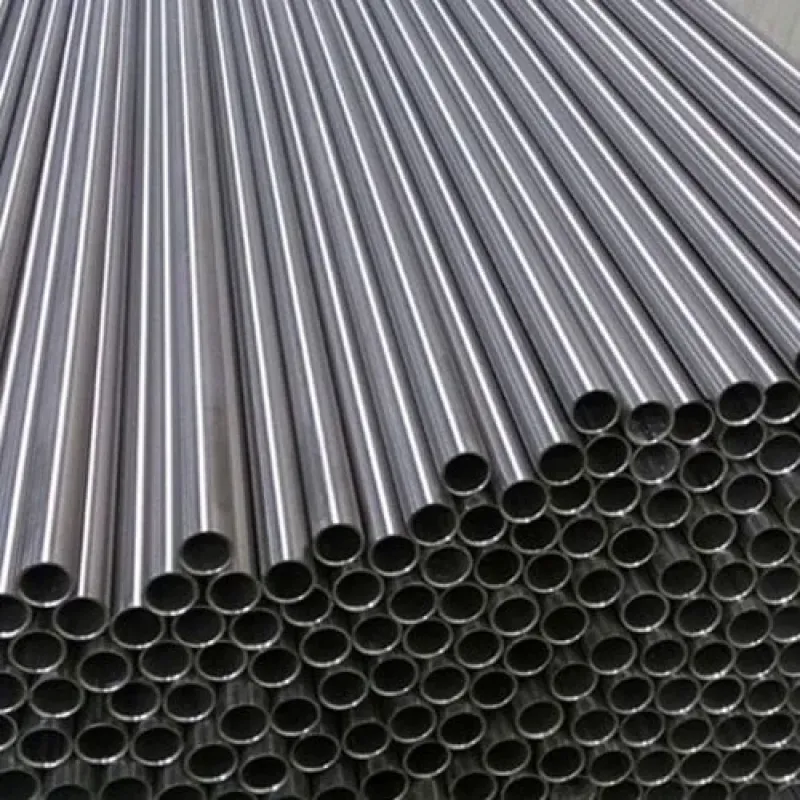
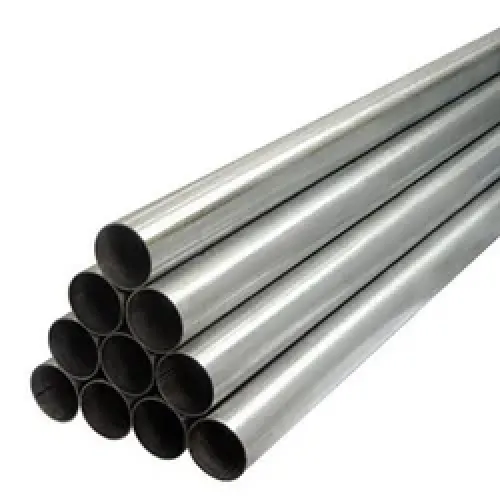
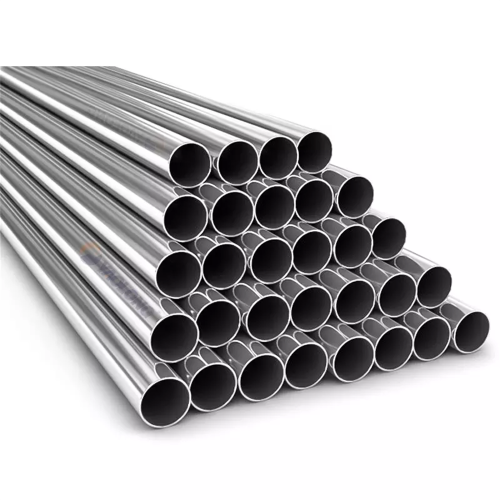
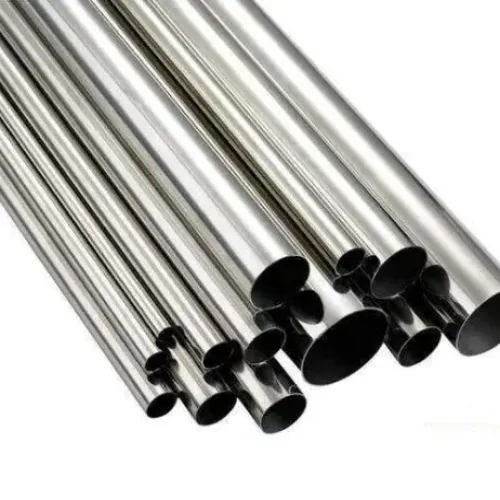
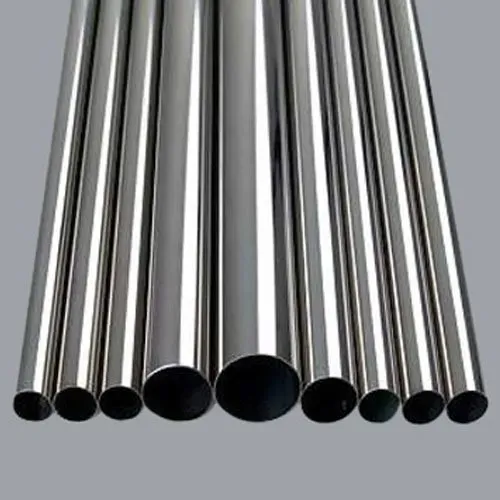
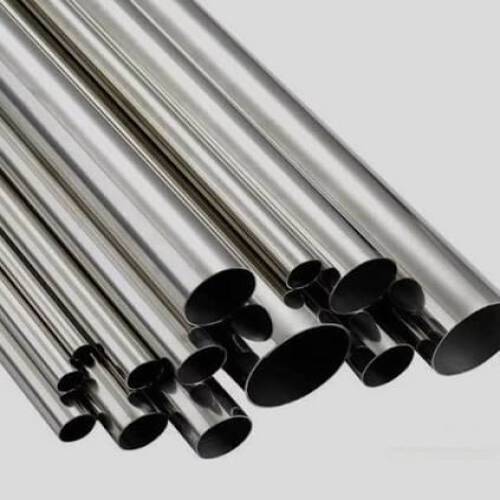
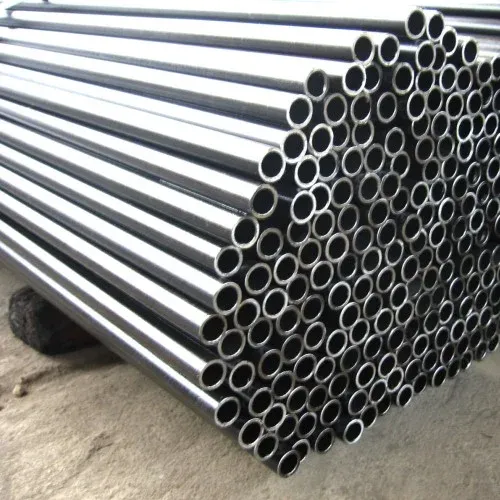
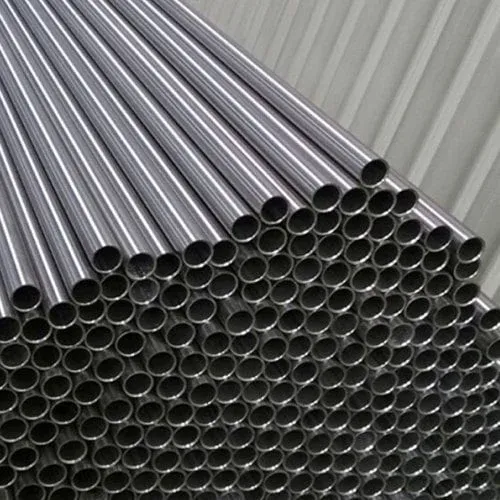
Precision Manufacturing of Austenitic Alloys throughout the Region.
The first step in the risk assessment of sensitisation is to control chemistry. Sidhgiri Overseas refines using state-of-the-art Argon Oxygen Decarburisation (AOD) and Vacuum Oxygen Decarburisation (VOD), which provide precise elemental balance. To avoid local chromium depletion, it is necessary to reduce the concentration of carbon. This means that there is no risk of intergranular pitting or stress corrosion cracking in the heat-affected zones (HAZ), thus avoiding the need for costly solution annealing after welding.
Advanced Thermal Processing: The controlled solution annealing of raw billets between 1040°C and 1120°C followed by fast water quenching is provided in our production mills to optimise mechanical properties. This process stabilises the austenitic microstructural configuration in a reliable manner where pressure containment is guaranteed.
High precision – Cold working is done on high-capacity draw benches and heavy mandrel matrices. This ensures strict adherence to international specifications on wall thickness uniformity, ovality variation and micro-inch surface roughness parameters essential for high-purity cleanroom performance.
304L Stainless Steel Pipe Specification
Engineered to sustain structural integrity and application safety across high-stress industrial environments, our SS 304L pipes conform to standardized international structural codes. The technical matrix below outlines the exact material, chemical, and testing parameters:
| Specification Parameter | Technical Standard Matrix / Operational Metric |
|---|
| Standard Classifications | ASTM A312, ASTM A213, ASTM A249, ASME SA312, ASME SA312, ASME SA249 |
| Dimensional Metrics | ANSI B36.19M, ANSI B36.10M, ASME B36.19 |
| Outside Diameter (OD) | 1/8" NB to 24" NB; custom sizes ranging from 6.00 mm up to 914.4 mm |
| Wall Thickness Range | 0.3 mm up to 50.0 mm (Schedules 5S, 10S, 40S, 80S, 160, XXS) |
| Length Profiles | Single Random (5–7 meters), Double Random (10–14 meters), or Cut-to-Length |
| End Configurations | Plain End (PE), Beveled End (BE), Threaded (Male/Female), Threaded Both Ends (TBE) |
| Surface Finish States | No.1 Pickled, No.4 Brush Finish, No.8 Mirror Polish, 2B Matte, Bright Annealed (BA) |
| Chemical Breakdown | Chromium (18.0%–20.0%), Nickel (8.0%–12.0%), Carbon (0.035% Max), Manganese (2.0% Max) |
| Mechanical Thresholds | Tensile Strength: ≥485 MPa (70 ksi); Yield Strength: ≥170 MPa (25 ksi) |
| Hardness Limits | Rockwell B (HRB) ≤92 Max or Brinell Hardness (HBW) ≤201 Max |
| Testing Regimens | Hydrostatic, Eddy Current, Ultrasonic, Radiography (100% X-Ray), PMI Testing |
Metallurgy & Performance Dynamics
Understanding the value of SS 304L requires knowledge of the surface chemistry of the material after passivation. In the atmosphere, the lowest chromium content of 18% will react and create an ultra-thin, self-healing layer of chromium oxide. This passive barrier is to protect the underlying iron matrix from oxygen and to prevent the oxidation process all together.
Carbon atoms are able to diffuse to the grain boundaries during the heavy thermal processing of standard 304 stainless steel in the range of 425∘C to 815∘C and to form chromium carbides that combine chromium and carbon. This localised depletion results in the exposure of the boundaries to aggressive intergranular corrosion. For the final structural assembly, Sidhigiri Overseas is able to completely disrupt this mechanism of chemical bonding so that the structure is not affected by corrosion even after long periods of multi-pass welding.
Available Product Configurations
Based on the fluid dynamics, structural loads and the budget of the projects, clients can choose among various physical setups:
SS 304L Tubing Configurations
|
+-----------------------+-----------------------+
| |
Seamless (SMLS) Welded (WLD)
| |
+--> Hot Extruded / Cold Drawn +--> ERW (Electric Resistance)
+--> EFW (Electric Fusion)
+--> CDW (Cold Drawn Welded)
Seamless Pipes (SMLS): These are pipes that are formed without longitudinal welds through the process of piercing solid steel billets over a piercing mandrel. Designed for use in high-pressure and high-temperature lines that can experience stress fatigue.
Electric Resistance Welded – ERW: Continuous Sheet (Electric Resistance Welded – ERW). Provides an extremely cost-effective solution that has close tolerances.
Electric Fusion Welded (EFW): Made using heavy plate rolling and high-energy electric arcs, with deep weld penetration, validated by continuous radiography testing for thick-walled applications.
Cold Drawn Welded (CDW): Made by pulling a welded base tube through a precision die and a mandrel in the core of the tube. This places the grain in the direction of the seam, and it also drastically diminishes eccentricity and surface roughness.
304L Stainless Steel Pipe Price Index
The price of SS 304L parts varies according to the iron ore, elemental nickel and ferrochromium futures prices on the international market, as well as specific process factors (such as seamless cold drawing and/or high-speed automated material roll-forming).
Common mill pricing structure for 2026 reference (with indicative prices).
Premium Seamless Piping (ASTM A312 TP304L): ₹320 – ₹410 per kg depending on size run scales and special heat treatments.
Meanwhile, welded/ERW piping lines (ASTM A312/A249) range from approximately ₹270 to ₹340 per kilogram, making them a cost-effective option for low- to moderate-pressure pipelines.
Sample Procurement Reference Chart (Per-Meter Delivery Framework)
| Size Designation (NB) | Outside Diameter (OD) | Wall Thickness | Schedule Rating | Approximate Weight | Indicative Price (Jordan) |
|---|
| 15 NB (1/2 Inch) | 21.30 mm | 2.11 mm | Schedule 10S | 1.04 kg/meter | ₹623 per Meter |
| 15 NB (1/2 Inch) | 21.30 mm | 2.77 mm | Schedule 40S | 1.31 kg/meter | ₹789 per Meter |
| 20 NB (3/4 Inch) | 26.70 mm | 2.11 mm | Schedule 10S | 1.33 kg/meter | ₹798 per Meter |
| 20 NB (3/4 Inch) | 26.70 mm | 2.87 mm | Schedule 40S | 1.75 kg/meter | ₹1,052 per Meter |
| 25 NB (1 Inch) | 33.40 mm | 2.77 mm | Schedule 10S | 2.17 kg/meter | ₹1,168 per Meter |
| 25 NB (1 Inch) | 33.40 mm | 3.38 mm | Schedule 40S | 2.60 kg/meter | ₹1,372 per Meter |
| 50 NB (2 Inch) | 60.30 mm | 2.77 mm | Schedule 10S | 4.08 kg/meter | ₹2,193 per Meter |
| 50 NB (2 Inch) | 60.30 mm | 3.91 mm | Schedule 40S | 5.64 kg/meter | ₹2,982 per Meter |
SS 304L Tube Suppliers in Jordan
Sidhgiri Overseas has a strong distribution channel in the region, making us the leading SS 304L Tube Suppliers in Jordan. Our network is extensive and goes deep into key industrial areas and supply centres locally, meaning we can hold large amounts of stock there and distribute materials on the spot without dealing with long manufacturing lead times.
Precision Pre-processing: Distribution centres have heavy-duty band saws, precision laser-cutting arrays and pipe-bevelling machines capable of high speed to provide pre-configured pipe which is ready for field installation.
Positive Material Identification (PMI): Spectrometers are available in our facilities for the re-verification of alloy chemistry before dispatch, giving absolute traceability to the original steel melt heat sequences, as part of a Non-Destructive Material Validation (NDMV) process.
Third-Party Inspection Coordination: Regularly work with trusted international inspection bodies such as Bureau Veritas, SGS, TUV and Lloyd's Register to meet strict requirements as required by the project.
Industrial Packaging & Protective Protocols
Maintaining straightness, shiny surfaces and exact bevel angles throughout handling and shipping long distances is an essential objective.
Bundle Strapping & Surface Protection: Piping is bundled in heavy steel bands in a secure hexagonal matrix with a high-density polyethylene (HDPE) plastic sheathing and surface protection and fitted with dedicated lifting straps to prevent metal-on-metal contact.
End caps & thread guarding: Heavy-gauge plastic caps are used on exposed pipe ends to prevent debris from entering and to buffer the structural weld prep angles to prevent impact damage.
Heavy-Duty Wooden Enclosures: Thin walled capillary tubes, instrument lines and electropolished items are packed in completely enclosed wooden crates with shock-absorbing internal framing.
Core Engineering Applications
Its consistently predictable mechanical behaviour makes SS 304L truly irreplaceable in demanding processing applications:
Chemical Process Systems: Manages long-distance transport lines for mild organic acids, oxidising fluids and various chemicals where localized weld decay may lead to catastrophic environmental failure.
Food, Beverage, & Dairy Processing: The ultra-smooth inner surfaces provide high value in sanitary circuits, where biological growth is a concern and where aggressive Clean-in-Place (CIP) chemical wash cycles are applied.
Nuclear & Power Generation Lines: Selected for its exceptional low-temperature toughness, high-stress mechanical properties and proven ability to perform at elevated temperatures up to 525°C.
Advanced Fabrication Processing
Cold Machining & Bending: High ductility allows for even bending with rotary draw or mandrel benders under high hydraulic force with precise control of the bending rate, considering the natural work-hardening nature of the material.
Welding Integration: Easily weldable with Gas Tungsten Arc Welding (GTAW/TIG), Gas Metal Arc Welding (GMAW/MIG), and Shielded Metal Arc Welding (SMAW). A low-carbon chemistry is maintained that helps prevent corrosion at joint lines without post-weld thermal treatment.
Pickling & Passivation: Chemical immersion of fabricated assemblies in a controlled nitric–hydrofluoric (NF) acid solution to remove oxide scales generated by high-temperature exposure and to immediately regenerate the protective chromium passive layer.
Dimensional Classifications In Stock
Standard Round Pipes: These are used for structural fluid transport, utility mains and cooling loops.
Square & Rectangular Tubing: Strong and durable structural tubing for equipment frameworks and architectural supports in corrosive applications.
Electropolished Tubing (EP): Ultra-pure, high-purity lines designed for biotechnology, pharmaceutical cleanrooms and semiconductor processing applications.
Heavy-Wall High-Pressure Tubing: Designed for chemical injection systems, high-pressure steam headers and heavy high-pressure hydraulic manifolds.
SS 304L Tube Exporters in Jordan
Sidhgiri Overseas is an established SS 304L Tube Exporter in Jordan that works completely in line with world standard frameworks. We arrange imports and exports from countries around the world, from the Middle East to Southeast Asia, South America, Europe and North American distribution centres.
Each shipment of exports is accompanied by full documentation, including European Standard EN10204 Type 3.1 Mill Test Certificates. Located close to the international seaports, we ensure smooth customs clearance, safe container packing and timely delivery for international buyers. We offer a strong product line, from lightweight transport piping (Schedules 5S & 10S) to heavy wall (Schedules 80S & 160S) products, giving users the freedom to choose without incurring lead time during emergency plant shutdowns or fast-track international buildouts.
Detailed Dimensional Framework
Our pipes integrate seamlessly into international engineering assemblies by maintaining strict adherence to standard dimensional ratings:
304L Stainless Steel Pipe Pressure Rating
Safe operating pressures are functions of design temperature, pipe diameter, and wall thickness. Governed by ASME B31.3 processing rules and calculated via Barlow’s formula, the maximum allowable pressure scales downward at elevated temperatures as the alloy's mechanical strength undergoes thermal reduction.
The following data table maps the maximum allowable internal working pressures (expressed in pounds per square inch gauge – psig) for seamless ASTM A312 TP304L pipes:
304L tube: the welded workhorse, and its ceiling
Carbon capped at 0.030% against 0.08% for 304, with chromium and nickel
unchanged at 18–20% and 8–12%. No molybdenum, so no particular
chloride resistance — PREN sits around 19.
On tube the low carbon matters because the assembly is welded. Orbital welds
on hygienic runs, tube-to-tubesheet joints, field terminations on instrument
lines: each one takes the heat affected zone through the sensitisation band,
and in 304 that leaves a chromium-depleted strip along the weld. 304L does not
form the carbides in the first place.
A213 and A269 annealed minima are 485 MPa (70 ksi) tensile,
170 MPa (25 ksi) yield and 35% elongation, hardness to HRB 92.
Two ceilings worth knowing. Chlorides: if the line carries brine,
chlorinated water or sits in coastal air, 304L will pit and 316L is the grade.
And temperature: above roughly 425 °C in sustained service the low
carbon costs creep strength, and 321 or 347H take over. Inside those two limits
304L is the most economical welded tube on the list.
304 against 304L on tube, decided on the numbers
| Property | 304 | 304L | What it decides |
|---|
| Carbon, max | 0.08% | 0.030% | Whether a weld sensitises the heat affected zone |
| Chromium | 18–20% | 18–20% | Unchanged |
| Nickel | 8–10.5% | 8–12% | Marginally wider band on 304L |
| Molybdenum | none | none | Neither grade resists chlorides; that is 316 territory |
| Tensile, min | 515 MPa (75 ksi) | 485 MPa (70 ksi) | Wall thickness where allowable stress governs |
| Yield, min | 205 MPa (30 ksi) | 170 MPa (25 ksi) | As above |
| Sustained service | to approx. 425 °C | lower, creep limited | Above that, 321 or 347H |
| Post-weld anneal | Often required | Not required | Fabrication cost and schedule |
On tube the carbon ceiling earns its keep more often than on pipe, because
tube assemblies are welded constantly: orbital welds on hygienic runs,
tube-to-tubesheet joints, field terminations on instrument lines. Each one
takes the heat affected zone through the 425–815 °C band.