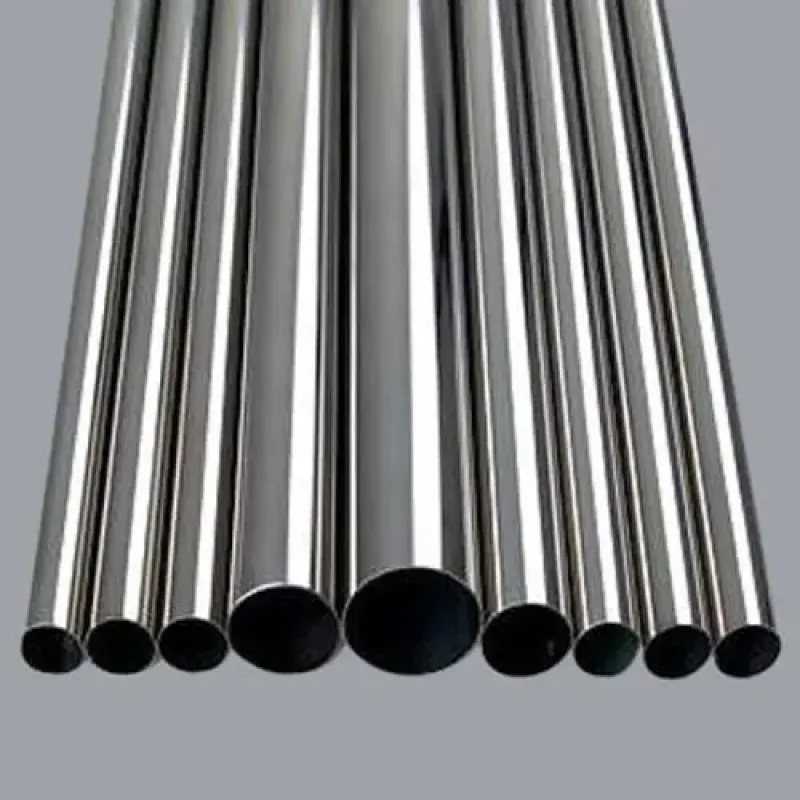
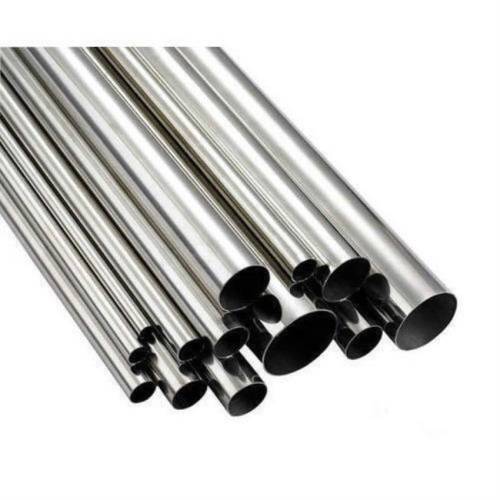
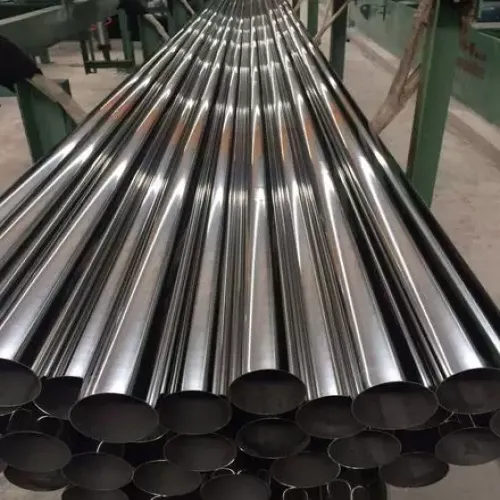
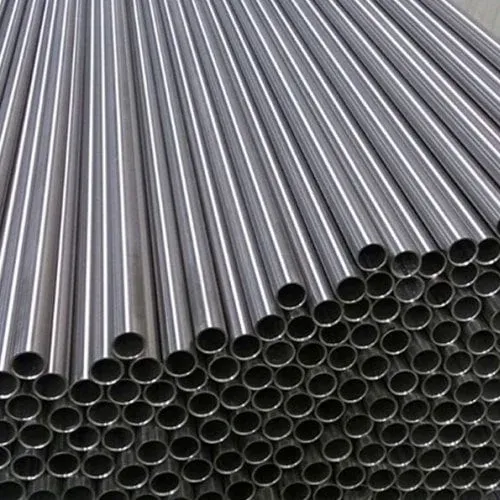
Top Production Infrastructure
Sidhgiri Overseas is one of the world's largest and premier distributors of fully traceable and mill-certified marine-grade (SS) 316L industrial, decorative, and performance-grade stainless steel (SS) piping. Sidhgiri Overseas provides very customized configurations to a quality-controlled distribution network for the most challenging chemical, marine, heavily welded, and high-temperature applications.
A Clear Explanation of Stainless Steel 316L Pipes
Stainless Steel 316L Pipe: What is it?
The ultra-low carbon stainless steel 316L pipes are the top-quality marine-grade stainless steel piping system. The "L" designation is a special designation, indicating that the maximum amount of carbon is less than 0.03% (standard SS 316 only has a maximum of 0.08%). In this particular chemical adjustment, along with a deliberate addition of molybdenum, the result is a pipeline system that is resistant to localized chemical breakdown during heavy fabrication. This makes SS 316L the best choice for those pipe networks that are heavily welded and exposed to extremely corrosive saline, high-chlorine, and extremely corrosive industrial environments.
The special property of stainless steel is its composition of 10.5% or more chromium.
Oxidation Defense: This chromium reacts naturally with the oxygen in the ambient to form a thin passive layer of chromium oxide that is microscopically thin and has no pores in the passive layer. This barrier prevents moisture and corrosive agents from oxidizing the iron matrix.
Self-Healing Properties: This protective film will reform when the 316L pipe is cut, scraped, or subjected to severe friction during fabrication, providing continuous protection to the structure and providing a characteristic clean metallic finish.
Structural and Functional Benefits of Different Product Types
Since its invention over 100 years ago, stainless steel is the most widely used and common material in the world. It has resistance to corrosion due to its content of chromium. Resistance can be shown to breaking down acids and their resistance to pitting in chloride solutions. It has low maintenance requirements and a familiar luster and is the ideal and best material for stainless steel 316L pipe.
The stainless steel 316L pipe comes in many forms, for example, high-frequency longitudinally welded pipe and seamless cold-drawn pipe. Choice of the best pipe structure depends very much on what pipe alloy chemistry, manufacturing requirements, surface finish, and structural loading are required for the pipe for the intended application.
The Ultimate Defense: Combining Molybdenum with Low Carbon
SS 316L is the ultimate solution to two conflicting destructive engineering problems:
The Molybdenum Factor: The strategic addition of 2% to 3% Molybdenum chemically shields the pipe against severe pitting, localized crevice corrosion, and rapid chemical degradation caused by active chlorides (such as saltwater, sea spray, industrial bleach, and aggressive processing solvents).
The Low Carbon Factor: Restricting the carbon level to a maximum of 0.03% prevents chromium carbides from forming along weld lines when the alloy is exposed to extreme welding heat (425°C–860°C). This completely eliminates intergranular corrosion, commonly known as weld decay.
Because of this, industrial engineers do not have to rely on time-consuming post-weld heat treatment (annealing) to regain corrosion resistance after welding, thus providing significant physical benefits:
Immense Project Cost Savings: Eliminates the specialized labor, machinery, and inspection hours needed for post-weld stress relief annealing on site.
Flawless Joint Reliability: The structural weld zones retain identical corrosion resistance to the raw mill-certified pipe body, preventing catastrophic chemical leaks at the seams.
Outstanding Sub-Zero Toughness: The ultra-low carbon austenitic matrix delivers exceptional fracture toughness and mechanical ductility in deeply sub-zero and cryogenic climates.
The chemical composition and surface profile of steel overall have a great influence on end products' mechanical properties and application areas. They can be used as per surface finish and type of alloy used; 316L is extensively employed in extreme offshore conditions and in high-purity pharmaceutical products:
No. 1 / Mill Finish (Hot-Rolled): A dull, matte grey, unpolished raw surface treatment. Primarily reserved for hidden structural frameworks, offshore rig sub-flooring, subterranean wastewater lines, and chemical refinery skeletons.
2B Finish (Cold-Rolled): A smooth, unpolished finish with a uniform metallic sheen, serving as the standard baseline for hidden chemical transport loops and industrial process containment.
Satin / Brushed Finish (#4 / Grit 240/320): Features smooth, unidirectional matte lines. It hides fingerprints and scuffs perfectly, making it the preferred choice for architectural accents in coastal zones, outdoor public handrails, and transport safety lines.
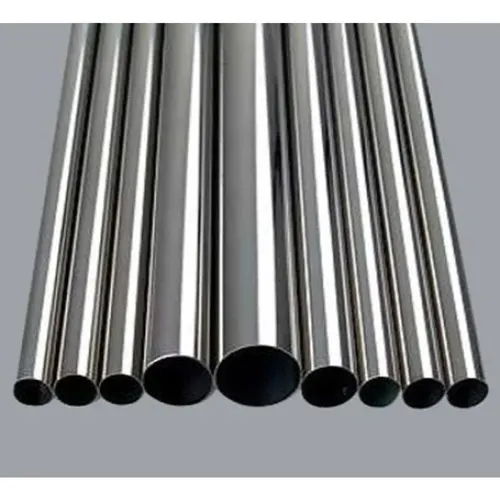
Mirror Polished (#8 / Grit 600+): A brilliant, reflective, chrome-like finish used for high-purity medical lines, yacht fittings, luxury coastal facades, and biotech processing equipment where material accumulation must be prevented.
Dual Certification Optimization: Sidhgiri Overseas features extensive dual certification stock satisfying both SS 316 and SS 316L parameters. This ensures the material delivers the ultra-low carbon weld safety of 316L alongside the higher mechanical yield and tensile strength limits of standard 316.
International Standard Grades Matrix
| DIN Grades | EN Grades | ASTM / ASME Standards | Targeted Scope |
|---|
| 1.4404 | X2CrNiMo17-13-2 | ASTM A312 / A269 Grade MT316L | Low-carbon marine optimization prevents weld decay |
| 1.4401 | X5CrNiMo17-12-2 | ASTM A312 Grade MT316 | Standard molybdenum grade; premium pitting and chloride defense |
| 1.4306 | X2CrNi19-11 | ASTM A312 Grade MT304L | Low-carbon general-purpose variant for standard welded systems |
| 1.4301 | X5CrNi18-10 | ASTM A312 Grade MT304 | Standard grade for non-marine, mild, or low-weld setups |
| 1.2010 / 1.2020 | X12CrMnNiN17-7-5 | ASTM A554 Grade MT201/202 | Budget alternative strictly for dry decorative or indoor use |
Size Configurations & Manufacturing Processes
The old adage applies to industry and standards: the two go hand in hand. Since there is a wide range of application ranges and various organization standards, manufacturing and testing results might differ. The 316L pipes are specified by their nominal bore (NB) sizing or their outer diameter (OD), and they have strict wall thickness schedules from both high-pressure seamless and economical welded fabrication tracks.
Common Size Classifications
Small Profiles (1/8" to 1" NB / 15.88 mm to 33.7 mm OD): Typically found with thin walls (Schedule 5S/10S) for use in biotech instrumentation, chemical dosing loops, pure water sampling lines, medical supply lines, etc.
Medium Framework (1.25" to 4" NB / 42.4 mm to 114.3 mm OD): Schedule 40S walls are used in coastal infrastructure, desalination piping manifolds, food processing loops with high saline water, and public handrails.
Heavy Structural & Transmission (6" up to 48" NB / 168.3 mm to 1219 mm OD): Thick wall (Schedule 80S up to Schedule 160) ideal for heavy load-bearing column applications in offshore rigs, subsea transmission pipelines, and heavy industrial chemical reactors.
Categorized Application Areas
Marine & Offshore Engineering: Offshore oil & gas production platforms, boat railings, dock skeletons, raw saltwater for coastal desalination facilities, and subsea transmission pipelines.
Pharmaceutical & Biotech Manufacturing: Sanitary process piping that can withstand aggressive chemical cleaning solutions, organic solvents, or high-temperature, high-pressure steam sterilization and is not able to corrode and contaminate batches.
Chemical & Petrochemical Processing: Highly corrosive acidic streams (sulfuric acid, acetic acid, phosphoric acid, and others) and/or high chloride chemical streams at elevated temperature and/or pressure.
High-Saline Food & Beverage Production: A process line for food ingredients (such as soy sauce, commercial brines, pickling agents, etc.) that have high sodium content or high acidity and would rapidly be destroyed by standard 304/304L piping.
Technical Specifications of Stainless Steel 316L Pipes
Unlike basic consumer tubes, industrial stainless steel 316L pipes adhere to strict dimensional criteria, chemical limitations, and international pressure schedules to confirm absolute operational defense.
Pipe Sizing (OD / NB): 1/8 inch up to 48 inches Nominal Bore (15.88mm, 21.3mm, 26.9mm, 33.7mm, 42.4mm, 48.3mm, 60.3mm, etc.). Standardizes pipe profiles from thin laboratory dosing tracks to massive high-volume marine distribution lines.
Wall Thickness / Schedule: Schedule 5S, 10S, 20S, 40S, 80S, up to Schedule 160 variants. Controls wall mass to handle high internal pressure, aggressive fluids, and heavy dead-load structural variables.
Material Grade: SS 316L (Ultra-Low Carbon), Dual Certified 316/316L, SS 316, SS 304L. Limits carbon to 0.03% max. and adds 2-3% molybdenum to eliminate weld decay and chloride pitting completely.
Pipe & Form Type: Seamless Drawn Billet, Welded Seam RHS / ERW Pipe. Selects seamless blocks for high-pressure containment or welded options for structural and low-to-medium pressure transfer.
Surface Finish: No. 1 Mill Finish, 2B Cold-Rolled, Satin / Brushed (#4), Mirror Polished (#8). Brushed and mirror finishes handle visible marine design; the unpolished mill finish serves hidden industrial reactor grids.
Standard Length: 3 m, 4 m, 5.8 m, 6 m, Random Lengths, and custom-cut profiles. Pre-cut and continuous mill configurations matching spatial layout requirements, architectural layouts, and international shipping constraints.
Mechanical Strength: Min. Yield Strength: 170 MPa | Min. Tensile Strength: 485 MPa. Verified metallurgy ensuring supreme structural rigidity on a primary axis and exceptional fracture toughness in sub-zero climates.
Comparing the Core Four: 304 vs 304L vs 316 vs 316L
| Grade | Carbon Level | Molybdenum Added? | Best Suited For... |
|---|
| SS 304 | Standard (0.08% max) | No | General purpose, low-weld, non-corrosive fluid transfer or indoor fabrication. |
| SS 304L | Low (0.03% max) | No | Heavy welding in mildly corrosive, freshwater, sanitary, and municipal environments. |
| SS 316 | Standard (0.08% max) | Yes (2.00% – 3.00%) | High-chloride and marine environments with minimal structural field welding. |
| SS 316L | Low (0.03% max) | Yes (2.00% – 3.00%) | Heavy-gauge welding in high-chloride, coastal marine, and aggressive chemical processing. |
Strategic Sourcing & Supply Chain Metrics
The choice of suppliers for structural piping or marine-quality hollow channels is a matter of parsing by price bands, certification to the operation, and geographic proximity to local commercial areas.
Tiered Cost Structures: Piping configurations come in ranges depending on total nickel concentrations, overall wall thickness, and specialty finishes (below ₹200, ₹201 - ₹250, ₹251 - ₹400, and heavy industrial/performance options above ₹401 per kg).
Corporate Compliance Filters: For major projects, heavy mechanical, and energy projects, procurement limits partnerships to elite entities possessing an annual turnover of ₹5 Cr+ alongside continuous registration under the Goods & Services Tax (GST) for 3+ years, which is required to trace the materials used.
Localized Logistics Networks: Accessing specialized regional supplier networks like Shanghai-based partners provides project managers with agile delivery options, minimizing transport delays on local projects and neighboring {local_hubs} industrial sectors.
Top Stainless Steel 316L Pipe Exporters in Shanghai
Industrial logistics requires special export routes to provide raw materials from all over the world to manufacturing, energy, auto-assembly, and chemical processing plants.
Sidhgiri Overseas Global Distribution: Sidhgiri Overseas is a leading exporter and has access to international logistics channels to supply high-performance welded and seamless stainless steel 316L piping from our plant in Shanghai to processing plants and structural distribution centers worldwide. Each batch exported conforms to the highest international standards of EN, DIN, ASME and ASTM A312/A269 and has the highest structural security in the world. Also, we are the best Stainless Steel 316L Pipe Exporters in Shanghai.
316L: low carbon on top of the molybdenum
Same 16–18% chromium, 10–14% nickel and 2–3% molybdenum as
316, with carbon held to 0.030% rather than 0.08%.
That matters because the weld is where chloride attack starts. 316 welded
and left unannealed sensitises in the heat affected zone exactly where the
chlorides are concentrating, and the molybdenum cannot defend ground the
chromium has already left. 316L removes the mechanism. For any welded
fabrication in chloride service — which is most process pipework, most
marine work and most pharmaceutical and dairy installations — the real
choice is 304L against 316L, not 304 against 316.
A312 minima are 485 MPa (70 ksi) tensile and 170 MPa
(25 ksi) yield, 35% elongation, hardness to HRB 95. The dual-certified
316/316L material common in the market meets both chemistries and both sets of
minima, which is often the most practical thing to buy.
For hygienic service the grade is only half the specification. Internal
surface roughness governs cleanability and has to be stated as an Ra value at
enquiry, because it determines the manufacturing route rather than being
polished on at the end.
Dual certification, and reading a 316L certificate
Most 316L on the market is dual-certified 316/316L: a single heat whose
chemistry meets the 0.030% carbon ceiling of 316L and whose mechanical results
also clear the higher 316 minima of 515 MPa tensile and 205 MPa
yield. It is stamped and certified to both.
That is genuinely useful, because it lets one material satisfy a drawing
calling for either, and it removes the usual 316L strength penalty. It is also
where certificates get misread. Three things to check on the document.
The carbon figure itself, not the grade line. A certificate
headed 316/316L with carbon at 0.045% is a 316 certificate; the dual marking is
wrong.
The heat number, and whether it matches the marking on the
pipe. This is what a positive material identification check on site is
reconciling, and the discrepancies almost always trace to a retyped trader
document rather than to the mill.
The test condition. Mechanical results quoted on
as-received material mean something different from results on a solution
annealed sample, and for a welded fabrication the annealed condition is the one
your design assumed.
If your specification calls for EN 10204 3.2 rather than 3.1, that has
to be in the purchase order, because 3.2 means an independent party witnessed
the testing and it cannot be issued retrospectively.
Pharmaceutical, biotech and chemical process lines
316L is the default for regulated process piping, and on those projects the
grade is the least of what has to be specified.
Surface finish as a number. Product-contact lines are
specified by internal Ra, not by a description. "Polished" means nothing on a
purchase order. The Ra figure governs the manufacturing route and therefore the
price and the lead time, so it belongs in the enquiry.
Drainability and dead legs. Clean-in-place systems depend
on geometry. A dead leg longer than a few pipe diameters will not be cleaned by
flow, whatever the finish, and that is a layout question settled before the
pipe is ordered.
Delta ferrite in welds. Autogenous welds on 316L need a
small ferrite fraction to resist solidification cracking, and too much costs
corrosion resistance. Where the specification calls for a ferrite number range,
it has to be in the order; it cannot be measured into existence later.
Documentation depth. Regulated projects typically want
heat-number traceability, the chemical and mechanical certificate, and often
the surface finish record. If EN 10204 3.2 is required, the
independent inspection has to be arranged before production rather than
afterwards.