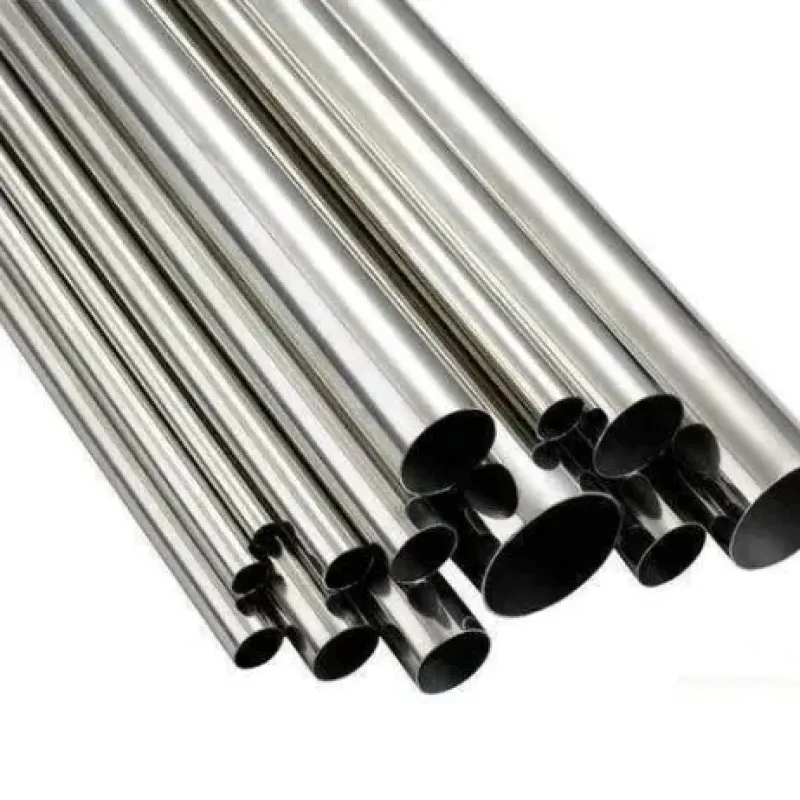
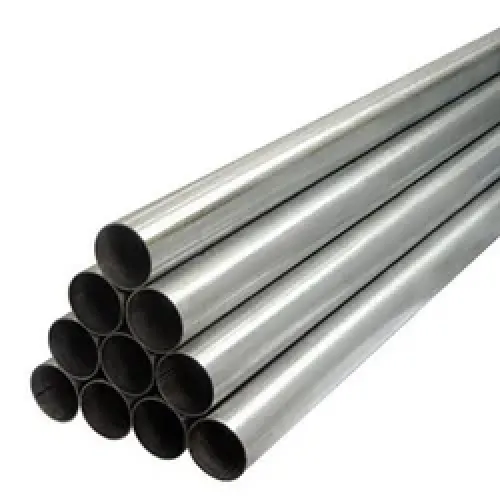
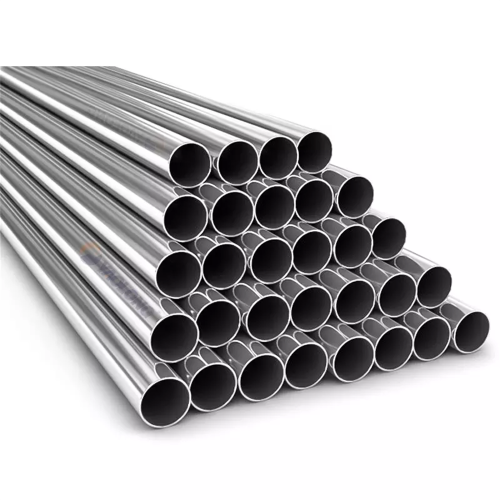
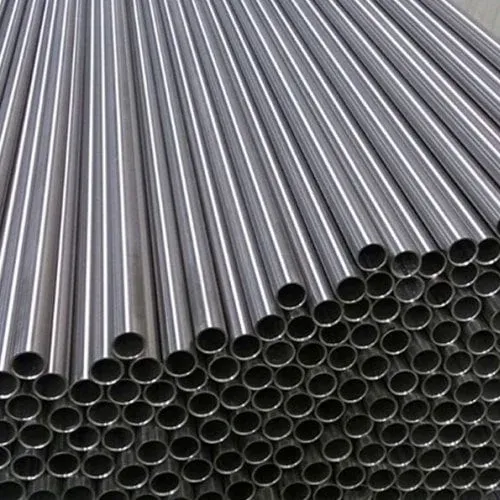
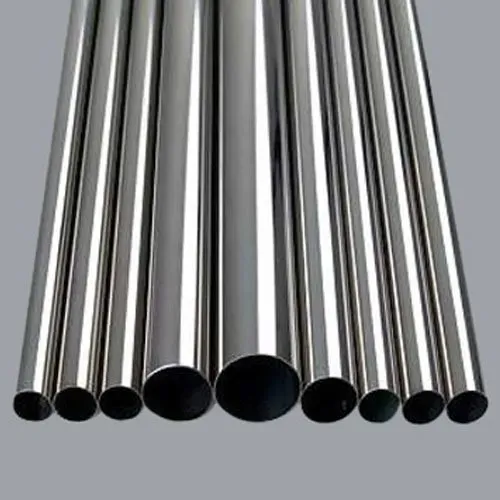
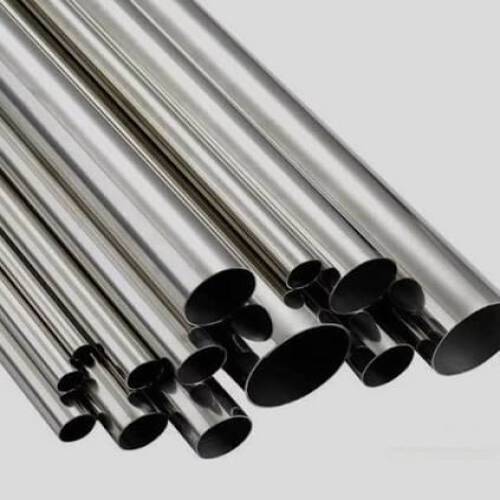
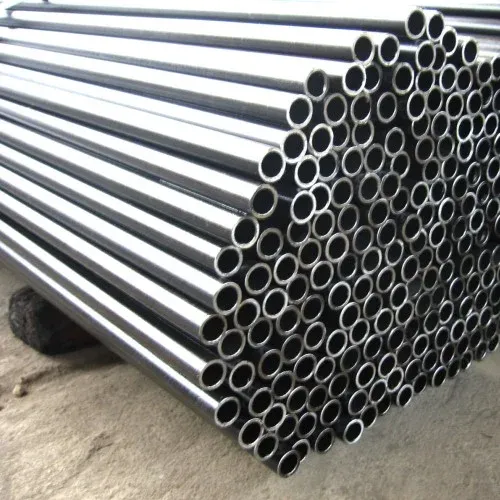
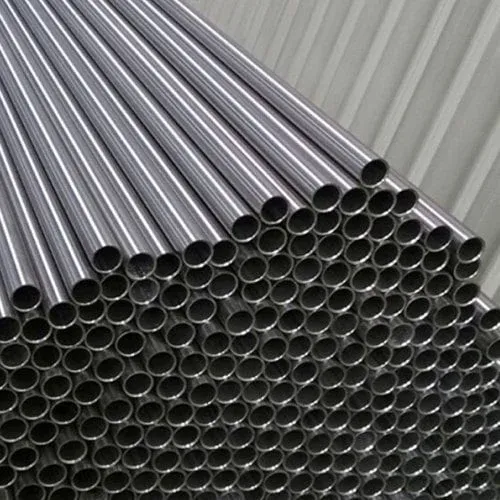
HPPICs and Regional Manufacturing Centers
Controlled Molybdenum Fusion: We use Vacuum Oxygen Decarburisation (VOD) and Argon Oxygen Decarburisation (AOD) refining matrixes in our production mills. This provides a uniform distribution of 2.0%–3.0% elemental molybdenum in the steel matrix to significantly improve localised pitting resistance.
Rigorous Solution Annealing: Raw pipes are put to the highly controlled thermal treatment at a temperature range of 1040°C to 1150°C and then rapidly water-quenched. This process stabilises the internal austenitic grain orientation and frees up the material's optimum mechanical strength.
Dimensional Micro-Tolerances: Our strict geometric tolerances, absolute wall thickness uniformity and exceptionally smooth internal surface topographies are achieved on our heavy-duty cold-draw benches and on a variety of specific mandrel matrices.
316 Stainless Steel Pipe Specification
To guarantee structural safety, seamless plant integration, and universal interchangeability, our systems are engineered to meet rigid international structural codes. The technical matrix below details the definitive material parameters:
| Specification Parameter | Technical Standard Matrix / Operational Metric |
|---|
| Standard Classifications | ASTM A312, ASTM A213, ASTM A249, ASME SA312, ASME SA213, ASME SA249 |
| Dimensional Metrics | ANSI B36.19M, ANSI B36.10M, ASME B36.19 |
| Outside Diameter (OD) | 1/8" NB to 24" NB; capillary & instrumentation lines from 6.00 mm to 914.4 mm |
| Wall Thickness Range | 0.3 mm up to 50.0 mm (Schedules 5S, 10S, 40S, 80S, 160, XXS) |
| Length Profiles | Single Random (5–7 meters), Double Random (10–14 meters), or Cut-to-Length |
| End Configurations | Plain End (PE), Beveled End (BE), Threaded (Male/Female), Threaded Both Ends (TBE) |
| Surface Finish States | No.1 Pickled (AP), 2B Matte, Bright Annealed (BA), Mechanically Polished (MP), Electropolished (EP) |
| Chemical Breakdown | Chromium (16.0%–18.0%), Nickel (10.0%–14.0%), Molybdenum (2.0%–3.0%), Carbon (0.08% Max) |
| Mechanical Thresholds | Tensile Strength: ≥515 MPa (75 ksi); Yield Strength: ≥205 MPa (30 ksi) |
| Hardness Limits | Rockwell B (HRB) ≤95 Max or Brinell Hardness (HBW) ≤217 Max |
| Testing Regimens | Hydrostatic, Eddy Current, Ultrasonic, Radiography (100% X-Ray), PMI Testing |
Erosion & Pitting Resistance Dynamics
One of the key benefits of SS 316 is its outstanding resistance to localised chemical corrosion. Standard grades of stainless steel are suitable for use in simple atmospheric conditions, but they corrode at a very high rate in high chloride concentrations and marine environments as well as in corrosive industrial acid.
The passive surface chemistry of the alloy is changed by the addition of 2.0% to 3.0% molybdenum. In conjunction with the chromium matrix, it creates a highly stable, self-healing barrier of chromium-molybdenum oxide. This defence shield prevents aggressive chloride ions from penetrating it and therefore completely eliminates pitting and crevice corrosion in extreme service.
Available Product Configurations
Sidhgiri Overseas offers a broad selection of physical forms designed to suit unique flow patterns, pressure capacities and structural layouts:
Seamless Pipes (SMLS): These are extruded pipes that don't have any lines of welds down the length of the pipe from solid steel billets. These pipes are the standard pipe for high-pressure hydraulic circuits and critical thermal applications because all weak points are eliminated.
Electric Resistance Welded (ERW): Formed by rolling flat steel together and welding with high-frequency electrical resistance. This provides a very cost-effective solution for utility media lines where close dimensional tolerances are needed.
Electric Fusion Welded (EFW): Made from heavy steel plate with a high-intensity electric arc and with 100% radiographic monitoring to ensure deep weld penetration in large-diameter assemblies.
Cold Drawn Welded (CDW): Drawn through precision dies and internal mandrels. This mechanical treatment improves the grain alignment of the microstructure at the weld seam, reduces eccentricity and optimises the smoothness of the surface.
316 Stainless Steel Pipe Price Index
The commercial value of SS 316 components is linked to the internal microstructural commodity markets for raw elemental nickel and ferromolybdenum futures, as well as to certain fabrication decisions (such as whether the component is a premium cold-drawn product or an automated high-speed roll-formed product).
Indicative Mill Pricing Structure (2026 Reference)
Premium Seamless Piping (ASTM A312 TP316): The price ranges from ₹390 to ₹490 per kilogram, depending on the size and run scales of the pipes and specific surface treatments applied.
Welded/ERW Piping Lines (ASTM A312/A249): Positioned around ₹340 to ₹420 per kilogram, providing a budget-optimised alternative for medium-pressure networks.
Sample Procurement Reference Chart (Per-Meter Delivery Framework)
| Size Designation (NB) | Outside Diameter (OD) | Wall Thickness | Schedule Rating | Approximate Weight | Indicative Price (Shanghai) |
|---|
| 15 NB (1/2 Inch) | 21.34 mm | 2.11 mm | Schedule 10S | 1.02 Kg/Meter | ₹715 per Meter |
| 15 NB (1/2 Inch) | 21.34 mm | 2.77 mm | Schedule 40S | 1.29 Kg/Meter | ₹903 per Meter |
| 20 NB (3/4 Inch) | 26.70 mm | 2.11 mm | Schedule 10S | 1.33 Kg/Meter | ₹931 per Meter |
| 20 NB (3/4 Inch) | 26.70 mm | 2.87 mm | Schedule 40S | 1.75 Kg/Meter | ₹1,225 per Meter |
| 25 NB (1 Inch) | 33.40 mm | 2.77 mm | Schedule 10S | 2.13 Kg/Meter | ₹1,385 per Meter |
| 25 NB (1 Inch) | 33.40 mm | 3.38 mm | Schedule 40S | 2.54 Kg/Meter | ₹1,651 per Meter |
| 50 NB (2 Inch) | 60.33 mm | 2.77 mm | Schedule 10S | 3.99 Kg/Meter | ₹2,593 per Meter |
| 50 NB (2 Inch) | 60.33 mm | 3.91 mm | Schedule 40S | 5.52 Kg/Meter | ₹3,588 per Meter |
SS 316 Tube Suppliers in Shanghai
Sidhgiri Overseas is a strong regional distributor with a powerful distribution network, as one of its top SS 316 Tube Suppliers in Shanghai and as a certified stockholder. Our logistics network reaches directly into important industrial hubs and localised supply hubs in {local_hubs}, providing us with massive local stocks that allow us to assign materials as needed and avoid long manufacturing lead times.
Precision Pre-Processing: Logistical facilities use heavy-duty band saws and precision laser cutting arrays to provide pre-cut and bevelled piping to exact field dimensions.
Positive Material Identification (PMI) Spectrometers: We use Positive Material Identification (PMI) spectrometers to confirm precise alloy chemistry and molybdenum content before sending the products out, guaranteeing absolute traceability to the steel melt.
Third-Party Inspector Collaboration: We co-ordinate product validation with top international inspection organisations like Bureau Veritas, TUV, SGS and Lloyd's Register regularly to adhere to project specifications.
Industrial Packaging & Protective Protocols
We undertake rigorous packaging standards to protect products from the stresses of handling and shipment and degradation during marine transport:
Secure Bundle Strapping: Piping is tied securely in hexagonal matrices with heavy steel bands, covered with outer heavy-duty polyethylene (HDPE) plastic sheathing and equipped with heavy-duty outer lifting slings.
Heavy Plastic End Caps & Bevel Protection: Caps seal both exposed pipe ends, preventing debris from entering and providing protection for the vulnerable weld preparation angles to impact damage.
Heavy-Duty Crate Enclosures: Fully enclosed wooden crates with shock-absorbing internal padding that pack capillary tubes, instrumentation lines and electropolished configurations.
Core Engineering Applications
Coastal Exposure: Used on coastal industrial plants and offshore drilling platforms in the harsh atmospheric salt environment.
Chemical Engineering Systems: Commonly used in transport piping for aggressive solvents, organic acids, chloride compounds and high-temperature chemical mixtures.
High-Purity Manufacturing: Selected for use in fluid lines applications in pharmaceutical formulations, biotechnology laboratories, commercial brewing, and food processing plants, where purity is absolutely critical (zero contamination).
Advanced Fabrication Processing
Cold Bending: Good ductility allows a smooth bend by rotary draw or mandrel machine. The material has a high work hardening rate and is processed under high capacity and stable hydraulic pressure.
Weldability: Readily welded with Gas Tungsten Arc Welding (GTAW/TIG), Gas Metal Arc Welding (GMAW/MIG), and Shielded Metal Arc Welding (SMAW/MIG welding).
Pickling & Passivation: The high-temperature scale is removed by a carefully formulated nitric-hydrofluoric acid chemical bath which places the product immediately into the protective chromium-molybdenum-oxide passive condition.
Comprehensive Inventory Framework
Standard Round Utility Pipes: For processing loops, facility utility mains, and high-stress fluid transport networks.
Square & Rectangular Structural Tubing: High-strength structural profiles for equipment frames, support columns and structural arrays in corrosive environments.
High-Purity Electropolished Tubing (EP): Manufactured for clean rooms used in pharmaceutical applications, for sterile biological environments and for ultra-pure water loops.
Heavy-Wall High-Pressure Tubing: Designed for chemical injection applications, high-pressure steam headers and heavy hydraulic manifolds.
SS 316 Tube Exporters from Shanghai
Sidhgiri Overseas is one of the SS 316 Tube Exporters in Shanghai and also works in full compliance with the global standard frameworks. We regularly handle long-distance freight to and from industrial areas around the Middle East, Southeast Asia, South America, Europe and North American distribution points, transporting marine-grade piping solutions.
All our shipments are accompanied by a detailed shipping document with complete documentation, including EN 10204 Type 3.1 Mill Test Certificates. Being close to main international seaports guarantees the speed of customs clearance, safe filling of ocean containers, and very predictable delivery time. With our extensive range of lightweight transport profiles (Schedules 5S and 10S) to heavy wall (Schedules 80S and 160), there are no lead-time limitations when it comes to your emergency plant turnaround or fast-track construction projects.
Detailed Dimensional Framework
Our pipes integrate seamlessly into global engineering assemblies by maintaining strict adherence to standard dimensional ratings:
| Nominal Pipe Size (NPS) | Nominal Bore (NB) | Outside Diameter (mm) | Schedule Rating | Wall Thickness (mm) | Nominal Weight (Kg/m) |
|---|
| 1/4 Inch | 8 NB | 13.72 mm | Schedule 10S | 1.65 mm | 0.50 Kg/m |
| 1/4 Inch | 8 NB | 13.72 mm | Schedule 40S | 2.24 mm | 0.64 Kg/m |
| 1/2 Inch | 15 NB | 21.34 mm | Schedule 10S | 2.11 mm | 1.02 Kg/m |
| 1/2 Inch | 15 NB | 21.34 mm | Schedule 40S | 2.77 mm | 1.29 Kg/m |
| 1/2 Inch | 15 NB | 21.34 mm | Schedule 80S | 3.73 mm | 1.65 Kg/m |
| 1 Inch | 25 NB | 33.40 mm | Schedule 10S | 2.77 mm | 2.13 Kg/m |
| 1 Inch | 25 NB | 33.40 mm | Schedule 40S | 3.38 mm | 2.54 Kg/m |
| 1 Inch | 25 NB | 33.40 mm | Schedule 80S | 4.55 mm | 3.29 Kg/m |
| 2 Inch | 50 NB | 60.33 mm | Schedule 10S | 2.77 mm | 3.99 Kg/m |
| 2 Inch | 50 NB | 60.33 mm | Schedule 40S | 3.91 mm | 5.52 Kg/m |
| 2 Inch | 50 NB | 60.33 mm | Schedule 80S | 5.54 mm | 7.60 Kg/m |
| 4 Inch | 100 NB | 114.30 mm | Schedule 40S | 6.02 mm | 16.32 Kg/m |
| 6 Inch | 150 NB | 168.28 mm | Schedule 80S | 10.97 mm | 43.21 Kg/m |
316 Stainless Steel Pipe Pressure Rating
Maximum safe internal working pressures (psig) calculated via Barlow’s formula and governed by ASME B31.3 processing rules for seamless ASTM A312 TP316 pipes:
| Nominal Size (Inches) | Schedule Designation | Ambient Rating (−20°F to 100°F) | Elevated (300°F) | High Heat (500°F) | Severe Limits (750°F) |
|---|
| 1/2 Inch | Schedule 40S | 3,315 psig | 2,851 psig | 2,563 psig | 2,287 psig |
| 1/2 Inch | Schedule 80S | 4,548 psig | 3,911 psig | 3,516 psig | 3,138 psig |
| 1 Inch | Schedule 40S | 3,366 psig | 2,797 psig | 2,512 psig | 1,940 psig |
| 1 Inch | Schedule 80S | 4,476 psig | 3,862 psig | 3,470 psig | 2,686 psig |
| 2 Inch | Schedule 40S | 2,398 psig | 2,069 psig | 1,860 psig | 1,439 psig |
| 2 Inch | Schedule 80S | 3,381 psig | 2,916 psig | 2,621 psig | 2,028 psig |
| 4 Inch | Schedule 40S | 2,021 psig | 1,742 psig | 1,566 psig | 1,212 psig |
| 4 Inch | Schedule 80S | 2,919 psig | 2,517 psig | 2,263 psig | 1,751 psig |
Metallurgical Matrix: SS 316 vs. SS 316L
For high-weldability assemblies, there is a significant threshold that must be taken into account – the carbon level:
Standard SS 316 (Carbon ≤ 0.08%): Provides higher tensile properties and good creep rupture strength at high temperatures. It can still undergo "sensitisation" in the 425°C−860°C range, where carbides are formed at the grain boundaries due to the combination of carbon and chromium, which may lead to weld decay.
SS 316L (Carbon ≤ 0.03%): An extra low-carbon type. It totally inhibits carbide precipitation in the heat-affected zone (HAZ), which allows strong and reliable multi-pass welding without the need for post-weld solution annealing.
316 tube: dimensional control is the reason it is tube
Pipe is bought to a nominal size and a schedule; tube is bought to an actual
outside diameter and wall, usually because something has to fit inside it,
slide over it, or transfer heat through it. In 316 that generally means heat
exchanger bundles, instrumentation and impulse lines, hydraulic and pneumatic
runs, and hygienic process lines.
The chemistry is 16–18% chromium, 10–14% nickel and 2–3%
molybdenum. The molybdenum is what resists chloride pitting, giving a PREN near
24 against about 19 for 304, and it is why 316 is the grade for anything near
seawater or carrying chlorinated water.
A213 and A269 minima are 515 MPa tensile, 205 MPa yield and 35%
elongation annealed, hardness to HRB 95.
Two things to state at enquiry that pipe orders never need. The tolerance
class, because exchanger tubesheets and compression fittings will not forgive a
loose OD. And the internal finish, as an Ra figure, for any hygienic or
instrumentation duty — it governs the manufacturing route rather than
being a polishing step added afterwards.
Specifying 316 tube so the right thing arrives
Four details decide whether a tube order lands correctly, and three of them
never appear on a pipe order.
Standard. A213 for boiler, superheater and heat exchanger
tube; A269 for general corrosion-resisting service; A270 where the duty is
sanitary; A554 for mechanical and ornamental work. They carry different test
regimes and different tolerance classes, and A554 tube should never be
substituted into a pressure application however well it measures.
Tolerance class. Exchanger tubesheets and compression
fittings are unforgiving. State the OD tolerance you need rather than assuming
the standard's default is tight enough for your joint.
Internal finish. For hygienic and instrumentation duty,
give an Ra figure. It governs the manufacturing route and the price, and it
cannot be added at the end.
Temper and condition. Annealed, bright annealed, or
cold-worked to a hardness range. Bright annealed matters wherever the bore is
not going to be cleaned after installation.
Tube is also where the pipe-versus-tube size confusion does real damage. Two
inch tube is 50.8 mm across the outside. NPS 2 pipe is 60.3 mm. If a drawing
gives a nominal size and a schedule, it is describing pipe, whatever the
heading on the sheet says.
Heat exchanger duty: what governs the tube, not the grade
Most 316 tube we quote goes into exchangers, and on those the grade is
usually the easy decision. The things that decide whether the bundle performs
are dimensional and procedural.
Wall tolerance against tubesheet hole tolerance. Expanded
joints rely on the interference between the two. A tube at the loose end of its
OD band in a hole at the generous end of its band will not expand to a sound
joint, and the leak shows up on hydrotest after the bundle is assembled.
Straightness and ovality over the full length. A tube that
measures correctly at the ends and bows in the middle will not thread through a
baffle stack.
Eddy current testing. A213 requires a non-destructive
electric test on each tube; eddy current is the usual choice for thin-wall
austenitic material. Where the bundle will be inspected in service, a baseline
set of readings at manufacture is worth asking for, because later inspections
are compared against something.
U-bend work. Bending cold-works the extrados and can leave
residual tensile stress exactly where chlorides concentrate. Where the bundle
sees chlorides above about 60 °C, stress relief of the bend region is
worth specifying rather than assuming.
Instrumentation, impulse and hydraulic lines
Small-bore 316 tube behaves differently from pipe, and the failures are
different too.
Fitting compatibility. Compression fittings bite into the
tube wall, and the joint depends on the tube being within OD tolerance and
within a hardness range. Tube that is too hard will not take the ferrule
properly; too soft and it deforms. Where fittings are specified, send the
fitting manufacturer's tube requirement with the enquiry.
Wall against pressure rating. Instrument tubing is rated by
OD and wall, and the rating falls away fast as wall thins. A 12 mm tube at
1 mm wall and the same tube at 1.5 mm are not interchangeable on a
high-pressure impulse line.
Bending. Tube is bent on site, which cold-works the
extrados and thins it. Minimum bend radius is a function of OD and wall, and
exceeding it leaves a thinned, stressed outer wall exactly where it will be
tested.
Cleanliness of the bore. Impulse lines to transmitters
carry no flow to speak of, so anything left in the bore at installation stays
there. Bright annealed tube and capped ends are worth the small premium.
Seawater systems and the velocity window
316 tube in seawater service fails in two opposite ways, and both are
avoidable by design rather than by buying a better grade.
Too slow. Below roughly one metre per second, silt and
biological growth settle on the bore. Under a deposit, oxygen is excluded,
chloride concentrates, and crevice corrosion starts in a spot the flow never
reaches. Stagnant legs and systems left full during a shutdown are where this
shows up, which is why a laid-up seawater circuit is drained and flushed rather
than simply switched off.
Too fast. Above roughly four metres per second, erosion
corrosion strips the passive film faster than it reforms, and at bends and
tube entries the local velocity is higher than the bulk figure suggests.
Between those limits 316 performs for decades. Outside them it does not, and
no amount of certification changes that. If the system will sit idle for long
periods, that is worth saying at design stage: it moves the specification
toward a higher alloy or toward a drain-and-flush procedure, not toward a
thicker wall.
Chloride stress corrosion cracking is the other boundary. Above about
60 °C with chlorides and tensile stress present, austenitic grades as
a family become vulnerable, and the answer is duplex rather than more
molybdenum.