Phone Number +91-96194-06392
Opening Hours:

Mon-Sat: 9am - 6pm

SS 321 Tube Supplier in Vietnam

Import Export
European Directive 2014/68/EU
ISO 14001:2015
ISO 45001:2018
ISO 9001:2015
GST Certificate
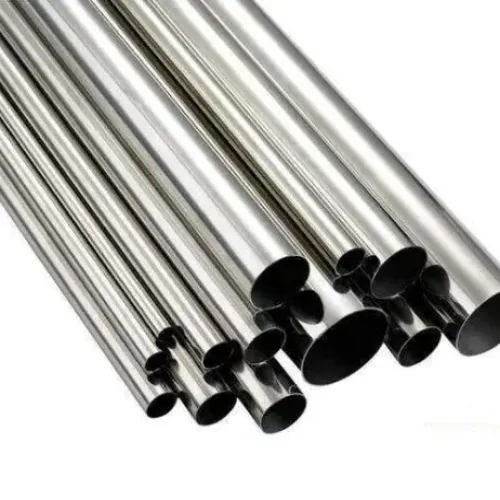
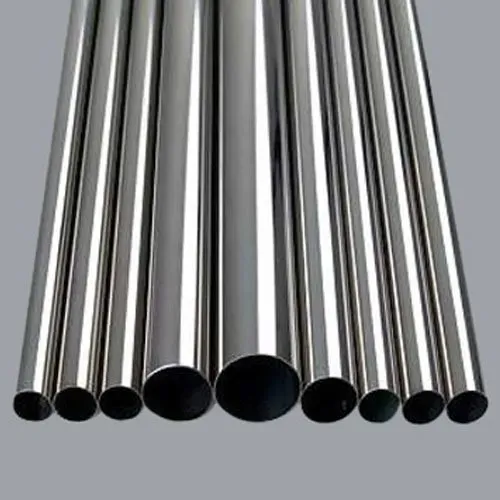
SS 321 Tube

SS 321 Tube Supplier in Vietnam Since 1962

Sidhgiri Overseas is a leading SS 321 Tube Suppliers in Vietnam and manufactures high-quality, titanium-stabilised austenitic stainless steel piping and tubing systems. Designed to meet the highest quality standards, our state-of-the-art in-house production facility features high-resolution cold-drawing machines, precision extrusion systems and fully automated high-frequency roll-forming mills, allowing us to produce top-quality structural piping specifically tailored for long-term high-temperature use.

It is important for the chemical composition of grade 321 stainless steel to be kept at an exact balance. Our mills don't have the same metallurgical flaws that exist in standard grades of steel, as elemental titanium is added at a minimum concentration of 5 times the carbon amount.

This titanium enrichment will react with carbon if welded or subjected to high temperatures to completely deter the precipitation of chromium carbides. Through close control of grain refinement during the thermal processing, we give industries a tough base material that is always resistant to intergranular corrosion even at extreme pressures and without structural deterioration.

Advanced Production Infrastructure Across Regional Manufacturing Centres.

Rigorous Solution Annealing: Raw pipes are subjected to carefully planned and controlled temperature cycles and then rapidly cooled. This high-level process stabilises the inner grain direction and achieves the maximum structural strength, microstructural stability, and creep resistance of the material in the case of cyclic heating.

Dimensional Micro-Tolerances: We use high-form and -capacity cold-draw benches and special mandrel matrices to ensure geometric tolerances, absolute wall thickness uniformity, and exceptionally smooth internal surface topographies.

Engineering Specifications & Material Standards

We follow worldwide structural codes to ensure structural safety, seamless integration of plants and universal interchangeability. The following benchmarks are used to determine the material parameters:

The standard classifications are ASTM A312, ASTM A213, ASTM A249, ASME SA312, ASME SA213, ASME SA249

Dimensional Metrics: ANSI B36.19M, ANSI B36.10M, ASME B36.19

Outside Diameter (OD) Scope: 1/8" NB to 24" NB, capillary & instrumentation lines 6.00 mm to 914.4 mm

Wall Thickness Capacities: 0.3 mm up to 50.0 mm (Schedules 5S, 10S, 40S, 80S, 160, XXS)

Length Profiles: Single or Double Random (5–7 or 10–14 meters) or custom Cut-to-Length variables

End Configurations: Plain End (PE), Beveled End (BE), Threaded (Male/Female), Threaded Both Ends (TBE)

Surface Finishes: No. 1 Pickled (AP), 2B Matte, Bright Annealed (BA), Mechanically Polished (MP)

Chemical Matrix Control: Chromium (17.0%–19.0%), Nickel (9.0%–12.0%), Titanium (5×C minimum to 0.70% maximum), and Carbon (0.08% maximum)

Mechanical Thresholds: Tensile Strength: ≥ 515 MPa (75 ksi); Yield Strength: ≥ 205 MPa (30 ksi)

Hardness Limits: Rockwell B (HRB) ≤ 95 maximum or Brinell Hardness (HBW) ≤ 217 maximum

Testing Regimens: Hydrostatic pressure, Eddy Current, Ultrasonic scans, Radiography (100% X-ray) and full PMI Testing

Metallurgy & High-Heat Performance Dynamics

The most important feature of SS 321 is its high resistance to severe dry heat and its durability. The 18-8 stainless steel grades (including SS 304) are very effective in common atmospheric applications but are susceptible to the formation of chromium carbide when heated in the sensitisation range (427°C ≤q T ≤q 816°C). This reaction results in the depletion of the grain boundaries of chromium and thus promotes the initiation of fast and catastrophic intergranular corrosion.

The presence of titanium changes this chemical equation. Titanium also has a much greater affinity to carbon than does chromium, and the carbon will therefore prefer to react with the titanium rather than with the chromium, thus creating stable titanium carbides. Consequently, the chromium is evenly distributed in the steel matrix and maintains the tough chromium-oxide passive film, which is self-healing. Therefore, SS 321 possesses good hot corrosion resistance against continuous and cyclic exposure up to 816°C (1500°F) and can be used for short-term oxidation resistance up to 900°C (1500°F).

Available Product Configurations

Sidhgiri Overseas provides several physical types, depending on the fluid dynamics, velocity profile, operating pressure and structural frameworks of your system.

Seamless Pipes (SMLS): Pipes extruded from solid steel billet without welding along the longitudinal axis. This smooth operation does not leave any weak points, and it is used in high-pressure boilers, aerospace manifolds and critical heat exchangers.

Electric Resistance Welded (ERW): These are formed from continuous flat steel strips and welded together by an electric welding process that is automated and uses high-frequency electrical resistance. This is a cost-effective solution with tight tolerances for high-temperature exhaust and exhaust gas recirculation (EGR) loops.

Fabricated by Electric Fusion Welded (EFW), a process that welds heavy steel plates with high-energy electric arcs, accompanied by 100% radiographic inspection for deep weld penetration for large industrial furnace configurations.

Cold Drawn Welded (CDW): The welded base tube is pulled through a precision die over an internal mandrel so as to align the base tube's microstructural grain along the weld seam for a more uniform mechanical performance.

321 Stainless Steel Pipe Price Index

The commercial value of SS 321 parts varies according to commodity prices of elemental nickel on the world market and ferro-titanium futures, as well as specific component manufacturing decisions (premium seamless cold drawing vs. high-speed, automated roll-forming).

This document outlines the indicative mill pricing structure for 2026. This is the indicative mill pricing structure (2026 reference).

Premium Seamless Piping (ASTM A312 TP321) is priced from ₹410 to ₹510 per kg based on the dimensional run scale and special testing parameters.

Welded/ERW Piping Lines (ASTM A312/A249): These are around ₹360 to ₹440 per kilogram, and they are extremely effective and reliable for exhaust and ducting arrays.

SS 321 Tube Suppliers in Vietnam

Sidhgiri Overseas is a strong SS 321 Tube Suppliers in Vietnam, with a comprehensive regional distribution network, and is a leading SS 321 Tube in Vietnam and a certified stockholder.

Our network reaches right into key industrial centres and neighbourhood supply centres throughout {local_hubs}, which provides large inventories on-site for quick material distribution and avoids long manufacturing lead times.

Precision Pre-Processing: Massive band saws and precision laser cutting arrays provide pre-cut and bevelled piping to precise field dimensions.

Positive Material Identification (PMI) spectrometers are used for material chemistry validation to confirm precise alloy chemistry and/or titanium stabilisation ratios before dispatch, therefore providing absolute traceability back to the steel melt.

The coordination of product validation with leading third-party inspection organisations such as Bureau Veritas, TUV, SGS and Lloyd's Register is commonplace, as this collaboration plays a key role in the successful development and fulfilment of our projects.

Industrial Packaging & Protective Protocols

Structural straightness, mechanical edge profiles and accurate bevel shapes are essential for long-distance handling and marine transportation.

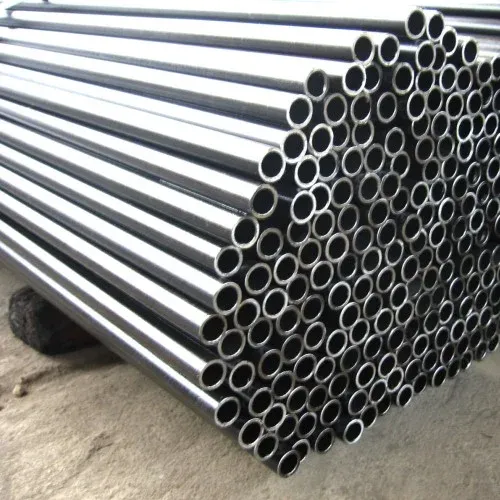
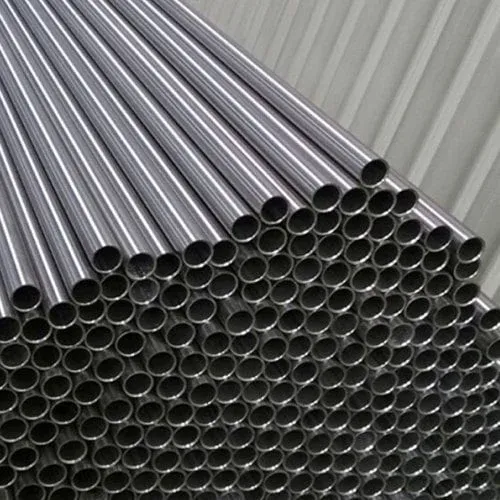
Secure Bundle Strapping: Piping is tightly strapped in compact hexagonal bundles with heavy steel bands, secured with high-density polyethylene (HDPE) plastic sheathing and equipped with heavy lifting slings on the outside to prevent chafing of metal on metal.

End Caps & Bevel Protection: Heavy plastic caps for both exposed pipe ends prevent the entry of debris and provide protection against impact damage to the vulnerable weld preparation angles.

Heavy-Duty Crate Enclosures: Fully enclosed wooden crates with shock-absorbing internal padding are used for packing Capillary tubes, instrumentation lines and thin-walled aerospace tubular goods.

Core Engineering Applications

Aerospace & Automotive Systems: Used extensively on aircraft exhaust manifolds, piston engine exhaust stacks, high-performance automotive downpipes and turbocharger housings.

Energy & Power Generation: Designed for high-temperature steam lines, superheater elements, waste-heat recovery systems, boiler casings and critical heat exchanger parts.

Industrial Processing Equipment: Used in heavy-duty expansion joints, components for industrial furnaces, incinerator liners and thermal processing facilities.

Advanced Fabrication Processing

Cold Bending: Very ductile and suitable for smooth bending using rotary draw or mandrel machines. Because of the material's high work hardening rate, the processing is done under high and stable hydraulic pressure.

Welding Integration: Can be easily welded with Gas Tungsten Arc Welding (GTAW/TIG), Gas Metal Arc Welding (GMAW/MIG) and Shielded Metal Arc Welding (SMAW). The immunity from weld decay is maintained without the need for post-weld solution annealing because it is stabilised with titanium.

Pickling & Passivation: Post-fabrication chemical immersion in a carefully controlled nitric and hydrofluoric acid bath removes the high-temperature scale and re-establishes the protective passive layer of the alloy.

Comprehensive Inventory Framework

Standard Round Utility Pipes: Designed for high fluid temperature and gas transport pipelines, processing loops and exhaust connections.

Square & Rectangular Structural Tubing: High-strength structural tubing for high heat equipment frames, furnace support columns and high-strength structural thermal arrays.

Heavy-Wall Boiler Tubing: Made specially for power generation steam headers, radiant coils and high-pressure superheated lines.

SS 321 Tube Exporters in Vietnam

Sidhgiri Overseas is a leading SS 321 Tube Exporters in Vietnam which works in accordance with the global standard frameworks. Long-distance freight management is conducted regularly to the Middle East, Southeast Asia, South America, Europe and North American distribution points with high-temperature piping solutions.

The export consignment is fully supported by detailed documentation, including EN 10204 Type 3.1 Mill Test Certificates. We are located near major international seaports for quick customs clearance, secure ocean container stuffing operations and highly predictable transit times to our international buyers. Our extensive range includes low-weight transport profiles (Schedules 5S, and 10S) to heavy-walled profiles (Schedules 80S and 160), and the lead time is not an issue during an emergency turnaround or a fast-track construction programme.

Metallurgical Comparison: SS 321 vs. SS 316L

For severe-service projects, the engineer has to consider the exact operating stresses of the project when choosing the most suitable alloy combination:

Operating Temperatures: SS 321 shows significantly better performance than SS 316L in high-stress applications in dry heat conditions and in continuous thermal cycles. It is most resistant to scaling and creep deflection within the range of operating temperature of 427°C to 816°C.

Elemental molybdenum added: corrosion type protection for protection from localised chloride ion attacks, pitting, and marine/acidic fluid corrosion. SS 321, on the other hand, is used to reduce intergranular structural failure at high temperatures, in the case of which the titanium is added intentionally.

Finishing & Aesthetics: SS 321 is not easy to polish or finish to a high shine or mirror-like finish because it contains titanium carbide inclusions in its grain structure. It is only suitable for industrial, structural and heavy engineering use, while SS 316L can be used for high-purity electropolishing for aesthetic and hygienic purposes.

Where 321 tube is specified, and the one thing to check

Tube rather than pipe means the duty is usually heat transfer or a mechanical assembly, and 321 is chosen for one reason: it survives cycling through the sensitisation band. Titanium at five times the carbon content ties up the carbon so chromium carbides never form at the grain boundaries, and the grade comes back from 425–815 °C excursions without losing corrosion resistance.

That makes it the default for exhaust and manifold work, expansion bellows, superheater and reheater elements, and heat exchanger bundles that run hot and are shut down regularly. Continuous service to roughly 870 °C.

A213 minima in the annealed condition are 515 MPa tensile, 205 MPa yield and 35% elongation.

The thing to check is the weld filler. 321 is normally welded with 347 filler rather than 321, because titanium oxidises and is largely lost across the arc while niobium survives it. A 321 assembly welded with matching filler can end up with unstabilised weld metal sitting in exactly the service the stabilisation was specified for. Confirm it with your fabricator before the first joint.

Chemical Composition & Mechanical Properties

SS 321's chemistry is built around one stabilizing element added to the standard chromium-nickel austenitic base:

Chromium (Cr)

17.00 - 19.00

Nickel (Ni)

9.00 - 12.00

Carbon (C)

0.08 max

Titanium (Ti)

5x(C) min, 0.70 max

Manganese (Mn)

2.00 max

The titanium content is set as a minimum of five times the carbon content rather than a fixed figure, because it must scale with however much carbon is actually present in a given heat of steel — enough titanium has to be available to bond with the carbon before chromium can, up to a 0.70% ceiling. Carbon is deliberately retained at up to 0.08%, rather than reduced as in the "L" grades, because that carbon contributes directly to the alloy's high-temperature strength and creep resistance once titanium has neutralized its corrosion risk.

Mechanical properties (minimum):

  • Tensile strength: ≥515 MPa (75 ksi)
  • Yield strength: ≥205 MPa (30 ksi)
  • Hardness: Rockwell B (HRB) ≤95, or Brinell (HBW) ≤217

Governing standards: ASTM A213 (seamless ferritic and austenitic alloy-steel tubes for boilers, superheaters and heat exchangers), ASTM A249 (welded austenitic tubes for the same service), and ASME SA213 / SA249, with dimensions referenced to ASME B36.19M. SS 321 tube is supplied with outside diameters from capillary sizes of 6.00 mm up to large-bore 914.4 mm, and wall thicknesses from 0.3 mm up to 50.0 mm, in schedules including 5S, 10S, 40S, 80S, 160 and XXS. Every production lot is verified through hydrostatic testing, eddy current or ultrasonic testing, radiography and Positive Material Identification (PMI) before dispatch from our Mumbai facility.

Weld-Decay Resistance & High-Temperature Behaviour

When conventional 18-8 austenitic stainless steels such as SS 304 are welded or held for extended periods in the 427°C-816°C range, chromium in the alloy reacts with carbon and precipitates out as chromium carbides at the grain boundaries — a condition known as sensitization or weld decay. The chromium locked into these carbides is no longer available to maintain the passive oxide film that gives stainless steel its corrosion resistance, so the grain-boundary regions become locally depleted in chromium and vulnerable to intergranular corrosion.

SS 321 prevents this by stabilization rather than carbon reduction. Titanium has a stronger chemical affinity for carbon than chromium does, so as the tube sits in or passes through the critical temperature range, titanium bonds preferentially with the available carbon instead of chromium. Chromium stays in solid solution, free to maintain the tough, self-healing passive film, and intergranular corrosion is suppressed without stripping carbon out of the steel. Because of this, SS 321 tube does not require solution annealing after welding to remain safe from weld decay, and it retains a base strength and creep resistance under sustained heat that a low-carbon "L" grade cannot match.

SS 321 tube is rated for continuous and cyclic service up to 816°C (1500°F), with short-term oxidation resistance extending to around 900°C. Grain refinement is closely controlled during solution annealing and thermal processing at our facility, producing tubing that resists intergranular corrosion without structural change even under repeated thermal cycling and challenging pressure conditions.

Applications

With its high sustained-temperature capability and stable mechanical properties, SS 321 tube is specified across industries where components spend their operating life inside the carbide precipitation zone rather than passing through it briefly:

  • Aerospace and automotive exhaust systems — aircraft exhaust manifolds, piston-engine exhaust stacks, turbocharger housings and high-performance automotive downpipes subject to repeated thermal cycling.
  • Exhaust gas recirculation (EGR) and ducting lines — welded (ERW) SS 321 tube provides a dimensionally consistent, cost-effective option for high-temperature exhaust and EGR circuits.
  • Power generation and boiler systems — superheater elements, waste-heat recovery tubing, boiler casings and heat exchanger bundles running at sustained high temperature and pressure.
  • Industrial furnaces and thermal processing equipment — expansion joints, furnace components, incinerator liners and thermal oxidizer tubing.
  • Instrumentation and capillary lines — small-bore, thin-wall tubing for high-temperature sensing and control applications requiring a seam-consistent, dimensionally precise bore.

Siddhgiri Overseas supplies SS 321 tube in seamless (SMLS), ERW, EFW and CDW construction, and stocks standard round utility tubing, square and rectangular tubing for high-heat equipment frames, and heavy-wall boiler tubing for steam headers and radiant coils — all tested and inspected before leaving our Mumbai facility.

Certifications

Siddhgiri Overseas is ISO certified for quality, occupational health & safety and environment management, and holds the import and export certification required to supply stainless steel pipe and tube to customers worldwide. Certificate copies are available on request for buyers who need them for their own compliance records.

Why Partner With Sidhgiri Overseas?

Rigorous QA Regimens: All production batches are tested by strict ultrasonic testing, hydrostatic testing and full-form PMI analysis for optimum field performance.

Massive Stock Selection: With large local stockpiles across all standard schedules and sizing metrics, we minimise lead times to circumvent downtime for critical projects.

Custom Fabrication Capabilities: Fully equipped to accommodate specialised bespoke mandates, including precision pipeline bevelling and custom-tailored lengths.

Reliable Global Logistics: Seamless shipping architectures ensure safe, punctual container delivery directly to commercial yards and construction sites worldwide.

Market-Aligned Costs: Production and supply chain tracking are well optimised to provide high-quality materials to international codes at competitive prices.

Get a Technical Procurement Quote

Talk to our Engineering Sales Division today to discuss your project requirements, custom size profiles and compliance requirements. We offer specific commercial pricing models, comprehensive logistical schedules and full material documentation that can be tailored to your corporate purchasing process. Contact us over the phone, via email or our online enquiry form for a fast and competitive estimate.

(FAQs)

1. What does "titanium stabilization" mean in SS 321, and how does it prevent intergranular corrosion?

When standard austenitic stainless steels (like Grade 304) are exposed to high welding temperatures or continuous operations in the sensitisation range (427°C to 816°C), carbon atoms diffuse to the grain boundaries and bond with chromium. This creates chromium carbides, resulting in localized chromium depletion and catastrophic intergranular corrosion.

Grade 321 resolves this by adding elemental titanium at a minimum concentration of 5 times the carbon content. Because titanium has a significantly higher chemical affinity for carbon than chromium does, the carbon preferentially bonds with the titanium to form stable titanium carbides. This allows the chromium to remain evenly distributed throughout the steel matrix, preserving its self-healing, protective passive layer.

2. What are the operational temperature limits for Grade 321 tubing?

SS 321 is specifically engineered to deliver exceptional resistance to continuous dry heat, cyclic thermal exposure, and scaling. It maintains structural stability, creep deflection resistance, and hot corrosion protection during continuous service at temperatures up to 816°C (1500°F). Additionally, for short-term or intermittent exposures, the alloy provides reliable oxidation resistance up to 900°C (1650°F).

3. What are the key mechanical strength and hardness metrics for SS 321 tubes?

SS 321 acts as an exceptionally tough structural base material capable of handling extreme mechanical loads and high pressures under elevated thermal conditions. Its technical thresholds include:

Ultimate Tensile Strength: ≥ 515 MPa (75 ksi)

Yield Strength: ≥ 205 MPa (30 ksi)

Hardness Limits: Rockwell B (HRB) ≤ 95 Max or Brinell Hardness (HBW) ≤ 217 Max

4. How does SS 321 compare to SS 316L regarding high-heat performance and finishing aesthetics?

High-Heat Performance: SS 321 performs significantly better than SS 316L in high-stress dry heat and continuous thermal cycles (427°C to 816°C) due to its titanium stabilisation. SS 316L relies on molybdenum fusion primarily to defend against liquid chloride pitting and marine/acidic environments.

Finishing & Aesthetics: Due to the presence of hard titanium carbide inclusions within its grain structure, SS 321 is difficult to polish to a high-gloss or mirror-like finish. Consequently, it is designated strictly for heavy industrial, structural, and high-temperature engineering use, whereas SS 316L remains preferred for high-purity electropolishing.

5. In what specific manufacturing profiles and structural forms are SS 321 tubes supplied?

To accommodate diverse fluid velocities, high pressure limits, and structural frameworks, Grade 321 is produced in four core configurations:

Seamless Pipes (SMLS): Extruded from solid steel billets with zero longitudinal welds, eliminating weak points for high-pressure boilers, aerospace manifolds, and heat exchangers.

Electric Resistance Welded (ERW): Roll-formed from continuous strips and fused via automated high-frequency welding; ideal for cost-effective exhaust gas recirculation (EGR) loops.

Electric Fusion Welded (EFW): Crafted from heavy plates with deep weld penetration and 100% radiographic inspection for large industrial furnace installations.

Cold Drawn Welded (CDW): Drawn through a precision die over an internal mandrel to physically align microstructural grains along the weld seam for uniform performance.

6. What testing protocols and corporate compliance filters apply to the procurement of SS 321 tubes?

To meet international engineering codes (ASTM A312, A213, A249 or ASME SA312, SA213, SA249), raw lots must clear stringent verification frameworks before dispatch:

Testing Regimens: Every batch undergoes Hydrostatic pressure validation, Eddy Current testing, Ultrasonic scans, 100% X-ray Radiography, and Positive Material Identification (PMI) spectrometer analysis to re-verify titanium stabilization ratios.

Traceability: Shipments must be accompanied by comprehensive European Standard EN 10204 Type 3.1 Mill Test Certificates (MTC) that track components directly back to the original furnace melt.

Vendor Compliance: Major state-run projects and heavy industrial works filter their vendor networks to select top-tier entities maintaining an annual turnover of ₹5 Cr+ and a continuous GST registration for 3+ years to ensure material pedigree.

Leading Stainless Steel Pipe Manufacturers in Mumbai

Heavy-duty piping infrastructure requires high-quality materials from reputable and mill-certified production facilities. Sidhgiri Overseas is one of the stainless steel pipe manufacturers in Mumbai, providing high-quality piping solutions designed to meet the rigours of industry. We adhere to the high standards of metallurgy used in industrial projects worldwide and have the ability to maintain tight tolerances for dimensions, chemical stability and strict quality testing on all production runs.

As one of the Leading Stainless Steel Pipe Manufacturers in Mumbai, we offer seamless and welded options, ensuring strength and reliability for high-pressure energy use, chemical processing, and large-scale projects. Sidhgiri Overseas ensures certified sustainable material production with a strong supply chain, using the best production infrastructure available and ensuring strict international compliance. A trusted domestic manufacturer ensures superior fluid handling performance, durability, corrosion resistance, and reliability for the most challenging industrial fluid handling tasks.

A Clear Explanation of Different Types of Stainless Steel Pipe

What's Stainless Steel Pipe?

Stainless steel is an iron-based alloy resistant material with a minimum of 10.5% chromium. It is essentially designed with special alloying components such as chromium, nickel, and molybdenum to deliver some of the highest corrosion resistance, strength, and long-lasting qualities that are possible in a residential, industrial, or heavy construction setting.

Sainik steel is not like the ordinary carbon steel, which readily reacts with moisture and oxygen to form iron oxide (rust); the surface of the stainless steel forms a microscopically thin layer of chromium oxide that is self-healing. This passive protective barrier will prevent corrosive chemicals, water, and exposure to the atmosphere from coming into contact with the underlying metal. This layer is restored automatically in the presence of oxygen after mechanical damage or scratching, thus requiring minimum maintenance and retaining the familiar clean, metallic appearance.

A Clear Explanation of Different Types of Stainless Steel Pipes

Stainless steel has been the most popular and used material in the world since its invention more than 100 years ago. The resistance to corrosion is due to the chromium content. Resistance can be expressed in terms of lowered acid production and against acid pitting in chloride solutions. Low maintenance requirements and familiar shine make this an excellent and fine material for stainless steel pipes.

There are many different types of stainless steel pipes, such as welded pipes and seamless pipes. It can be composed to change, to be used in different fields. Stainless steel pipe is used on a regular basis by many industrial firms. The manufacturing process, alloy type, ASTM standards and usage of the stainless steel pipes are essential to be described to ensure the correct procurement.

Different Types of Stainless Steel Pipes Based on the Production Method

1. Welded Stainless Steel Pipes

The technique of producing welded pipes from continuous coil or plate entails rolling the plate or coil in a circular section with the help of a roller or bending equipment. The filler material can be used in large-scale production. Welded pipes are less costly than seamless pipes because the latter is a more costly production process. Details of these welding methods will be omitted, as they are very important aspects of the manufacture of stainless steel pipes but are not welds. The most frequent welding process is often used for stainless steel pipes and will be seen as abbreviations. It is important to be familiar with these abbreviations

EFW – Electric fusion welding

ERW – Electric resistance welding

HFW – High-frequency welding

SAW – Submerged arc welding (spiral seam or long seam)

2. Seamless Stainless Steel Pipes

In the market, there are seamless types of stainless steel pipes also. Specifically, after the production of electric resistance welding, the metal goes through the process of rolling all the way through its length. Metal extrusion can be used to create seamless pipes of any length. The joint of ERW pipe is welded across the cross-section; the joint of seamless pipe is welded the length of the pipe.

Seamless pipes do not have any welding, because the whole production process is performed with a solid round billet. The seamless pipes were made to the wall thickness and dimensional requirements in different diameters. Because of the absence of a seam on the body of the pipe, these pipes are used in high-pressure service, including oil and gas transmission systems, chemical manufacturing industries and refineries.

Stainless Steel Pipe Types – Based on Alloy Grades

The chemical composition of steel overall has a great influence on end products' mechanical properties and application areas. So, it comes as no surprise that they can be categorised as a result of their chemical make-up. But when attempting to determine the grade of a given stainless steel pipe, there are several different types of stainless steel pipe nomenclature that might be found. The most used standards when designating steel pipes are DIN (German), EN, and ASTM grades. A cross-reference guide can be used to identify equivalent grades.

Grade Formulations and Key Characteristics

DIN 1.4541 / EN X6CrNiTi18-10 / ASTM A312 Grade TP321: Titanium-stabilised grade that prevents carbide precipitation during welding and offers excellent strength in high-temperature environments.

DIN 1.4571 / EN X6CrNiMoTi17-12-2 / ASTM A312 Grade TP316Ti: Titanium-stabilised version of 316 steel with added molybdenum, providing enhanced resistance to localised pitting and chloride environments.

DIN 1.4301 / EN X5CrNi18-10 / ASTM A312 Grade TP304: The classic and highly versatile 18/8 stainless steel grade, widely used across general industrial and food processing applications.

DIN 1.4306 / EN X2CrNi19-11 / ASTM A312 Grade TP304L: A low-carbon alternative to 304 that minimises harmful carbide precipitation during high-temperature welding processes.

DIN 1.4307 / EN X2CrNi18-9 / ASTM A312 Grade TP304L: Another low-carbon variant of 304, offering excellent post-weld structural integrity and corrosion protection.

DIN 1.4401 / EN X5CrNiMo17-12-2 / ASTM A312 Grade TP316: Infused with molybdenum to significantly improve performance in marine environments and chemical processing applications.

DIN 1.4404 / EN X2CrNiMo17-13-2 / ASTM A312 Grade TP316L: The low-carbon configuration of 316, representing the optimal choice for preventing corrosion in heavily welded, highly aggressive chemical environments.

Different Types Based on ASTM Specifications

The old saying "Industry and standards go hand in hand” comes to mind. The manufacturing and testing results may differ due to differences in various organisations standards for a wide variety of application ranges. The buyer must first grasp the fundamentals of various industrial specifications for their projects before actually doing the purchasing operations. Stainless steel pipes are also a true statement to this.

ASTM is an abbreviation for the American Society for Testing and Materials. ASTM International offers service standards and industrial materials for many industries. This organisation has currently served 12000+ standards that are utilised in businesses all around the world. There are more than 100 stainless steel pipe & fitting standards. Unlike other standard bodies, ASTM includes almost all types of pipes. For example, as American pipe items, the entire spectrum of pipes is offered. For high-temperature services, seamless carbon pipes that are of proper specifications are used. The ASTM specifications are based on the composition and special manufacturing methods of the material.

A106 – Designed for hot service applications.

A335 – Ferritic seamless steel pipe specially designed for high-temperature industrial use.

Alloy steel pipes, low-temperature welded and seamless pipes, and A333.

A312 – Standard specification for general corrosive service, for high-temperature service, covering cold-worked, welded, straight seam welded, and seamless pipes.

Depending on the application areas, stainless steel pipes come in various types.There are many different types of stainless steel pipes, depending on the area of application.

Sanitary Pipes

Stainless steel sanitary pipes are used in high sanitation applications like food processing, medical devices and sensitive biochemistry pipes. This is the most preferred type of pipe for unclogging and fluid flow in the industry. Simplicity in pipe maintenance makes it the most corrosion-resistant and doesn't rust. ASTM A270 grades are the most commonly used sanitary pipe grades.

Mechanical Pipes

In the mechanical pipe, the hollow structure components, bearing structure components, and cylinder structure components are commonly used. The mechanics can easily be precisely adjusted to achieve a wide variety of sectional shapes, including rectangular, square and other custom shapes, summing to standard profiles. The most commonly used types of grades are ASTM A554 and ASTM A511. They are very easily machinable and used in the automobile's chassis or in the agricultural machinery.

Polished Pipes

Depending on the architectural specifications, polished stainless steel pipes are used in household, retail and commercial facilities. The shiny surfaces help to minimise wear and tear on functional parts. It also helps to reduce adhesion and contamination on a number of equipment surfaces. Because of the lack of need for additional protective coating, the electropolished surface can be used in a multitude of applications. Cleaned pipes are a vital and important part of the design of safety railings, architectural borders and designer furniture.

Stainless Steel Suppliers in Mumbai

Relationship between material traceability and cost-effectiveness when procuring pipeline components. We are the best Stainless Steel Suppliers in Mumbai. Also, you can save lots of setup spending by selecting the vendor format you need when ordering pre-cut individual parts, or you can search for high-volume industrial stock.

Primary Sourcing Options

Direct Mills & Large Corporate Stockholders: Best for custom length cuts, specialised mill test certificates, and wholesale volume orders. Large entities like Jindal Stainless Limited supply fully traceable stock for heavy structural or chemical infrastructure projects.

B2B Industrial Directories: Platforms like MumbaiMART's Stainless Steel Pipe Hub allow project planners to check real-time bulk rates per kilogram (kg) and connect directly with localised metropolitan dealers.

Precision Online Distributorships: Digital retail platforms like MetaleMart provide immediate pricing for specialised pre-cut profiles, featuring clean finishes tailored for mechanical instrumentation.

Why Choose Us?

For those who need dependable and long-term piping solutions, partnering with a dedicated supply partner ensures system safety. We support our supply chain with the highest quality parameters:

Corrosion-Resistant Integrity: Utilising precise chemical ratios of chromium, nickel, and molybdenum keeps our products defended against localised pitting attacks.

Diverse Custom Formats: We offer stock configurations across traditional round, square, rectangular, and oval profiles to fit specific mechanical layouts.

High-Pressure Optimisation: Seamless pipeline runs contain zero welded joints, allowing structural deployment across high-pressure processing lines.

Transparent Bulk Pricing: Our deep connection with distribution hubs ensures highly competitive market rates per kilogram or per metre.

Verified Logistics Speed: Reliable supply lines and localised shipping channels keep your assembly yard supplied on schedule, reducing operational downtime.

Please Reach Out To Our Engineering Team Today!

Looking to boost your industrial piping system's efficiency? We have a product distribution team that offers direct matching services of the structural fabrication, sanitary fluid systems, and heavy mechanical frameworks. Talk to our distribution specialists today and get accurate material line estimates, detailed mill test certificates, or guaranteed real-time raw material bulk pricing for your next project timeline. Constructed with superior stainless steel engineering, these systems offer structural insurance for your high-performance systems.


Related Categories

FAQs

Frequently Asked Questions About SS 321 Tube

SS 321 contains an added titanium stabilizer, set at a minimum of five times its carbon content, which bonds with carbon ahead of chromium during welding or sustained heat exposure. This prevents chromium carbide precipitation and the intergranular corrosion that can affect SS 304 or SS 316 tubing after prolonged service in the 427°C-816°C range, while retaining higher carbon for better high-temperature strength than a low-carbon grade.

No. Because titanium stabilization prevents chromium carbide precipitation at the grain boundaries during welding, SS 321 tube remains safe from weld decay without a post-weld solution anneal, which is one of the main reasons it is specified for fabricated exhaust and high-temperature piping assemblies.

SS 321 tube is rated for continuous and cyclic service up to 816°C (1500°F), with short-term oxidation resistance extending to around 900°C. It is specifically engineered for long-term stability across the 427°C-816°C sensitization range where standard austenitic grades are most vulnerable to intergranular corrosion.

SS 321 tube is specified by its actual outside diameter (OD) and wall thickness, per standards such as ASTM A213 and ASTM A249, rather than by nominal bore and schedule as with pipe under ASTM A312. This gives the tighter dimensional control needed for heat exchangers, instrumentation lines and precision exhaust components.

We manufacture SS 321 tube in seamless (SMLS), electric resistance welded (ERW), electric fusion welded (EFW) and cold drawn welded (CDW) construction, selected according to the application's pressure rating, dimensional requirements and budget — seamless for critical high-pressure and aerospace use, ERW for cost-effective high-temperature exhaust and EGR lines.

Not easily. Titanium carbide particles within the microstructure resist fine polishing, so SS 321 is treated as an industrial, high-temperature utility grade rather than a decorative one. We supply it in No. 1 pickled, 2B matte, bright annealed and mechanically polished finishes suited to functional rather than aesthetic use.

Every batch undergoes hydrostatic testing, eddy current or ultrasonic testing, radiography, Positive Material Identification (PMI) and dimensional inspection at our Mumbai facility, with a Mill Test Certificate (MTC) issued in line with EN 10204 Type 3.1 confirming chemical composition and mechanical properties.

SS 321 contains no molybdenum, so it does not resist pitting and crevice corrosion from chlorides as well as SS 316 or 316L tubing does. It should be selected for its high-temperature stability rather than as a substitute for a marine-grade tube in chloride-heavy service.

Clients

Our Partners

Tata Power
Shell Global Solutions
ONGC
NRL
NTPC
NIOC
HP
JSL
Godrej
Bhel
Inoxium Tubi
24/7 we are here
Your Partner in Industrial Growth, Let’s get started today!