Capable Production Infrastructure Across Regional Manufacturing Centers
Intensive Chromium-Nickel Fusion: Optimised elemental ratio by our refining mills: We disperse 24% – 26% of chromium and 19% – 22% of nickel evenly over the steel matrix, thus optimising the ratio of the elements. It is the metallurgic fusion of the highest density, giving unrivalled oxidation resistance in continuous dry air.
Rigorous Solution Annealing: Raw piping is subjected to a careful and rapid speed-up thermal cycle and followed by a fast quenching cycle. This stabilises the internal austenitic grain orientation, resulting in outstanding creep strength and structural integrity in long-duration, high-heat applications.
Dimensional Micro-Tolerances: High-capacity cold-draw benches, along with dedicated mandrel matrices, ensure that we hold very close tolerances on geometry, absolute wall thickness uniformity and surface topographies inside the mandrel that are incredibly smooth.
Engineering Specifications & Material Standards
We adhere to the global structural codes to ensure structural safety, seamless plant integration and universal interchangeability. The following benchmarks are used to define the material parameters:
Commonly used terms: ASTM A312, ASTM A213, ASTM A249, ASME SA312, ASME SA213, ASME SA249
Dimensional Metrics: ANSI B36.19M, ANSI B36.10M, ASME B36.19
Outside Diameter (OD) Scope: 1/8" NB to 24" NB; Capillary lines and instrumentation lines ranging from 6.00 mm up to 914.4 mm
Wall Thickness Capacities: 0.3 mm up to 50.0 mm (Schedules 5S, 10S, 40S, 80S, 160, XXS)
Length Profiles: Single Random (5-7 meters), Double Random (10-14 meters) or Cut-to-Length (as needed)
End Configurations: Plain End (PE), Beveled End (BE), Threaded (Male/Female), Threaded Both Ends (TBE)
Surface Finish: No. 1 Pickled (AP), 2B Matte, Bright Annealed (BA), Mechanically Polished (MP)
Chemical Matrix Control: Chromium (24.0%–26.0%), Nickel (19.0%–22.0%), Manganese (2.0% max.), Carbon (0.08% max. for 310S)
Mechanical Thresholds: Tensile Strength: ≥ 515 MPa (75 ksi); Yield Strength: ≥ 205 MPa (30 ksi)
Chemical Analysis: See ASTM C 409 for minimum and maximum limits. Hardness Limits: Rockwell B (HRB) ≤ 95 max or Brinell Hardness (HBW) ≤ 217 max.
Testing Regimens: Hydrostatic pressure, eddy current scans, ultrasonic scans, 100% X-ray and full PMI testing.
Metalwork & High Heat Performance Dynamics
The most important feature of SS 310 is that it is a special high-temperature, heat-resistant alloy. Common grades like 304 and 316 lose their structural integrity and mechanical strength under intense thermal exposure due to rapid scaling and mechanical fatigue, but SS 310 maintains high structural integrity and shows high resistance to high-temperature sulfidation.
The alloy will run in continuous dry air up to 1150°C and intermittently up to 1035°C. Low-carbon SS 310S is used for systems that need lots of fabrication. This low-carbon base provides good control on the precipitation of chromium carbide along grain boundaries during welding and helps avoid embrittlement during long periods of high-heat operation. Moreover, the alloy is extremely tough in structure with an outstanding magnetic permeability even as low as cryogenic temperatures of −267°C (−450°F).
Available Product Configurations
Sidhgiri Overseas provides a variety of physical materials of SS 310 piping, which are designed for different fluid dynamics, operating velocity, and force requirements:
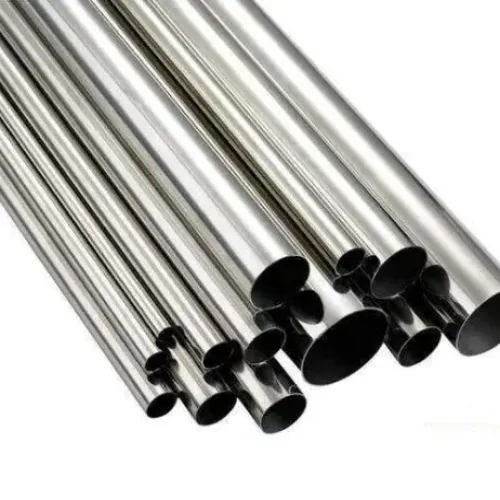
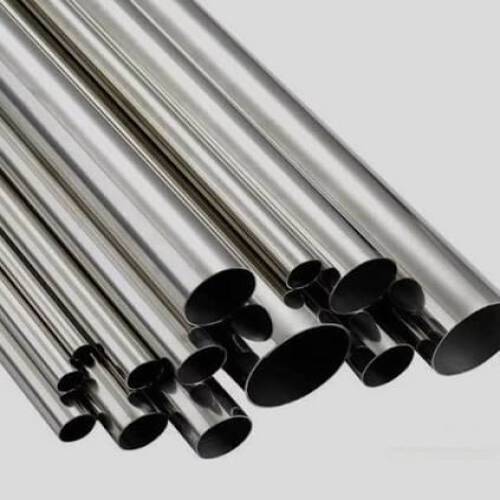
Seamless Pipes (SMLS): These are pipes that have been extruded directly from solid steel billets with no longitudinal weld lines. It is seamless, and therefore the material is the material of choice for high-pressure boilers, radiant tubes and heat exchangers.
Electric Resistance Welded (ERW): High-frequency electric resistance welding along the seam of continuous flat steel pieces. This is an economical solution for high-temperature flue gas handling and for large ducting arrays, where the dimensional parameters are close to each other.
Electric Fusion Welded (EFW): High-energy electric arcs designed in heavy steel plates, supported by 100% radiographic monitoring for deep weld penetration of large industrial kiln assemblies.
Cold Drawn Welded (CDW): Refining the microstructural grain alignment at the weld seam (CDW) by pulling a welded base tube through a precision die over an internal mandrel, resulting in uniform mechanical properties.
316/321/310 Stainless Steel Pipe Price Index
The commercial value of SS 310 components is dependent on the international commodity markets for raw elemental nickel and high-purity ferrochromium futures, as well as the particular manufacturing decisions (e.g., premium seamless cold drawing or high-speed automated roll-forming).
The price structure for indicative mill prices is shown below (2026 Reference).
Premium Seamless Piping (ASTM A312 TP310/310S): With a dimensional run scale range of ₹460 to ₹580 per kg, depending on the thickness profile and specialised surface treatment.
Welded/ERW piping lines (ASTM A312/A249) are priced within the range of ₹410 to ₹510 per kilogram, offering an economical and highly dependable piping system for conveying high-temperature gases in low-pressure systems.
Looking for SS 310 Tube Suppliers in South Africa?
Sidhgiri Overseas is a prominent SS 310 Tube Suppliers in South Africa and is a certified stockholder, which enables them to have a very strong distribution network in the region. Our network reaches directly into the key industrial centres and local supply centres within {local_hubs}, which means we can have massive onsite stockpiles to enable immediate allocation of materials, resulting in no long manufacturing lead times.
Precision Pre-processing: Logistical facilities use heavy-duty bandsaws and precision laser-cutting arrays to provide pre-cut and bevelled piping to precise field sizes.
Positive Material Identification (PMI) Spectrometers: We use positive material identification (PMI) spectrometers to confirm the exact alloy chemistry and chromium-nickel saturation ratios before delivering, guaranteeing absolute traceability back to the original steel melt.
Third-party inspector collaboration: Regular cooperation with top international inspection organisations like Bureau Veritas, TUV, SGS and Lloyd's Register to satisfy project requirements.
Industrial Packaging & Protective Protocols
Maintaining structural straightness, mechanical edge profiles and tight bevel tolerances for long-distance handling and shipping to marine markets is a key requirement.
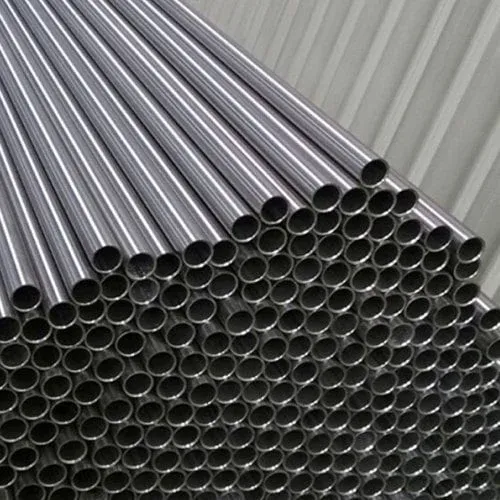
Secure Bundle Strapping: Piping is securely strapped with heavy steel bands in compact hexagonal matrices and encased in high-density polyethylene (HDPE) plastic sheathing and tied with strong outer lifting slings to eliminate metal-on-metal friction.
End Caps & Bevel Protection: Heavy plastic caps seal both exposed pipe ends, preventing debris from entering and covering vulnerable weld preparation angles from impact damage.
Heavy Duty Crate Enclosures – Capillary tubes, instrumentation lines, thin-walled thermal tubing goods are all packed in fully enclosed wooden crates lined with shock-absorbing pad inside.
Core Engineering Applications
Furnaces & Kilns: Used extensively for radiant tubes, burner tips, furnace linings, muffle covers, annealing boxes and combustion chambers.
Power Generation Systems: Selected to be utilised in fluidised bed coal combustors, boiler tube hangers, steam pipe internals and high-temperature ash handling systems.
Petrochemical Refining Infrastructure: Used in catalyst recovery units, special heat exchangers, thermowells, flare stacks, and high-temperature fractioning units.
Advanced Fabrication Processing
Cold Bending: Cold forming is good. The material is very work-hardening, so a high and stable hydraulic pressure is used for processing.
Weldability: Gas Tungsten Arc Welding (GTAW/TIG), Gas Metal Arc Welding (GMAW/MIG) and Shielded Metal Arc Welding (SMAW). With a low carbon 310S option, post-weld solution annealing can be avoided altogether.
Pickling & Passivation: Chemical immersion in a controlled nitric-hydrofluoric acid bath immediately removes the scale which forms at high temperatures, thus restoring the passive layer of the alloy.
Comprehensive Inventory Framework
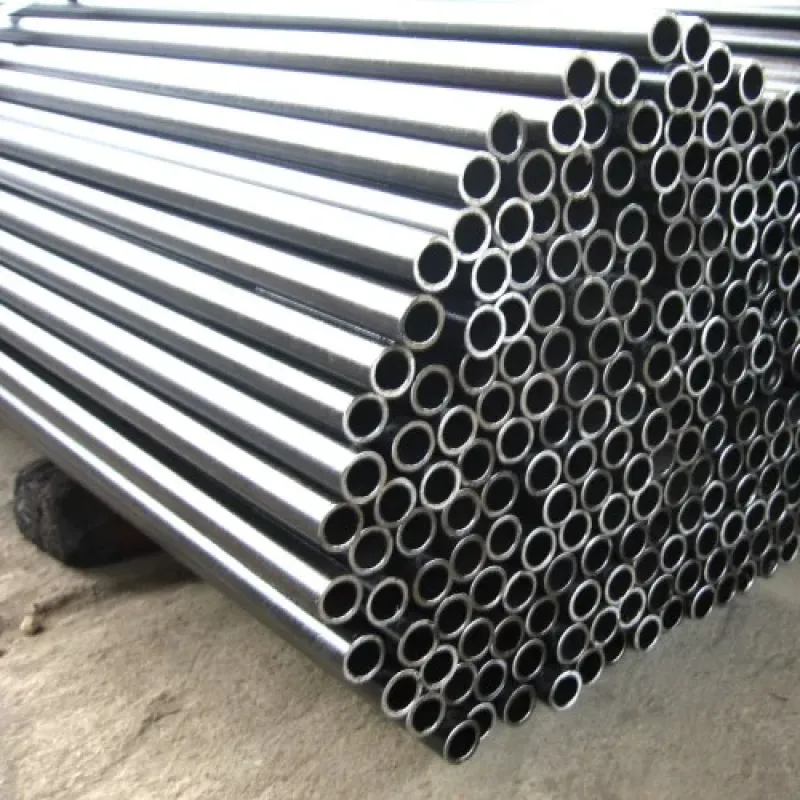
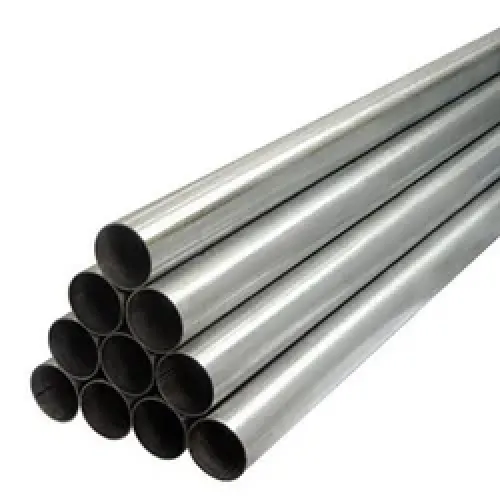
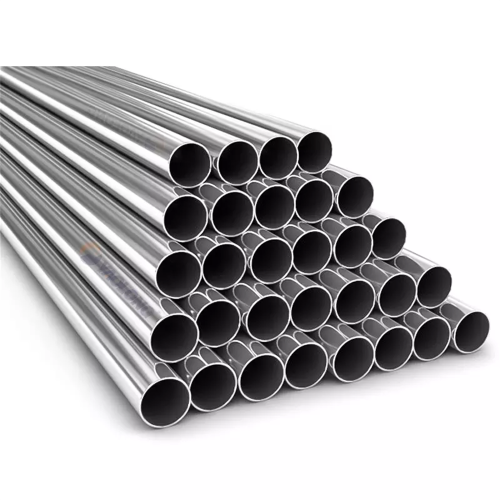
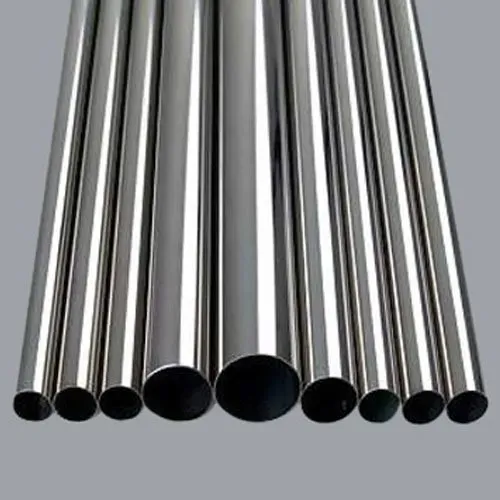
Standard Round Utility Pipes: Designed for high-stress, high-temperature gas and fluid processing loops and high-temperature exhaust headers.
Square & Rectangular Structural Tubing: High-strength structural profiles for high-heat equipment frames, internal furnace column support and structural thermal arrays.
Heavy-Wall Boiler Tubing: Manufactured for power plant superheated manifolds, chemical injection lines and radiant thermal coils.
Best SS 310 Tube Exporters in South Africa
Sidhgiri Overseas is a leading SS 310 Tube Exporters in South Africa who operates within the global standard frameworks. We routinely handle long-haul shipments of high-temperature piping to distribution points in industrial areas of North America, Europe, South America, Southeast Asia and the Middle East.
All our exports are accompanied by complete export documentation, including EN 10204 Type 3.1 Mill Test Certificates. We have an advantage in being located near the primary international seaports, which allows for quick customs clearance, safe stuffing of ocean containers and the most predictable transit times for our global buyers. The broad range of available profiles, from lightweight transport types (Schedules 5S and 10S) to heavy-wall types (Schedules 80S and 160), eliminates lead time constraints for emergency plant turnaround or fast-track construction.
310S is a furnace grade, not a corrosion grade
At 24–26% chromium and 19–22% nickel, 310S carries roughly half
again the chromium of 304 and more than twice the nickel. That buys scaling
resistance, not chloride resistance: with no molybdenum, 310S is no better than
304 in brine and considerably more expensive.
What it does is hold an adherent oxide scale in continuous service to about
1035 °C and intermittent exposure to around 1150 °C, with the
high nickel keeping the structure austenitic and resisting the sigma-phase
embrittlement that limits leaner grades on long holds.
A312 and A213 minima are 515 MPa tensile, 205 MPa yield and 35%
elongation in the annealed condition.
Typical duty: furnace muffles and radiant tubes, kiln and calciner
internals, heat treatment fixtures, cement and lime plant hardware, flue and
recuperator tubing. One caution worth stating plainly — in atmospheres
carrying sulphur the high nickel works against you, because nickel sulphide
forms a low-melting eutectic. In reducing sulphidising conditions 310S is the
wrong choice, however hot the service.
Getting 310S tube into service without losing it early
310S fails for reasons that have little to do with the grade and a lot to
do with how it was installed and what the atmosphere actually contains.
Sulphur. Stated again because it is the commonest way to
destroy this material: in reducing sulphidising atmospheres the high nickel
forms a low-melting nickel sulphide eutectic and the tube goes quickly. Confirm
the flue or process gas analysis before specifying.
Carburising atmospheres. 310S resists carburisation better
than leaner grades, but it is not immune, and repeated carburisation and
oxidation cycling will embrittle it over time.
Thermal cycling and restraint. Austenitic stainless expands
roughly half again as much as carbon steel. A furnace element rigidly anchored
at both ends will distort or crack from its own expansion, not from heat.
Expansion has to be designed in.
Sigma phase. Long holds in the 600–900 °C
band can precipitate sigma, which costs room-temperature toughness. It matters
most at shutdown, when a brittle component is being handled cold.
Supplied annealed to A213 or A312 minima of 515 MPa tensile,
205 MPa yield and 35% elongation, in the sizes and wall thicknesses listed
above.
310S against the grades it is usually compared with
Against 309S. 309S runs 22–24% chromium and
12–15% nickel against 24–26% and 19–22% for 310S. It costs
less and serves to roughly 980 °C continuous. Where the duty tops out
below that and the atmosphere is cleanly oxidising, 309S is often the better
buy and 310S is over-specification.
Against 321 and 347H. Those are stabilised grades chosen
for creep strength and for cycling through the sensitisation band, typically
to about 870 °C. 310S is chosen for scaling resistance above that. The
two groups solve different problems and are not interchangeable on price.
Against 253 MA and the heat-resistant alloys. Above
roughly 1100 °C, or where thermal cycling is severe, the rare-earth
and higher-alloy grades hold a more adherent scale than 310S does. If the
design is pushing the top of the 310S range, that comparison is worth making
before committing.
Against 304 and 316. Not a real comparison. 310S has no
molybdenum and no advantage in aqueous corrosion. Specifying it for a wet
chloride duty buys heat resistance nobody is using, at a price everybody
notices.