Phone Number +91-96194-06392
Opening Hours:

Mon-Sat: 9am - 6pm

SS 347H Pipe Supplier in China

Import Export
European Directive 2014/68/EU
ISO 14001:2015
ISO 45001:2018
ISO 9001:2015
GST Certificate
SS 347H Pipe

SS 347H Pipe Supplier in China Since 1962

If you have to buy fluid lines for high-pressure applications, exhaust sections customized for your needs, or heavy structural piping parts, you'll find it's best to turn to trusted metallurgy experts. Parts used have absolute dimensional accuracy, verifiable heat tracking, and outstanding structural stability, which are the characteristics required for industrial projects where the use of material networks is imperative when it comes to parts procurement.

Our specialized processing lines ensure that the material always has a low risk of failure, resists continuous vibration, and maintains its structural limit even under extreme physical stresses in the processing areas of China and surrounding areas like {local_hubs}.

Why Metallurgy Matters: The 347H Advantage

The variety of compromises made in chemistry and the need for niobium for strengthening and stabilizing the alloys explain why metallurgical problems—such as difficult industrial processing and use in high-heat situations—are of such significance.

By precision-balancing these elements, Sidhgiri Overseas has established itself among the leading Stainless Steel 347H Pipes Suppliers in China, delivering robust solutions that resist intergranular corrosion and thermal degradation in the most demanding environments.

Top Production Infrastructure

Sidhgiri Overseas is one of the international market leaders in the high-strength, heat-resistant, stabilized, and mill-certified stainless steel (SS) 347H piping sector that is fully traceable. Sidhgiri Overseas has a quality-controlled distribution network with very customized configurations optimized for the most demanding refinery, power generation, and high-temperature thermal environments.

A Very Clear Explanation About Stainless Steel 347H Pipes

What is Stainless Steel 347H Pipe is?

High-carbon, niobium-stabilized austenitic stainless steel pipes are special pipes manufactured to be resistant to high temperatures and highly corrosive environments, as well as to provide long-term structural stability and excellent creep resistance. The lower grades are resistant to weld decay because the carbon content is reduced (e.g., 304L or 316L), while 347H is a grade that is resistant to weld decay as a result of careful addition of niobium (columbium). High Carbon—The high carbon range with the designation "H" refers to the range of carbon content from 0.04% to 0.10% to ensure high mechanical strength when exposed to thermal loading.

With its higher carbon content and niobium stabilization, SS 347H is the benchmark global industry standard for pipelines that are subject to continual exposure to the critical carbide precipitation temperature range of 400°C to 815°C (750°F to 1500°F). The most widely used applications of SS 347H pipes have been as structural absolute defense, in fluid catalytic cracking units, high-temperature steam boiler tubes, and severe chemical processing loops.

The most obvious characteristic of stainless steel is the unique chemical and alloy composition, which requires a minimum of 10.5% chromium.

Oxidation Shield: Naturally protected chromium is protected by a micro-thin passive layer of chromium oxide that is impermeable to oxygen and water. This barrier is meant to protect the iron matrix from moisture and corrosive agents below it.

Self-Healing Capabilities: During pipe fabrication, when they are cut and subjected to high levels of friction, this protective film is regenerated, resulting in continuous protection to the pipe structure even in oxygen and giving a characteristic clean metallic finish.

A Clear Explanation of the Different Benefits of Structure and Function.

It is the most used and popular material, which was invented more than 100 years ago and used by the world. It is resistant to corrosion due to the chromium content. Resistance can be shown in the reduction of acids as well as against attacks of pitting in chloride solutions. Its maintenance requirement is very low, and it has a familiar luster. When it is used in stainless steel 347H pipes, it is an excellent and fine material.

There are various product forms of stainless steel 347H pipe, such as seamless cold-drawn and high-frequency longitudinally welded tubes. As the most appropriate piping structure will depend on the alloy chemistry and manufacturing requirement, surface finish, and structural load, it will depend on the operating environment.

The Niobium Advantage – Why Ss 347H Over 321 or 310?

When stainless steel is subjected to long exposure under temperature conditions of 425°C to 850°C it can be vulnerable to the diffusion of carbon into the grain boundaries and subsequent intergranular corrosion (or weld decay) of the steel. The susceptibility is overcome by applying strategic niobium stabilization in SS 347H, and this alloy is better than other alloys at higher temperatures:

Preferential Carbides Binding: Niobium has a much higher affinity for carbon than chromium; this affinity is termed preferential carbide binding. It selectively reacts with the carbon matrix to form harmless niobium carbides, which are uniformly dispersed, while leaving the underlying chromium completely unaffected to maintain the protective rust-resistant surface of the pipeline.

Thermal stability: Niobium carbides are more thermally stable than the titanium carbides in grade 321, particularly at ultra-high temperatures. Important is that niobium is not volatilized (burn off) during the arc of high-intensity welding, which means that high-quality and complete corrosion protection is achieved directly in the weld seam.

The 'H' Grade Strength Boost: When exposed to extreme heat and pressure, the carbon range is kept high (up to 0.10%), thus preserving excellent tensile properties, high creep-rupture strength, and exceptional resistance to sagging, stretching, or physical deformation under continuous stress.

Stainless Steel 347H Pipe Types – Based on Surface Finishes & Grades

The chemical composition and surface profile of steel overall have a great influence on end-products' mechanical properties and application areas. The surface finish and the particular alloy grade used in 347H pipes determines their use, as they are designed for industry use in high-utility applications and not for ornamentation.

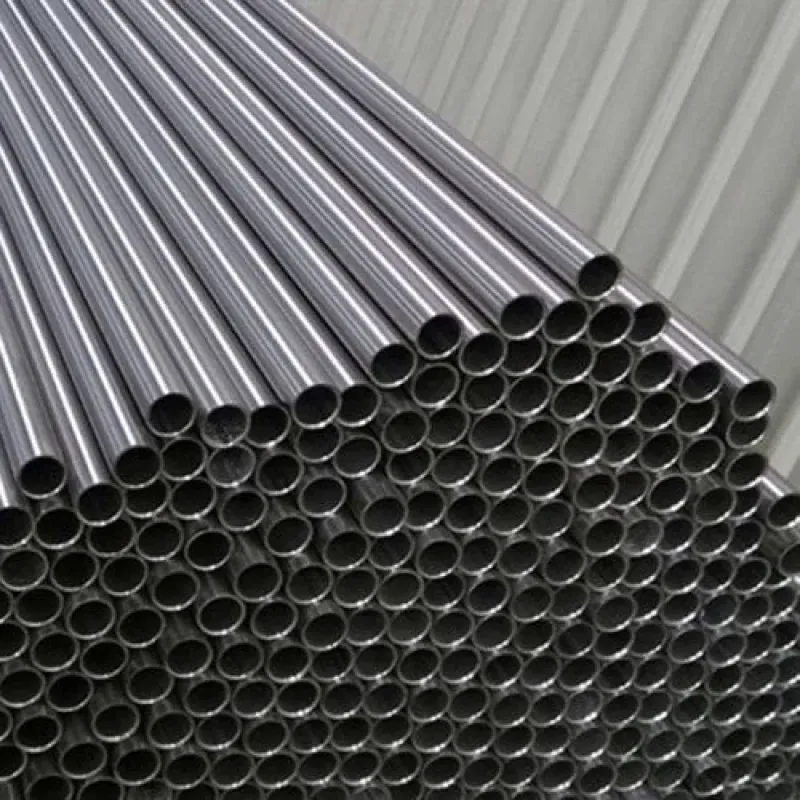
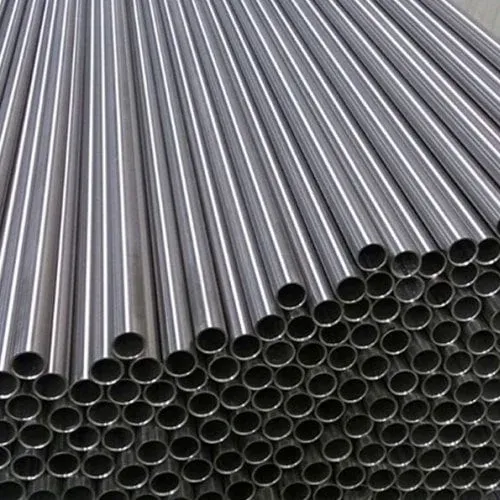
No.1 / Mill Finish (Hot-Rolled): A raw surface treatment that is dull and gray and has not been polished. Suitable for all catalytic cracking loops, hydroprocessing lines, power plant boiler manifolds, and gas collector rings.

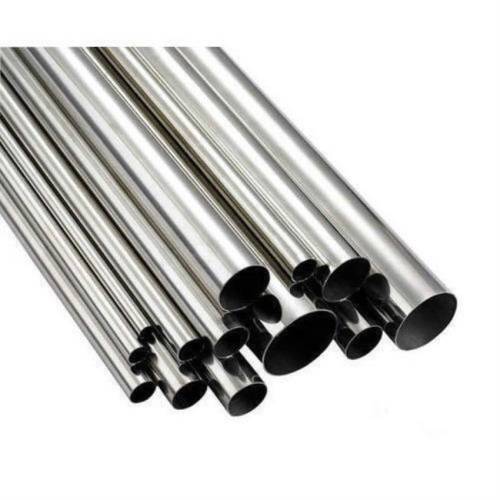
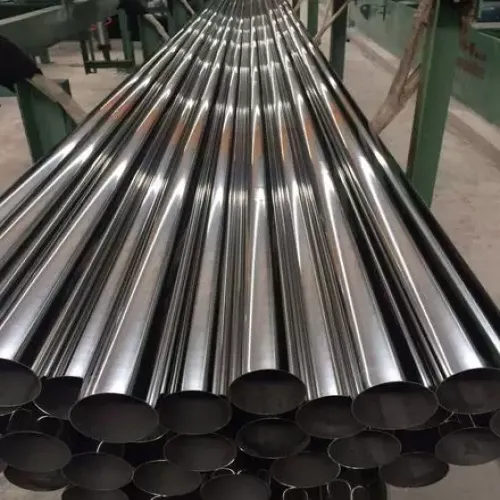
Smooth, unpolished, 2B Finish (Cold-Rolled): A uniform metallic gloss smooth unpolished finish that is applied to millions of heat-exchanger tubings in the refinery and many industrial chemical reactors.

Smooth satin/brushed (4/grit 240/320): Lines are smooth but don't have a shiny finish and can be brushed in one direction. It is not so commonly used with 347H, as it has a high-heat industrial application, but it is recommended where external system lines are required to be clean and uniform.

Alloy Grade Optimisation

Standard SS 347H: Default standard used for premium high-carbon creep resistance and niobium stabilization.

DIN 1.4961 / EN X8CrNiNb16-13 / ASTM A312 Grade MT347H: High-carbon, niobium-stabilized premium creep and thermal strength.

DIN 1.4541 / EN X6CrNiTi18-10 / ASTM A312 Grade MT321: Titanium-stabilized, mid-range, high-temperature option (up to 850°C).

DIN 1.4845 / EN X8CrNi25-21 / ASTM A312 Grade MT310S: Low-carbon refractory alloy; premium scaling defense up to 1150°C.

DIN 1.4404 / EN X2CrNiMo17-13-2 / ASTM A312 Grade MT316L: Low-carbon marine variant optimized for chloride pitting defense where molybdenum is required to prevent pitting.

DIN 1.4301 / EN X5CrNi18-10 / ASTM A312 Grade MT304: General-purpose grade for low-temperature or low-corrosion fluid transfer.

Different Types Based on Size Configurations & Manufacturing Process

The old saying is true that "industry and standards go hand-in-hand." Differences in various organization standards for a variety of application ranges may lead to differences in the manufacturing and testing results. Specific piping sizes are determined by the pipe's nominal bore (NB) size or outer diameter (OD) and particular wall thickness schedules that range over the high-pressure seamless or economical welded fabrication track.

Common Size Classifications

For thin wall (Schedule 5S/10S) applications such as refinery instrumentation lines, aerospace exhaust manifolds, high-pressure sampling tracks, and laboratory reactor connections, use small profiles (1/8"-1" NB / 15.88 mm-33.7 mm OD).

Medium Framework (1.25" to 4" NB / 42.4 mm to 114.3 mm OD): A heavy-duty application that is used in turbine components for marine turbochargers, distillation columns, high-temperature gas collector rings, and radiant power plant loops.

Heavy Structural & Transmission (6" to 48" NB / 168.3 mm to 1219 mm OD): These are the thick-wall (Schedule 80S to Schedule 160) conduits used for high-pressure steam boiler pipes. fluidized catalytic cracking units (FCCU), hydroprocessing headers, and primary refinery transmission lines.

Different Types of Stainless Steel 347H Pipes Based on Application Areas

Refinery Loops: Fluid catalytic cracking units (FCCU), hydroprocessing equipment, polythionic acid environments, crude oil heater loops, and high-temperature refinery piping.

Power Generation Facilities: High-temperature steam boiler tubes, superheater tube bundles, radiant power plant piping, and steam header networks.

Chemical Processing Plants: Industrial heat exchangers, high-temperature chemical reactors, and distillation columns with aggressive organic or inorganic acids.

Exhaust Systems & Gas Handling: Aero exhaust manifolds, heavy-duty marine turbocharger exhaust parts, and high-temp gas collector rings for industry.

Technical Specifications of Stainless Steel 347H Pipes

Industrial stainless steel 347H pipes are not simply for the use of basic consumers, but they are subject to strict outer dimensions, high-grade chemical metrics, and worldwide pressure schedules to guarantee absolute operational insurance.

Tech Metrics & Current Operational Options

Pipe Sizing (OD / NB): 1/8 inch up to 48 inches Nominal Bore (15.88mm, 21.3mm, 26.9mm, 33.7mm, 42.4mm, 48.3mm, 60.3mm, etc.). Normalizes the pipe profile of thin refinery instrumentation tracks to large-volume catalytic cracking headers.

Wall Thickness / Schedule: 5S and 10S, 20S and 40S, 80S and variants up to 160S. High internal thermal pressure, harsh flue gas, and heavy dead load structural variables are met by controls' wall mass.

Grade of material: SS 347H (high-carbon niobium-stabilized), also available in other grades (321, 310S, 316L, and 304L). Requires 0.04-0.10% carbon for strength and niobium for stabilization, which prevents intergranular corrosion up to 815°C.

Pipe & Form Type: Seamless Drawn Billet / Welded Seam RHS / ERW pipe. Choose seamless blocks for high-pressure thermal containment and welded ones for structural grids and low- to medium-pressure transfer.

Surface Finish: 4 - Satin / Brushed (#4), 2B Cold-Rolled, No. 1 Mill Finish. High-utility heat lines are finished with matte gray industrial colors; structural elements are finished with 2B or mill textures.

Standard Length: 3 m, 4 m, 5.8 m, 6 m, random lengths, and custom-cut profiles. Pre-cut and continuous mill configurations matching spatial layout parameters, boiler engineering loops, and international shipping constraints.

Mechanical Strength: Min. Yield Strength: 205 MPa | Min. Tensile Strength: 515 MPa. Verified metallurgy ensuring supreme high-temperature creep resistance, elevated allowable stress limits, and robust structural rigidity.

Breakdown & Purpose of Chemical Components.

Carbon (C): 0.04% – 0.10%. Maintain at a high level to obtain high tensile, toughness, and creep-rupture properties at high temperature.

Niobium (Nb): 10xC min to 1.10%. Stabilizes the alloy by binding to carbon to prevent intergranular weld decay in the heat zone.

Chromium (Cr): 17.00% – 19.00%. Forming general corrosion and oxidation protection passive film.

Nickel (Ni): 9.00% – 13.00%. Stabilizes the austenitic structure and enhances overall fracture toughness and cryogenic durability.

Manganese (Mn): 2.00% max. It helps deoxidize the steel during manufacture and makes it stronger.

The potential for limitations and engineering risks will be discussed.

Pitting in Marine Environments: SS 347H has no molybdenum in it. High molybdenum SS 316/316L lines are needed to avoid severe pitting and crevice corrosion in heavy bleach exposure and marine environments at room temperature in chloride solutions.

Knife-Line Attack Risk: Localized corrosion may develop in a narrow line near the weld line (knife-line attack) when the pipe is exposed to the extreme heat-reheating areas in certain welded conditions. Rarely occurs when welding compared to the normal weld decay, but will need strict welding temperature controls.

The Metrics and Sourcing of Stainless Steel Suppliers.

In terms of procurement of structural piping and high-temperature-stabilized hollow channels, it is necessary to categorize the suppliers based on price, qualification for operation, and location of commercial districts in the region.

Tiered Cost Structures: Piping configurations are created over a range of wholesale nickel concentrations (below ₹200, ₹201 - ₹250, ₹251 - ₹400, and heavy industrial/performance options). (Above ₹401 per kg) and are dependent on the nickel concentration, niobium stabilization processes, and overall wall thickness.

Corporate Compliance Filters: Only highly reputed entities with an annual turnover of ₹ 5 Cr or more and who have been continuously registered under the Goods and Services Tax regime for at least 3 years for traceability of materials can enter into partnerships for major state-run projects, heavy mechanical works, and energy facilities.

Localized Logistics Networks: The project manager can leverage special local supplier networks like suppliers from China to gain first-hand access to agile delivery, bringing transport lag to local construction projects and neighboring {local_hubs} manufacturing facilities down to a minimum.

Top Stainless Steel 347H Pipe Exporters in China

Special export lanes are necessary for the international flow of goods and preserve supplies for vehicles, chemical processing plants, energy production, and manufacturing on the international market.

Sidhgiri Overseas Global Distribution: Sidhgiri Overseas is a premier exporter and a major global supplier in China and has a strong logistics chain network all over the world for delivering high-quality 347H welded and seamless stainless steel pipes to processing plants and logistics distribution centers across the globe. Every batch of exports is exported to international standards EN, DIN, ASME, and ASTM A312 so that all partner {local_hubs} supply networks are provided with elite structural protection worldwide.


The Niobium Advantage: 347H vs 321

SS 347H and SS 321 both solve the same underlying problem — carbide precipitation and weld decay — using the same basic mechanism: stabilization. Both grades add an element that bonds with carbon more readily than chromium does, so that carbon is tied up as harmless, dispersed carbides instead of stripping chromium from the grain boundaries. Where they differ is in which stabilizing element they use, and that difference has real consequences in service.

SS 321 uses titanium. SS 347H uses niobium. Both work, but niobium carbides are more thermally stable than titanium carbides, particularly at the upper end of the high-temperature service range. This means 347H holds its stabilization advantage more reliably as temperatures climb toward the top of the 400°C-815°C window and beyond.

The more critical distinction is at the weld itself. Titanium can volatilize — effectively burn off — in the heat of a welding arc, which can locally reduce the amount of stabilizer actually available right at and near the weld seam in 321 pipe. Niobium does not volatilize the same way. It stays in place through the welding process, so SS 347H pipe retains its corrosion resistance more consistently exactly where sensitization risk is highest: the heat-affected zone around a weld.

Layered on top of the niobium/titanium distinction is the "H" strategy itself. SS 347H deliberately keeps carbon high (0.04%-0.10%) rather than reducing it, because the niobium stabilization already neutralizes the weld-decay risk that high carbon would otherwise cause. Keeping carbon high preserves tensile strength, creep-rupture strength, and resistance to sagging or deformation under continuous extreme heat and pressure — properties that matter directly in boiler tubes and high-temperature process piping under sustained load, and that a low-carbon "L" strategy would trade away.

In practical terms: choose SS 347H over SS 321 where the combination of very high service temperature, weld-seam integrity, and long-term structural load-bearing capacity all matter together — such as superheater tubing, FCCU piping, and high-pressure steam headers.

One caveat worth noting: in certain repeated-reheat welding conditions, stabilized grades including 347H can be subject to a rare, localized corrosion phenomenon called knife-line attack, occurring in a narrow band immediately adjacent to the weld. It is manageable with proper welding temperature control and is not a reason to avoid the grade, but it is a known characteristic worth factoring into welding procedure specifications.

Chemistry, Mechanical Properties & Standards

SS 347H is defined by its niobium stabilization and its deliberately elevated carbon content. The table below summarizes the key chemical composition limits.

Carbon (C)

0.04 - 0.10 (kept high deliberately for strength)

Chromium (Cr)

17.00 - 19.00

Nickel (Ni)

9.00 - 13.00

Niobium (Nb) + Tantalum

10x C minimum, up to 1.10 max (stabilizer)

Manganese (Mn)

2.00 max

Mechanical properties are correspondingly robust, reflecting the strength benefit of the high-carbon "H" strategy:

Yield Strength

205 MPa

Tensile Strength

515 MPa

SS 347H is cross-referenced across the major international designation systems as follows:

1.4961

X8CrNiNb16-13

TP347H (ASTM A312)

Every batch of SS 347H pipe supplied by Siddhgiri Overseas undergoes dimensional checks prior to dispatch, with Mill Test Certificates (MTC) issued to document chemical and mechanical conformance.

It is worth noting that SS 347H contains no molybdenum. It is therefore not the appropriate grade for room-temperature marine or chloride-rich environments — SS 316 or 316L, which contain molybdenum for pitting and crevice corrosion resistance, are better suited to that duty. SS 347H's strengths are specifically in sustained high-temperature service.

Sizes & Applications

Siddhgiri Overseas supplies SS 347H pipe across small, medium, and heavy size ranges to match the demands of instrumentation, structural, and heavy process piping applications.

Small

1/8" - 1" NB (15.88 - 33.7mm OD)

Sch 5S / 10S

Refinery instrumentation lines, aerospace exhaust manifolds, high-pressure sampling

Medium

1.25" - 4" NB (42.4 - 114.3mm OD)

Sch 40S

Marine turbocharger components, distillation columns, gas collector rings, radiant power-plant loops

Heavy

6" - 48" NB (168.3 - 1219mm OD)

Sch 80S - 160

High-pressure steam boiler pipe, fluidized catalytic cracking units (FCCU), hydroprocessing headers, refinery transmission lines

Across these size ranges, SS 347H finds use in four broad application areas:

Refinery and hydroprocessing: Fluid catalytic cracking units (FCCU) and hydroprocessing equipment run continuously at temperatures squarely within 347H's stabilized range, where weld-seam integrity over years of service is essential.

Power generation: High-temperature steam boiler tubes, superheater bundles, and steam header networks depend on 347H's combination of creep resistance and sustained tensile strength under continuous pressure and heat.

Chemical processing: Heat exchangers, high-temperature reactors, and distillation columns benefit from the carbide stability that keeps corrosion resistance intact at the weld even after repeated thermal cycling.

Exhaust and gas handling: Aerospace exhaust manifolds, marine turbocharger parts, and high-temperature gas collector rings all operate in the elevated-temperature, oxidizing conditions 347H is built for.

Certifications

Siddhgiri Overseas is ISO certified for quality, occupational health & safety and environment management, and holds the import and export certification required to supply stainless steel pipe and tube to customers worldwide. Certificate copies are available on request for buyers who need them for their own compliance records.

Why Choose Us

Choose Sidhgiri Overseas as your key supply partner. If you have heavy infrastructure, oil refineries, high-pressure steam systems, or difficult chemical processing plants and platforms—you are investing in long-term operational security. In all areas of work we strive to achieve a high standard of output:

Complete Material Traceability: Sidhgiri Overseas provides detailed and genuine material test certificates for all shipped bundles up to the melt stage.

Weld Decay Protection: In 347H stock, we guarantee a minimum niobium content of 10×C for up to 1.10% (max.), which truly ensures protection against intergranular weld decay in the temperature range from 400°C to 815°C.

Rejected Minimum Carbon Limit: High-carbon creep strength pipes must be able to have a minimum carbon of 0.04% to 0.10% with higher allowable stress limits and resistance to thermal sagging than those for the standard low-carbon alloys.

Strict Dimensional Accuracy: Advanced drawing, roll-forming, and sizing equipment guarantee absolute dimensional accuracy, both in outer and wall thickness dimensions and in concentricity.

Mechanical Weldability: Each section is smoothly and completely integrated at the edge with a minimum of stress on the HAZ and no loss of volatile material during the field welding process.

Thin-wall to heavy-duty industrial scheduling in all kinds of shapes, forms, and finishes.

Vetted Commercial Integrity: Sidhgiri Overseas provides a lot of manufacturing volume, tiered invoicing systems, and a verified compliance framework to effortlessly handle large enterprise contracts.

Call Our Engineering Team Today!

Find the most cost-effective solution for your future pipe and structural requirements with high-quality 347H heat-resistant piping infrastructure and special structural components. At Sidhgiri Overseas, our technical distribution team can draw a mechanical requirement profile to the best alloy grade, finish & wall thickness options. Contact our supply team today for an itemized and detailed quote, certified mill reports, and/or direct shipping for large quantities. Get the precision-engineered metallurgical solutions from Sidhgiri Overseas to ensure structural security in your operations.

FAQs

1. High-Temperature Metallurgy & The Niobium Advantage

Q: Why choose Grade 347H pipes over standard low-carbon grades or titanium-stabilized options like Grade 321?

A: Standard low-carbon grades (like 304L or 316L) prevent weld decay by reducing carbon, which unfortunately compromises their high-temperature structural strength. Grade 347H takes the opposite approach: it maintains a high carbon content (0.04% to 0.10%) to maximize tensile and creep-rupture strength under extreme thermal loads.

To prevent intergranular corrosion within the critical carbide precipitation range of 400°C to 815°C, it is heavily alloyed with niobium (columbium). Niobium has a much stronger chemical affinity for carbon than chromium does, forming highly stable niobium carbides that lock up the carbon while leaving the chromium matrix intact to maintain its self-healing oxidation shield.

Q: How does niobium perform during field welding compared to titanium stabilization?

A: Niobium carbides are more thermally stable than the titanium carbides found in Grade 321, especially at ultra-high temperatures. Crucially, niobium does not volatilize (burn off) during high-intensity arc welding. This ensures the pipe retains full corrosion defense directly across the weld seam and the heat-affected zone (HAZ) without losing its protective qualities.

Q: What are the primary engineering risks or limitations when deploying SS 347H pipelines?

A: There are two primary metallurgical watchpoints to keep in mind:

Chloride Pitting: Because SS 347H contains zero molybdenum, it should not be used in marine environments or room-temperature chloride solutions where severe pitting and crevice corrosion can occur. Grade 316/316L remains the benchmark for those conditions.

Knife-Line Attack: In rare instances under specific multi-pass welding conditions, localized corrosion can develop in a narrow line immediately adjacent to the weld fusion zone if the steel is exposed to extreme reheating. This risk requires precise welding temperature controls.

2. Sizing, Finishes, & Application Frameworks

Q: What industrial configurations and sizes are typical for SS 347H piping networks?

A: Sizing profiles span from 1/8 inch up to 48 inches Nominal Bore (NB), engineered to match structural weight and internal pressure demands:

Profile TierSizing SpectrumWall Mass/ScheduleCommon Use Cases
Small Profiles1/8" to 1" NB (15.88 to 33.7 mm OD)Schedule 5S to 10SRefinery instrumentation lines, high-pressure sampling tracks, aerospace exhaust manifolds.
Medium Framework1.25" to 4" NB (42.4 to 114.3 mm OD)Schedule 40SMarine turbocharger components, distillation columns, gas collector rings.
Heavy Transmission6" to 48" NB (168.3 to 1219 mm OD)Schedule 80S to 160Fluid catalytic cracking units (FCCU), hydroprocessing headers, high-pressure steam boilers.

Q: Can SS 347H pipes be finished with a aesthetic brushed surface?

A: While a Satin/#4 Brushed Finish is available for exposed pipelines that need to look clean and uniform, it is rarely requested. Because 347H is fundamentally designed as a high-utility, industrial refractory alloy, it is almost exclusively supplied in its unpolished, raw forms: No. 1 Hot-Rolled Mill Finish for heavy structural skeletons and 2B Cold-Rolled Finish for smooth, uniform heat exchanger loops.

3. Commercial Procurement & Localized Logistics

Q: What strict compliance metrics apply to sourcing certified SS 347H material?

A: For critical, high-risk systems like refinery loops or power plant steam headers, procurement managers enforce rigorous quality filters to guarantee structural security. Suppliers must provide complete mill test certificates tracing the material back to the melt stage, confirming a minimum niobium content of 10x the carbon level (up to a 1.10% maximum).

Q: How do regional supplier networks streamline project timelines?

A: Corporate compliance filters for major energy and state-run projects restrict partnerships to established entities holding an annual turnover of ₹5 Cr+ and at least 3 years of continuous GST registration history. Sourcing through major industrial hubs like Gurugram allows project managers to tap into highly agile local logistics networks. This proximity minimizes transport lag and streamlines direct bulk shipping to regional processing plants and neighboring manufacturing clusters.

Related Categories

FAQs

Frequently Asked Questions About SS 347H Pipe

Both are stabilized austenitic grades that resist weld decay, but they use different stabilizing elements. SS 321 uses titanium, while SS 347H uses niobium, which forms more thermally stable carbides and does not volatilize during welding, giving 347H more reliable corrosion resistance right at the weld seam.

The "H" indicates that carbon content is deliberately kept high, at 0.04%-0.10%, rather than reduced. Because niobium stabilization already neutralizes the weld-decay risk that high carbon would normally cause, keeping carbon high instead preserves tensile strength, creep-rupture strength, and resistance to deformation under continuous high heat and pressure.

Knife-line attack is a rare, localized form of corrosion that can occur in a narrow band immediately next to a weld under certain repeated-reheat welding conditions. It is manageable with proper welding temperature control and is not a reason to avoid the grade, but it is worth accounting for in welding procedure specifications.

No. SS 347H contains no molybdenum, so it does not offer the pitting and crevice corrosion resistance needed for room-temperature marine or chloride-heavy environments. SS 316 or 316L, which are molybdenum-bearing, are the better choice for that service; SS 347H's strengths are specifically in sustained high-temperature applications.

SS 347H is engineered for long-term structural stability and creep resistance across the 400°C-815°C (750°F-1500°F) range, which is the critical carbide-precipitation window where standard austenitic grades are prone to sensitization and weld decay.

Siddhgiri Overseas supplies SS 347H pipe from small instrumentation sizes (1/8"-1" NB, Sch 5S/10S) through medium sizes (1.25"-4" NB, Sch 40S) up to heavy sizes (6"-48" NB, Sch 80S-160), covering applications from high-pressure sampling lines to refinery transmission lines and boiler pipe.

Refinery units such as FCCUs and hydroprocessing equipment, along with power plant boiler tubes and superheater bundles, operate continuously in the 400°C-815°C range under sustained pressure. SS 347H's niobium stabilization protects weld integrity in that range while its high-carbon composition maintains the strength needed under continuous heat and load.

Clients

Our Partners

Tata Power
Shell Global Solutions
ONGC
NRL
NTPC
NIOC
HP
JSL
Godrej
Bhel
Inoxium Tubi
24/7 we are here
Your Partner in Industrial Growth, Let’s get started today!