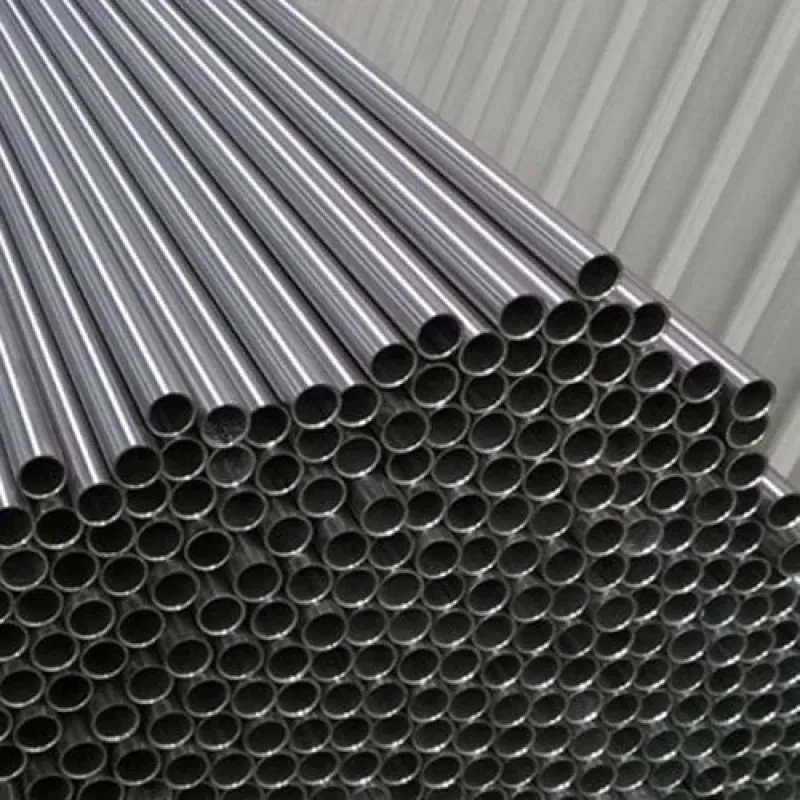
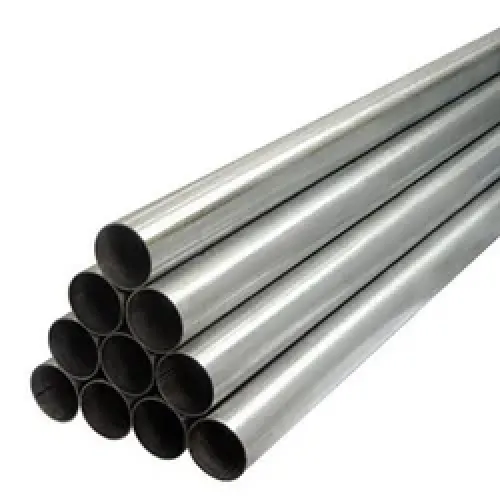
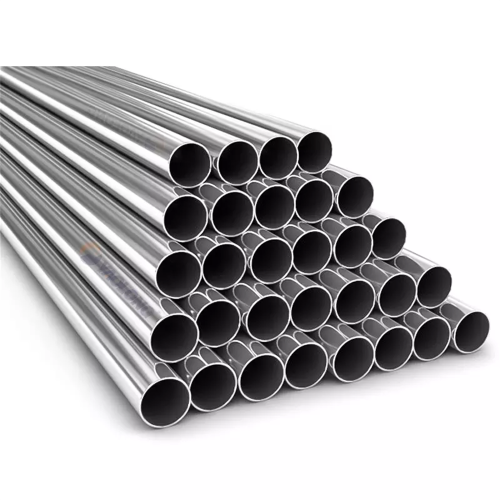
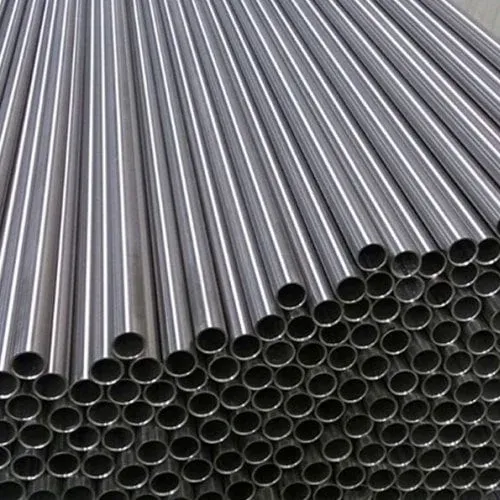
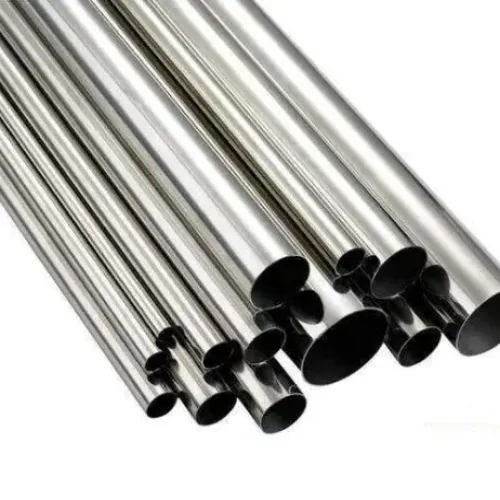
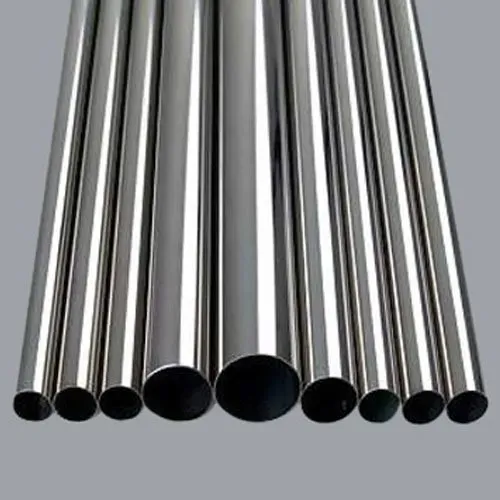
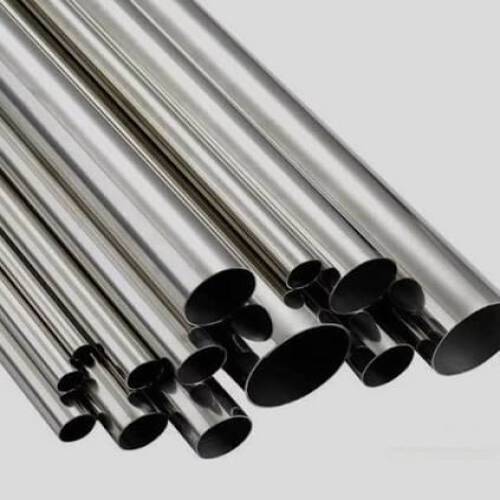
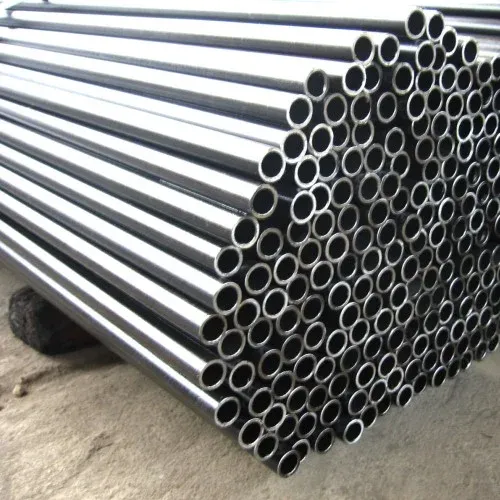
Sidhgiri Overseas is one of the SS 347H tube Suppliers in Bangkok who create high-performance systems of austenitic, columbium-stabilised stainless steel piping and tubing engineered to perform. Our own manufacturing plants provide high-quality structural piping materials to your requirements using high-precision cold-drawing machines, advanced extrusion processes and fully automated, high-frequency roll-forming mills, which allow us to produce structural pipe materials without molecular damage in high-temperature and high-stress environments processes
The chemical balance in high-carbon stainless steel is very critical in making Grade 347H. Our refining mills have the unique ability to incorporate columbium (niobium) in the proper ratio to eliminate the structural weaknesses found in conventional steel grades. In welding operations and prolonged thermal exposure, columbium combines with carbon to form chromium carbides and completely prevent their precipitation. In thermal processing, our closely controlled grain refinement cycles ensure that industries receive a robust base material that is free of intergranular corrosion throughout its lifespan and suitable for use in extreme pressure environments.
Controlled Columbium Stabilisation: The content of columbium addition is at least 8 times the carbon content, optimised in our production mills. This arrangement creates a close bond around the carbon atoms, maintaining a consistent distribution of the chromium all along the steel matrix.
Rigorous Solution Annealing: Raw piping is subjected to the heat treatment cycles followed by the cooling cycles, which are precisely and strictly controlled. These procedures fix the internal grain orientation of the austenitic matrix, resulting in high-temperature creep strength even at constant physical loads.
Dimensional Micro-Tolerances: High-capacity cold-draw benches coupled with a specially designed mandrel matrix are used to ensure precise tolerances, absolute wall thickness uniformity, and extremely smooth internal surface topographies.
In order to ensure structural safety, seamless plant integration and universal interchangeability, our systems comply with global structural codes to the highest degree. The material parameters are determined according to the following references:
Machines and Practices: ASTM A312, ASTM A213, ASTM A249, ASME SA312, ASME SA213, ASME SA249
Dimensional Metrics: ANSI B36.19M, ANSI B36.10M, ASME B36.19
Outside Diameter (OD) Scope: 1/8" NB to 24" NB; capillary and instrumentation lines up to 914.4 mm.
Wall Thickness Capacities: 0.3 mm up to 50.0 mm (Schedules 5S, 10S, 40S, 80S, 160, XXS)
Length Profiles: Single Random (5-7 metres), Double Random (10-14 metres) or custom cut-to-length variables.
End Configurations: Plain End (PE), Beveled End (BE), Threaded (Male/Female), Threaded Both Ends (TBE)
Surface Finish: No. 1 Pickled (AP), 2B Matte, Bright Annealed (BA), Mechanically Polished (MP)
Chemical Matrix Control: Chromium (17.0%–19.0%), Nickel (9.0%–13.0%), Columbium (8×C minimum to 1.0% maximum), Carbon (0.04%–0.10%)
Mechanical Thresholds: Tensile Strength: ≥515 MPa (75 ksi); Yield Strength: ≥205 MPa (30 ksi)
Tensile Strength: 1.75 Minimum (1.46 Minimum for Hot-Formed) Rockwell B (HRB) ≤95 Maximum (or Brinell Hardness (HBW) ≤217 Maximum for Hot Formed)
Testing Regimens include: Hydrostatic pressure, eddy current, ultrasonic scans, and full PMI testing (100% X-ray).
The most significant benefit of SS 347H is that it does not decay the molecular seam when exposed to prolonged, continuous heat in the thermal range of 400°C to 815°C (750°F to 1500°F). Within this temperature range, common stainless steels experience chromium depletion at grain boundaries, which creates a susceptibility to weld decay and intergranular structural cracking at these boundaries when exposed to corrosive conditions.
The "H" designation denotes a higher carbon content that is tightly controlled (between 0.04% and 0.10%). This high-carbon profile provides a significant increase in high-temperature strength and creep resistance over the low-carbon varieties. In the meantime, the columbium acts as an active stabiliser by reacting with the carbon to form non-soluble columbium carbides. These carbides form preferentially, thus not depleting the surrounding matrix of chromium. This metallurgical interaction allows for the formation of a very durable passive surface film under extreme thermal stress conditions for long service life.
Sidhgiri Overseas offers various physical forms of SS 347H piping for different fluid dynamics applications, velocity levels and pressure requirements:
Seamless Pipes (SMLS): Pipes manufactured without longitudinal weld lines from solid steel billets. Because the material is fused together without seams, potential heat-affected weak points are completely avoided, making it the material of choice for high-pressure boilers, superheat tubes and high-load headers in the refinery.
Electrically welded plates (Electric Fusion Welded, EFW): fabricated from heavy plate section with high energy electric arc with 100% radiographic monitoring to ensure deep weld penetration in large chemical reactor vessels.
Cold Drawn Welded (CDW): Uniformisation of the microstructural grain alignment around the weld seam by pulling a welded base tube through a precision die over an internal mandrel to produce uniform mechanical properties.
The chemical composition of SS 347H is very special and, as such, represents a very specialised class of steel. As such, it has a base value higher than regular commodity products such as SS 304 or SS 316. Final commercial rates are dynamic and depend on commodity markets, profiles of wall thickness and raw material allocations worldwide.
An indicative mill pricing structure (2026 Reference) has been provided for your reference.
Premium Seamless Piping (ASTM A312/A213 TP347H): The price of this seamless pipe is in the range of ₹450 to ₹800 per kg, based on the actual size of the wall, the processing method, and the quantity.
Welded/ERW Piping Lines (ASTM A312/A249): These are high-strength piping lines used in the structural ducting arrays and large-diameter lines around the price range of ₹400 to ₹710 per kilogram.
Sidhgiri Overseas, a leading SS 347H Tube Suppliers in Bangkok and a certified stockholder, has a strong distribution network in the region. Our network reaches right out to the local supply points and major industrial hubs in {local_hubs}, with massive inventories on site that provide the means to allocate materials at a moment's notice and help alleviate long lead times during critical refinery shutdowns.
Precision Pre-Processing: Logistical facilities use large-capacity band saws and precision laser-cutting arrays to provide pre-cut and bevelled pipe to fit exact field dimensions.
Positive Material Identification (PMI) spectrometers are used for material chemistry validation before dispatch with exact alloy chemistry and columbium stabilisation ratios, meaning absolute traceability back to the original steel melt.
Maintaining structural straightness, mechanical edge profiles and exact bevel geometries is of integral importance when handling over long distances or on marine vessels.
Secure Bundle Strapping: Heavy steel bands form compact hexagonal matrices, the metal being covered with high-density polyethylene (HDPE) plastic sheathing and equipped with strong outer lifting slings to prevent metal-on-metal friction.
End Caps & Bevel Protection: Heavy plastic caps seal both ends of pipe, preventing debris entry and ensuring vulnerable weld preparation angles remain protected from impact damage.
Heavy-Duty Crate Enclosures: Goods packed in full-enclosure wood crates with shock-absorbing internal padding are available for capillary tubes, instrumentation lines and thin-wall high-pressure boiler tubing.
Petrochemical & Oil Refining: Extensively used in Fluid Catalytic Cracker Units (FCCU), hydrotreater tubes, and high-temperature fractioning components in severe polythionic acid operating environments.
Power Generation Systems: For high-temperature steam piping, superheater tube bundles, radiant boiler headers and reheat piping networks.
Chemical Processing Infrastructure: Used in high-temperature chemical reactors, special heat exchanger equipment and corrosive gaseous exhaust lines.
Cold Bending: has very good cold-forming ductility. The material has a very fast work-hardening rate and is processed under high stable hydraulic pressure.
Welding Integration: Gas Tungsten Arc Welding (GTAW/TIG), Gas Metal Arc Welding (GMAW/MIG), and Shielded Metal Arc Welding (SMAW) welding are readily possible. Weld decay resulting from high temperature is totally prevented—no post-weld solution annealing is necessary—due to the good columbium stabilisation of the material.
Pickling & Passivation: A controlled chemical dipping process in a critical nitric-hydrofluoric acid bath removes the high-temperature-forming scale and re-activates the alloy's protective passive layer.
Standard Round Utility Pipes: Designed for high-pressure fluid and gas transporting systems, processing loops and high-pressure utility pipes.
Square & Rectangular Structural Tubing: High-strength structural profiles for high-heat equipment frames, furnace support columns and structural arrays in corrosive environments.
Heavy-Wall Superheater Tubing: Special for Superheated Manifolds in Power Plants, Chemical Injection Lines and Radiant Thermal Coils.
Sidhgiri Overseas is a leading SS 347H Tube Exporters in Bangkok and works as per the global standard systems. We regularly run long-distance freight, shipping high-temp pipe to distribution zones across the Middle East, Southeast Asia, South America, Europe & North America.
All our exports are accompanied by extensive documentation, including EN 10204 Type 3.1 Mill Test Certificates. With our close proximity to all of the major international seaports, we are able to provide quick customs clearance, secure stuffing of the ocean container and highly predictable delivery times for our international customers.
Our extensive range of profiles includes lightweight transport options, such as Schedules 5S and 10S, to heavy-wall applications, like Schedules 80S and 160, ensuring there are no delays on emergency plant turnarounds or on fast-track construction projects.
The engineering team needs to consider the exact environmental conditions when choosing the best possible alloy combination for heavy-load structures:
SS 347H vs SS 321: Both alloys are weld-decay resistant during high-temperature exposures, but SS 347H is stabilised with columbium, and SS 321 is stabilised with titanium. Under extreme physical loads at the maximum operating temperature, SS 347H has a much greater long-term creep rupture strength due to its more stable carbide matrix.
SS 347H vs SS 310: The difference between SS 347H and SS 310 is that SS 310 is designed to withstand higher absolute thermal limits, up to 1150°C, in non-structural and/or low-stress dry air applications. But in the 400°C to 815°C range, the structural load-bearing reliability and creep resistance of SS 347H are much greater when subjected to extreme internal pressure.
Corrosion Dynamics: SS 347H is highly resistant to polythionic acids and is a great choice for systems used in the refining of petrochemicals.

SS 347H tube is manufactured to a tightly controlled chemistry that balances corrosion resistance, weldability and elevated-temperature strength. Precise, controlled niobium addition — held to a minimum of eight times the carbon content — locks carbon atoms into stable niobium carbides while preserving the chromium distribution needed for corrosion resistance.
|
Carbon (C) |
0.04 – 0.10 (deliberately elevated for strength) |
|
Chromium (Cr) |
17.00 – 19.00 |
|
Nickel (Ni) |
9.00 – 13.00 |
|
Niobium (Nb/Columbium) + Tantalum |
8×C minimum, up to 1.10 max (stabilizer) |
|
Manganese (Mn) |
2.00 max |
The high-carbon "H" strategy carries directly into mechanical performance, giving the grade a real strength advantage over low-carbon stabilized alternatives under sustained heat and load.
|
Tensile Strength |
≥515 MPa (75 ksi) |
|
Yield Strength |
≥205 MPa (30 ksi) |
|
Hardness |
Rockwell B (HRB) ≤95, or Brinell (HBW) ≤217 |
SS 347H tube is manufactured to international standards including ASTM A213 (seamless austenitic alloy-steel tube for boilers, superheaters and heat exchangers), ASTM A249 (welded austenitic tube for the same duty) and their ASME equivalents SA213 and SA249, giving structural safety and interchangeability across projects. Tube is supplied to actual outside diameter and wall thickness — from small-bore instrumentation and capillary sizes up to heavy-wall boiler and superheater tube dimensions — engineered to the pressure and thermal duty of the application, in Plain End, Beveled End or Threaded end configurations and in No. 1 Pickled, 2B Matte, Bright Annealed or Mechanically Polished surface finishes. Solution annealing followed by controlled rapid cooling stabilizes the austenitic grain structure to deliver the high-temperature creep-rupture strength the grade is chosen for. Every batch is verified through hydrostatic, eddy current, ultrasonic and radiographic (100% X-Ray) testing along with positive material identification (PMI), and dispatched with Mill Test Certificates for full traceability.
Siddhgiri Overseas produces SS 347H tube in seamless and welded construction, with the appropriate type selected according to the system's operating pressure, temperature and structural configuration.
Across all types, final sizing is achieved through high-precision cold-drawing and cold-pilgering passes that tighten geometric tolerances, wall-thickness uniformity and inner-surface finish. Because niobium stabilization already protects against weld-decay in service, SS 347H tube does not require solution annealing after welding to retain its corrosion resistance — though this remains a standard step in our production process to optimize grain structure and mechanical properties. The grade is readily weldable using Gas Tungsten Arc Welding (GTAW/TIG), Gas Metal Arc Welding (GMAW/MIG) and Shielded Metal Arc Welding (SMAW). It is ductile enough for cold bending but work-hardens at a comparatively high rate, so forming is carried out on stable, high-capacity hydraulic equipment. Pickling and passivation after fabrication remove high-temperature scale and restore the self-healing passive oxide layer that gives the tube its long-term corrosion performance.
SS 347H tube is specified in thermal systems that demand sustained creep strength, weld-seam integrity and microstructural stability across the 400°C–815°C service range.
Siddhgiri Overseas supplies SS 347H tube in round, as well as square and rectangular sections for structural frames and support columns in corrosive processing environments, and heavy-wall tubing for chemical injection lines, high-pressure steam headers and radiant power-plant coils — tested, certified and packed for both domestic delivery and export from our Mumbai facility.
Siddhgiri Overseas is ISO certified for quality, occupational health & safety and environment management, and holds the import and export certification required to supply stainless steel pipe and tube to customers worldwide. Certificate copies are available on request for buyers who need them for their own compliance records.
Peace of mind QA Regimens: Each production batch goes through a rigorous ultrasonic scanning, hydrostatic testing and 100% PMI analysis process to guarantee faultless in-field performance.
Complete Material Traceability: We provide complete mill test certificates (MTC) in accordance with EN 10204 type 3.1 from furnace melt to dimensional check.
Large Stockpiles: At our production facilities, we offer large stockpiles in all standard schedules and sizes to avoid the need for long lead times and prevent downtime for important production jobs.
Custom Fabrication Capabilities: Completely prepared to meet special bespoke needs such as precision pipeline bevelling and customised lengths.
Reliable Global Logistics: The seamless shipping architectures ensure that the shipping process is safe and on time, delivering containers directly to commercial yards or construction sites in Bangkok.
Market-Aligned Costs: Production and supply chain tracking is very streamlined to provide top-notch materials at the best price in line with international codes.
Talk to our Engineering Sales Division today to discuss your project requirements, custom size profiles and compliance requirements. We offer customised commercial pricing options, comprehensive logistics timelines and comprehensive material documentation, all tailored to your company's procurement process. Call us, email us or go to our website to get a fast and competitive quote.
The "H" designation denotes a strictly controlled, higher carbon content restricted between 0.04% and 0.10%. While low-carbon stainless steel grades are optimized primarily to prevent corrosion during welding, this elevated carbon profile provides a significant boost to the material's mechanical strength, high-temperature structural stability, and creep rupture resistance under continuous, long-term thermal loads.
When unstabilized austenitic stainless steels operate within the sensitization range of 400°C to 815°C (750°F to 1500°F), carbon atoms readily bond with chromium to form chromium carbides at the grain boundaries. This depletes the surrounding steel matrix of chromium, leading to intergranular corrosion and weld decay.
Grade 347H resolves this by introducing elemental columbium (niobium) at a minimum concentration of 8 times the carbon content. Columbium has a much higher chemical affinity for carbon than chromium does; it bonds preferentially to form insoluble, highly stable columbium carbides. This keeps the chromium uniformly distributed throughout the matrix, maintaining a durable self-healing passive surface film under extreme thermal stress.
SS 347H vs. SS 321: While both resist weld decay through stabilization (SS 321 uses titanium), SS 347H delivers significantly higher long-term creep rupture strength under extreme mechanical loads at maximum operating temperatures due to its more stable columbium carbide matrix.
SS 347H vs. SS 310: Grade 310 is designed for higher absolute dry air thermal limits (up to 1150°C) in low-stress or non-structural applications. However, within the 400°C to 815°C range, SS 347H provides far superior load-bearing reliability and creep resistance when subjected to severe internal pressures.
Corrosion Advantage: SS 347H is exceptionally resistant to polythionic acid stress corrosion cracking, making it a highly reliable choice for aggressive petrochemical refining systems.
Engineered for severe-service industrial infrastructures, Grade 347H meets the following rigorous mechanical benchmarks:
Ultimate Tensile Strength: ≥ 515 MPa (75 Stream/ksi)
Yield Strength: ≥ 205 MPa (30 ksi)
Hardness Limits: Rockwell B (HRB) ≤ 95 Maximum or Brinell Hardness (HBW) ≤ 217 Maximum
To align with diverse velocity layers, fluid dynamics, and pressure variables, the material is produced in three primary profiles:
Seamless Pipes (SMLS): Extruded from solid round steel billets with zero longitudinal weld lines. This completely avoids heat-affected weak points, making it the preferred choice for high-pressure boilers, superheater tubes, and high-load refinery headers.
Electric Fusion Welded (EFW): Fabricated from heavy plate sections using high-energy electric arcs and monitored via 100% radiographic inspection to ensure deep weld penetration for large chemical reactor vessels.
Cold Drawn Welded (CDW): Pulled through a precision die over an internal mandrel to mechanically align the microstructural grain along the weld seam, ensuring uniform mechanical properties.
Because of its specialized columbium-stabilized chemistry, Grade 347H holds a higher baseline value compared to standard commodity products like SS 304 or SS 316. According to the 2026 reference index:
Premium Seamless Piping (ASTM A312/A213 TP347H): Ranges from ₹450 to ₹800 per kg, dynamically varying based on the specific wall thickness profile, quantity, and processing methods.
Welded/ERW Piping Lines (ASTM A312/A249): Ranges from ₹400 to ₹710 per kg, presenting a high-strength, cost-optimized alternative for large-diameter lines and structural ducting arrays.
SS 347H is stabilized with niobium and carries a deliberately high carbon content (0.04%–0.10%), giving it resistance to sensitization and weld decay at sustained high temperatures (400°C–815°C) that standard 304 or 316 tube does not have. This makes it the correct choice for boiler tube, superheater tubing and refinery process tube rather than general corrosion-resistant service.
Both are stabilized austenitic grades that resist weld decay, but they use different stabilizing elements. SS 321 uses titanium, while SS 347H uses niobium, which forms more thermally stable carbides and does not volatilize during welding — giving 347H more reliable corrosion resistance right at the weld seam, especially toward the upper end of its temperature range.
The "H" indicates that carbon content is deliberately kept high, at 0.04%–0.10%, rather than minimized. Because niobium stabilization already neutralizes the weld-decay risk that high carbon would normally cause, the extra carbon instead improves tensile strength, creep-rupture strength and resistance to deformation under continuous high heat and pressure.
We manufacture SS 347H tube in Seamless (SMLS) construction for high-pressure boiler and superheater duty, Electric Resistance Welded (ERW) tube for general high-temperature process lines, and Cold Drawn Welded (CDW) tube, which is redrawn over a mandrel to refine the weld-seam grain structure.
SS 347H contains no molybdenum, so it does not offer the pitting and crevice corrosion resistance needed for room-temperature marine or chloride-heavy environments. SS 316 or 316L, which are molybdenum-bearing, are better suited to that duty — SS 347H's strengths are specifically in sustained high-temperature service.
Knife-line attack is a rare, localized form of corrosion that can occur in a narrow band immediately next to a weld under certain repeated-reheat welding conditions. It is manageable with proper welding temperature control and is not a reason to avoid the grade, but it is worth accounting for in welding procedure specifications for niobium-stabilized tube.
Every batch undergoes hydrostatic pressure testing, eddy current and ultrasonic testing, radiography (100% X-Ray where specified), positive material identification (PMI) and dimensional inspection, with Mill Test Certificates issued to document chemical and mechanical conformance before the tube leaves our Mumbai facility.
Our SS 347H tube is manufactured to ASTM A213 (seamless) and ASTM A249 (welded) for boiler, superheater and heat exchanger service, along with their ASME equivalents SA213 and SA249, ensuring dimensional and mechanical interchangeability across international projects.